Mastering the Art of Persuasive Communication
Golden Hook & Introduction
SECTION
Nova: We often think persuasion is about having the best arguments or the loudest voice, but what if I told you that's precisely how true influence works?
Atlas: Oh, come on, Nova. You're telling me all those debate teams were just... for show? That sounds a bit out there, right?
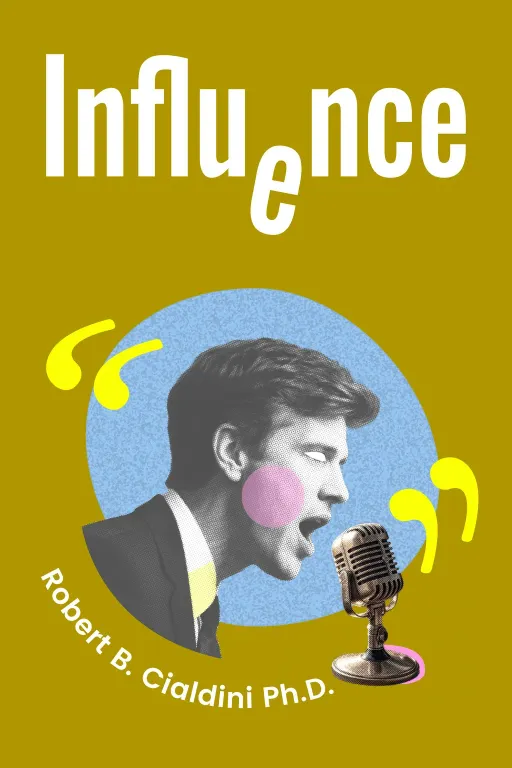
Nova: Well, maybe not entirely for show, but they might have missed some fundamental human wiring. Today, we're dissecting the very fabric of influence, primarily through the lens of Robert Cialdini's groundbreaking work, "Influence: The Psychology of Persuasion."
Atlas: Ah, Cialdini! I've heard whispers.
Nova: What's fascinating about Cialdini is that he didn't just theorize from an ivory tower; he spent years going undercover as a practitioner – car salesman, fundraiser, ad man – to observe persuasion in its natural habitat, becoming a sort of 'chameleon researcher.'
Atlas: Wow, a chameleon researcher! That’s a unique approach. It makes me wonder, how much deeper do you get into the psychology of 'yes' when you’re actually on the front lines, rather than just reading about it? That must offer some profound insights.
Nova: Exactly! His experiences gave him an unparalleled view into why people say 'yes,' often against their better judgment. And it’s those insights that we’re diving into first today.
The Psychology of Persuasion: Cialdini's Six Principles
SECTION
Nova: So, Cialdini identified six universal principles that guide human behavior and decision-making. Let's kick off with Reciprocity. It’s simple: we feel obligated to return favors. Think of a waiter giving you a small mint with the bill, or a charity sending you free address labels.
Atlas: Wait, so you're saying a tiny mint can actually sway my perception of service and potentially my tip? That's almost manipulative, isn't it? For those of us trying to build sustainable solutions and trust, where’s the line between ethical influence and coercion?
Nova: That's a crucial distinction, Atlas. Cialdini himself emphasizes ethical application. The power isn't in tricking people, but in understanding these deep-seated human tendencies. When you give genuinely, without expecting anything, it still triggers that sense of obligation, but it feels authentic. It builds goodwill.
Atlas: I guess that makes sense. It's about planting a seed of connection, rather than demanding a return.
Nova: Precisely. Next up, Social Proof. This is our tendency to do what we see other people doing, especially when we're unsure. Like those laugh tracks on sitcoms, or when you see a crowded restaurant and assume it must be good.
Atlas: Oh, I see. So it's not just about what think, but what I think. That's powerful, especially in a world flooded with reviews and testimonials. But how do you prevent that from just being herd mentality, especially when we're trying to innovate and break new ground? As an ethical innovator, I'm always looking for unique insights, not just following the crowd.
Nova: That's the challenge, isn't it? Social proof can be a shortcut to making decisions, but it can also lead us astray. The key for communicators is to genuinely showcase positive social proof – real testimonials, genuine success stories – not fabricate it. It’s about leveraging existing momentum, not manufacturing it.
Atlas: So, it's about providing evidence of value, not just saying "everyone else is doing it."
Nova: Exactly. Then there's Liking – we're more likely to be persuaded by people we like. Think about Tupperware parties; it's less about the product and more about buying from a friend. And Authority – we tend to defer to experts, even if their expertise isn't directly relevant.
Atlas: So, if I understand correctly, it's about building trust and demonstrating expertise, but also about creating a genuine connection. That's a lot more nuanced than just 'tell them what to do.' It’s about establishing credibility and rapport.
Nova: Absolutely. And then there's Scarcity – the idea that things are more desirable when they're limited – "limited time offer!" And Commitment and Consistency, which is our desire to be consistent with what we've already said or done.
Atlas: Whoa, that makes me wonder how many times I've agreed to something small, only to find myself committed to something much bigger because I wanted to be consistent with my initial 'yes.' It's a subtle trap, but incredibly effective.
Nova: It's a powerful one. Cialdini's work provides this foundational understanding of why people say 'yes,' allowing you to structure your communication for maximum impact and ethical influence. It's about understanding the underlying psychology.
Crafting Unforgettable Messages: The SUCCESs Principles
SECTION
Nova: And that naturally leads us to the second key idea we need to talk about, because getting a 'yes' is one thing, but making that 'yes' stick and spread, that's where Chip and Dan Heath come in with their incredible book, "Made to Stick: Why Some Ideas Survive and Others Die."
Atlas: Ah, the 'SUCCESs' principles! I'm curious how these layer on top of Cialdini. Are they two sides of the same coin, or entirely different beasts? As a strategic storyteller, I'm always looking for frameworks to make narratives more compelling.
Nova: They're incredibly complementary. Cialdini explains the, and the Heaths give us the for messages that effectively engage those triggers. They identified six principles that make ideas 'sticky': Simple, Unexpected, Concrete, Credible, Emotional, and Stories – or SUCCESs.
Atlas: Simple and Unexpected. Tell me more.
Nova: Simple means finding the core idea, the essential message, and stripping away everything else. Think of a proverb. Unexpected means breaking a pattern, generating surprise and interest. It makes people lean in.
Atlas: Can you give an example?
Nova: A classic one from their book is Nordstrom's employee handbook. It's famously just five words: "Use your best judgment."
Atlas: Wow! That's a perfect example of unexpected! It makes you lean in because it subverts all expectations of a corporate manual. But for complex ideas, like, say, a new strategic foresight model, how do you make it simple without dumbing it down? That's a perennial challenge for analysts who deal with intricate data.
Nova: That’s where the art comes in. Simple doesn’t mean simplistic. It means finding the most profound, concise way to express a complex idea. It's about prioritizing the core message. And the unexpected element is crucial for cutting through the noise. It creates a "knowledge gap" that people naturally want to fill.
Atlas: I like that – creating a knowledge gap. It's an invitation to curiosity.
Nova: Exactly. Then we have Concrete and Credible. Concrete means using sensory language, making ideas tangible. Not "high performance," but "a car that goes from 0 to 60 in 3 seconds." Credible means giving people reasons to believe, whether it's through data, anti-authority figures, or even internal validation.
Atlas: That makes sense. "High performance" is abstract, but "0 to 60 in 3 seconds" creates a visceral image.
Nova: The Heaths share a powerful case study about the "bag of popcorn" from a movie theater. When nutritional information was presented as abstract numbers, people ignored it. But when they framed it concretely – "This bag of popcorn has more fat than a bacon-and-egg breakfast, a Big Mac and fries, and a steak dinner combined!" – it was shocking and unforgettable.
Atlas: Wow, that popcorn example is brutal in its effectiveness. It makes the abstract threat of 'unhealthy' utterly tangible. So, it's not just about having the data, but presenting it in a way that people can and. That's a great analogy for how to make complex data resonate.
Nova: Precisely. And finally, Emotional and Stories. Emotional means connecting to feelings, making people care. Stories are crucial because they're essentially "flight simulators for the brain." They allow us to experience scenarios without actually living them, preparing us for action.
Atlas: So, essentially, Cialdini gives us the 'why' people are persuaded, and the Heath brothers give us the 'how' to construct messages that leverage those psychological triggers. It's like a user manual for the human mind, helping us transform abstract concepts into vivid, actionable stories.
Synthesis & Takeaways
SECTION
Nova: That's a great way to put it, Atlas. Cialdini helps us understand the fundamental human responses that drive persuasion, while the Heath brothers provide the toolkit to craft messages that not only get heard but are truly unforgettable, by making them Simple, Unexpected, Concrete, Credible, Emotional, and told through Stories.
Atlas: This really resonates with the idea of building sustainable solutions and ethical innovation. It's about influence, yes, but influence with integrity. It's not about manipulating, but about communicating so effectively that your message truly serves those who hear it. So, what's a 'tiny step' our listeners, especially those driven by meaningful contribution, can take after this?
Nova: A fantastic question. Here's a tiny step: Before your next important communication – whether it's an email, a presentation, or a crucial conversation – identify which of Cialdini's principles you can ethically leverage. Are you building reciprocity? Demonstrating authority? And then, apply at least three of the 'SUCCESs' principles to make your message stick. Make it simple, unexpected, tell a story.
Atlas: That's a fantastic, actionable challenge. It asks us to be intentional, not just intuitive. It's about mastering the art, but also understanding the science. What if, by truly mastering this, we could not only anticipate market shifts but also shape them for the better, building trust and innovation in the process? It’s about making our influence a force for good.
Nova: Absolutely. It's about becoming a strategic storyteller in every interaction, making your messages not just heard, but profoundly felt and remembered, leading to meaningful contribution.
Atlas: And that's a goal worth pursuing.
Nova: This is Aibrary. Congratulations on your growth!