Mastering the Art of Persuasion and Influence
Golden Hook & Introduction
SECTION
Nova: Every single day, you are both a master and a target of subtle psychological influence, whether you know it or not.
Atlas: Whoa. That's a bold claim, Nova. Are you saying we're all walking around like unwitting Jedi mind-trick practitioners? That feels a bit dramatic, but also... strangely relatable.
Nova: Well, maybe not Jedi, but certainly operating within powerful, invisible currents of human psychology. Today, we're pulling back the curtain on those currents, drawing insights from two titans in the field of persuasion and negotiation.
Atlas: Oh, I love where this is going. Lay it on me.
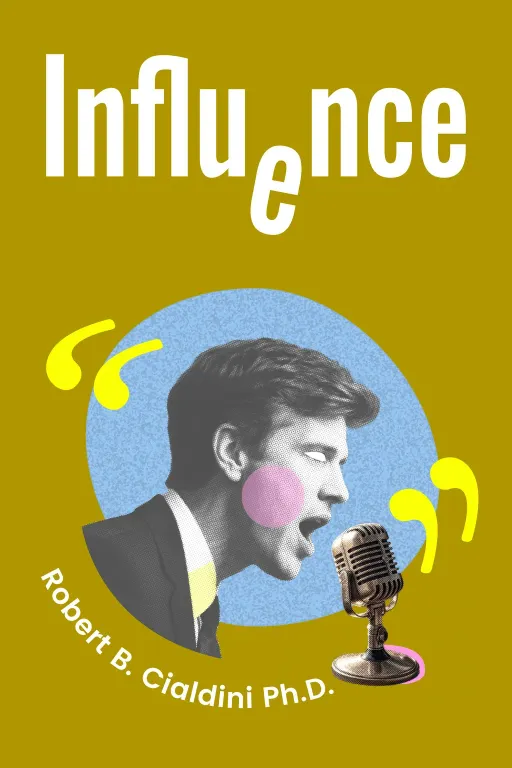
Nova: We're diving into Robert Cialdini's seminal work, "Influence: The Psychology of Persuasion," a book born from decades of rigorous academic research, even Cialdini's own undercover work infiltrating various sales organizations to truly understand how influence works in the wild. And then, we'll bridge that foundational science with the high-stakes, real-world strategies of Chris Voss, a former FBI hostage negotiator, from his book "Never Split the Difference."
Atlas: So, one's the deep academic dive into the 'why' of human behavior, and the other is the street-level, life-or-death application of that understanding? That’s a fascinating pairing. It sounds like we’re moving from the laboratory to the negotiation table.
Nova: Exactly. And the profound insight that connects them both, the core of our podcast today, is really an exploration of the profound psychology behind persuasion and influence, and how we can master it for more effective and communication. It’s not about manipulation; it’s about deep understanding. Today we'll dive deep into this from two perspectives. First, we'll explore the foundational psychological triggers identified by Robert Cialdini, then we'll discuss Chris Voss's real-world, high-stakes negotiation tactics, and finally, we'll connect how these insights empower us in every conversation.
The Science of Subtlety: Cialdini's Six Principles
SECTION
Nova: Cialdini’s work is groundbreaking because he identified six universal principles that consistently guide human behavior. These aren't just theories; they're deeply ingrained shortcuts our brains use to make decisions.
Atlas: Okay, so these are the "invisible currents" you mentioned. Give me one. What's a big one that people might not even realize is affecting them?
Nova: Let's start with Reciprocity. It’s simple: we feel indebted to those who give us something. Think about that free sample at the grocery store, or the unsolicited gift from a salesperson. That little act of giving creates a subconscious obligation to return the favor. Cialdini observed this everywhere, from Hare Krishna devotees giving out flowers to salespeople offering small gifts.
Atlas: Ah, I know that feeling. So, if someone gives me a free mint at a restaurant, I'm almost obligated to tip more? That feels... sneaky. It’s like my brain is being tricked into feeling grateful.
Nova: It can feel that way, but it’s a powerful social construct. It's about building rapport and creating a sense of connection. The key, as Cialdini always emphasized, is to use these principles ethically. Reciprocity can build genuine relationships if the initial gift or favor is sincere. It’s not about trickery; it’s about understanding a fundamental human impulse to balance the scales.
Atlas: I can see how that would be powerful. But what about when we see everyone else doing something? Does that count as influence too?
Nova: Absolutely. That leads us to Social Proof. We tend to assume something is correct if many other people are doing it. It’s why laugh tracks exist on sitcoms, or why you see testimonials on product pages. If everyone else is doing it, it must be the right thing to do, right?
Atlas: Like how I pick a restaurant based on which one has the longest line. Or those endless five-star reviews online. Is that just social proof on steroids?
Nova: Exactly. It's a mental shortcut. If hundreds of people loved this product, it must be good. If a hotel puts a sign in the bathroom saying "75% of guests reuse their towels," it's far more effective than just saying "please reuse towels." It leverages the social proof of others' environmentally conscious behavior. Cialdini's research showed how powerful this seemingly innocuous information can be.
Atlas: That’s fascinating. It really makes you rethink why you make certain choices. How many principles did he identify?
Nova: He identified six: Reciprocity, Commitment and Consistency, Social Proof, Authority, Liking, and Scarcity. Each one is a little lever that, when understood, allows you to better navigate social interactions. For instance, the principle of Authority shows us why we're more likely to trust someone in a uniform or someone with an impressive title, even if their expertise isn't directly relevant to the situation. It's a deep-seated respect for perceived knowledge or power.
Atlas: So, when a doctor tells me to do something, I'm more likely to follow it than if my friend tells me, even if it's the same advice?
Nova: Precisely. And Liking: we're simply more inclined to say yes to people we like. This can be due to physical attractiveness, similarity, compliments, or cooperation. It's why rapport-building is so crucial in sales and negotiation. And finally, Scarcity: opportunities seem more valuable when their availability is limited. "Limited time offer!" "Only three left in stock!" These phrases tap into our fear of missing out.
Atlas: That makes me wonder, how do you even fight against these things? It sounds like our brains are hardwired for these shortcuts.
Nova: And that’s a crucial point Cialdini makes. It's not about fighting them, but recognizing them. Once you understand these triggers, you can consciously choose how to respond, rather than being unconsciously swayed. It's about becoming a 'judo master' of influence, using the forces to your advantage, not to manipulate, but to create mutually beneficial outcomes.
From FBI Negotiator to Everyday Persuader: Chris Voss and Tactical Empathy
SECTION
Nova: Speaking of understanding human behavior, let's pivot from the subtle nudges of Cialdini to the high-stakes game of negotiation, where understanding is quite literally, life or death. Chris Voss, as an FBI hostage negotiator, had to master persuasion in the most extreme circumstances. His book, "Never Split the Difference," distills these high-pressure tactics into principles for everyday life.
Atlas: Wait, so you're telling me the secret to getting what I want isn't about being tough, or dominating the conversation, but about... being a good listener? That feels counter-intuitive for a hostage negotiator. I'd imagine it's all about projecting strength and making demands.
Nova: That’s a common misconception, isn't it? Voss flipped that script entirely. He realized that in a hostage situation, the goal isn't to out-talk or out-muscle the other side. It’s to get them to, to understand their deepest motivations, fears, and desires. He calls his core strategy "Tactical Empathy."
Atlas: Tactical empathy. That’s a powerful phrase. What does that actually mean in practice?
Nova: It’s not about agreeing with them, or even sympathizing. It’s about demonstrating that you their perspective, their emotions, and their worldview. It's about saying, "It sounds like you're feeling frustrated because..." or "It seems like you're worried about..." This act of labeling their emotions, of mirroring their words, disarms them. It makes them feel heard, and that's incredibly powerful.
Atlas: So, instead of jumping in with my solution, I should just reflect back what I’m hearing? Like, if my partner is upset about a chore, I shouldn't immediately defend myself, but say, "It sounds like you're feeling overwhelmed by the housework"?
Nova: Precisely. That simple act shifts the dynamic. It moves from confrontation to collaboration. Voss learned that when people feel understood, their defenses drop, and they become more open to finding a solution. He used this in situations where lives were literally on the line, getting kidnappers to reveal information or release hostages, not through threats, but through deep, tactical listening.
Atlas: That’s incredible. It makes so much sense, yet it feels so hard to do when you’re in the moment and emotions are running high. What’s another practical technique from Voss beyond just listening?
Nova: One of my favorites is his take on the word "No." We often think "No" is the end of a negotiation. Voss argues it's the beginning. When someone says "No," they feel safe, they feel in control. It gives them autonomy. And once they feel safe, they're more likely to open up and tell you they said no, which gives you crucial information.
Atlas: So, when my kid says 'no' to vegetables, I should be? How does that work? My instinct is to say, "You HAVE to eat them!"
Nova: Well, maybe not, but certainly not defeated! Instead of pushing harder, you might say, "Sounds like you don't want to eat your broccoli tonight. What is it about the broccoli you don't like?" You're acknowledging their "No," giving them control, and inviting them to tell you more. That information then allows you to understand their underlying objection and find a different path. It's a subtle but profound shift from demanding compliance to seeking understanding.
Atlas: That’s a great way to put it. It's about letting them feel empowered, which then makes them more receptive. So, these aren't just tricks for high-stakes situations; these are tools for better human connection in everyday life. For our listeners who are navigating complex team dynamics or difficult family conversations, this concept might feel like a revelation.
Synthesis & Takeaways
SECTION
Nova: Absolutely. What connects Cialdini's six principles and Voss's tactical empathy is a deep, almost scientific understanding of human psychology. Cialdini shows us the underlying triggers that influence our decisions, often without us realizing it. Voss gives us the practical toolkit to actively engage with those triggers, not to manipulate, but to build rapport, de-escalate tension, and find common ground, especially in challenging conversations.
Atlas: So it's not about manipulating people into doing what want, but about creating situations where both sides genuinely feel understood and valued, leading to a better outcome for everyone? It sounds like influence, when done ethically, is actually a pathway to more constructive interactions.
Nova: Exactly. It's about moving from a mindset of "winning" to a mindset of "understanding and collaboration." When you truly understand the psychological levers, whether they are Cialdini's principles or Voss's tactical empathy, you gain the power to shape interactions positively. You can defend yourself against unwanted influence, and you can ethically guide conversations towards mutually beneficial outcomes. It's about becoming a more effective communicator, a more insightful leader, and a more empathetic human being.
Atlas: That’s actually really inspiring. This isn't just for big business deals or hostage negotiations, is it? This is for every conversation we have, from asking for a raise to deciding what to have for dinner with your family. It's about making every interaction more meaningful.
Nova: It truly is. And for our listeners, here's your challenge before your next important interaction: try to identify one of Cialdini's principles you could ethically employ – perhaps offering a small, genuine gesture of reciprocity, or highlighting social proof for a good idea. Or, try one of Voss's tactical empathy techniques – really listen to understand, mirror a key phrase, or label an emotion you perceive. Notice how this small shift changes the dynamic. It’s a powerful way to put these profound insights into practice.
Atlas: I’m definitely going to try that. I imagine a lot of our listeners, especially those who enjoy deep thinking and learning, are already running through their mental rolodex of past conversations, seeing where these principles could have made a difference.
Nova: That’s the goal. It’s about building a better understanding of ourselves and others, one conversation at a time.
Atlas: This is Aibrary. Congratulations on your growth!