How to Build Unshakeable Influence: Your Guide to Leading with Impact
Golden Hook & Introduction
SECTION
Nova: Atlas, if I asked you to give me a five-word review of 'influence,' what would you say?
Atlas: Oh, easy. 'Everyone wants it, few understand it.' And honestly, most people probably get it wrong.
Nova: You're not wrong! It's a concept that feels so desirable, yet so many chase it in ways that ultimately backfire. Today, we're diving into how to build what we call "unshakeable influence," pulling wisdom from titans like Stephen Covey and Robert Cialdini.
Atlas: Those are some heavy hitters. Covey, the academic who became a global phenomenon with '7 Habits,' always stressing character over quick fixes. And Cialdini, who literally went undercover to study persuasion in the wild. Talk about contrasting approaches!
Nova: Exactly! And that contrast is exactly what makes their combined insights so powerful. Because the cold fact is, true influence isn't about manipulation; it's about building trust and demonstrating genuine value. Many try to lead with sheer authority, but lasting impact? That comes from understanding and shaping behavior through principle-centered actions.
Atlas: That makes me wonder, though, if it's so clear that trust and value are the way to go, why do so many people still lean into those manipulative or authority-driven tactics? What are the common pitfalls you see?
Influence as Trust & Value, Not Manipulation
SECTION
Nova: That's a brilliant question, Atlas, because it gets right to the heart of the challenge. The biggest pitfall is the allure of the quick win. Manipulation, or simply barking orders because you're "the boss," can get you immediate compliance. But it's a short-term gain that always, always, extracts a long-term cost.
Atlas: Okay, but isn’t there a time and place for just laying down the law? Especially in high-stakes environments, sometimes you need immediate action.
Nova: You might get immediate action, yes, but at what cost to loyalty, initiative, and morale? Think of it like this: Imagine a brilliant tech lead, let's call her Sarah. She's incredibly smart, probably the most technically skilled person on her team. When a deadline looms, she’ll often just tell everyone exactly what to do, how to do it, and dismiss any alternative suggestions. She gets the project done, usually on time.
Atlas: Sounds effective on the surface.
Nova: On the surface, absolutely. But over time, her team stops offering ideas. They just wait for instructions. Morale plummets. When Sarah inevitably moves to a new project or leaves, the team struggles because they haven't developed their own problem-solving muscles. They were compliant, but never truly influenced, never truly empowered.
Atlas: I can definitely relate to that. It’s like being in a meeting where one person dominates, and everyone else just checks out. So, what’s the alternative to that kind of authority-driven compliance?
Nova: The alternative is building influence through trust and demonstrated value. It's about being the person others to follow, not just to follow. Consider another leader, David. He’s equally brilliant, but when a challenge arises, he starts by explaining the 'why' behind the problem. He actively solicits ideas from his team, even if they're junior. He coaches, he mentors, and he gives credit where it's due.
Atlas: That sounds like a slower path.
Nova: Initially, perhaps. But here's the magic: David's team becomes incredibly resilient and innovative. When he's not around, they don't flounder; they self-organize and solve problems because they understand the principles and feel valued. Their solutions are often better than what David would have come up with alone. Their loyalty is deep. This is the difference between fleeting authority and unshakeable influence. It's about consistently acting in ways that prove you're reliable, competent, and genuinely care about mutual success.
Atlas: That’s a great way to put it. It’s about building a solid foundation, not just patching things up as you go.
The Dual Pillars: Character (Covey) & Psychology (Cialdini)
SECTION
Nova: And that solid foundation brings us perfectly to our second core idea: the dual pillars of influence. Because it’s not enough to simply trustworthy; you also need to understand how human beings are wired to make decisions. This is where Covey's character-based approach beautifully converges with Cialdini's insights into the psychology of persuasion.
Atlas: Okay, so Covey gives us the 'be a good person' framework, and Cialdini gives us the 'how to get people to say yes' toolkit. How do those two actually work in tandem without one undermining the other?
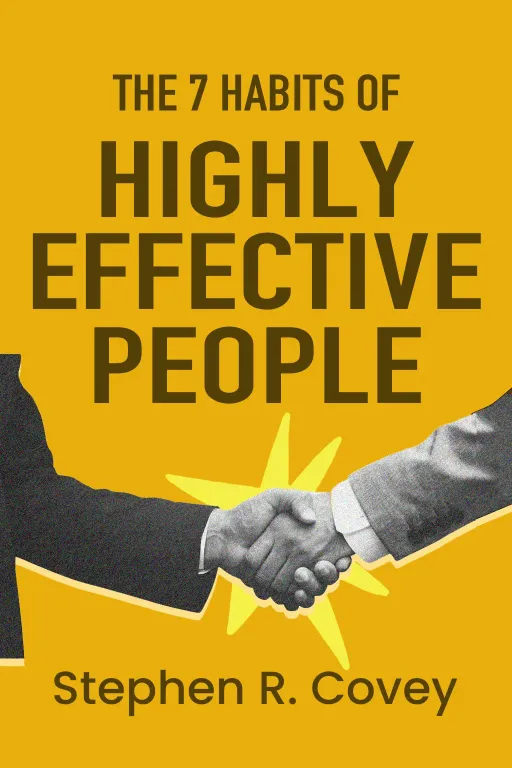
Nova: Exactly! It's not about choosing one over the other; it's about their powerful synergy. Covey, in his '7 Habits of Highly Effective People,' argues that real influence stems from character and competence. He emphasizes proactive habits, self-mastery, integrity – moving from dependence to independence before you can effectively engage in interdependent relationships. It's about building your internal strength and credibility first.
Atlas: So, you're saying I need to get my own house in order before I can expect to influence anyone else? That sounds like a lifetime project for some of us!
Nova: Well, it's a continuous journey, but it's crucial. Think of a community leader, Maria. She’s not the wealthiest or the most charismatic, but she’s known for her unwavering commitment to her neighborhood's well-being. She consistently shows up, keeps her promises, and listens deeply. People trust her implicitly because her character is unshakeable. When she advocates for a new community garden, people rally behind her not because she's using any 'tricks,' but because of who she. That's Covey's influence in action.
Atlas: That’s actually really inspiring. So, where does Cialdini fit into Maria's story, or into a situation where you've already built that character?
Nova: Cialdini's work, particularly in 'Influence: The Psychology of Persuasion,' breaks down six universal principles like reciprocity, scarcity, and social proof. These aren't manipulative if used ethically; they’re insights into human decision-making. Once Maria has established her character, she can then use Cialdini's principles to amplify her message and guide others more effectively.
Atlas: Give me an example. How would Maria use, say, 'social proof' ethically?
Nova: Imagine Maria is trying to get more volunteers for her community garden project. She's already built trust. Now, instead of just asking, she might highlight how many people have signed up, or share testimonials from satisfied volunteers. "Over 50 residents have already committed to nurturing our green space!" That's social proof. Or, for reciprocity, she might host a small, free workshop on urban gardening basics asking for sign-ups, thus giving value first.
Atlas: Ah, I see! So, the character built through Covey's principles provides the ethical framework and the deep-seated trust, and then Cialdini's principles are the elegant tools you use to communicate your value and guide action once that trust is established. It's not about tricking people, but understanding their natural tendencies.
Nova: Exactly! Nova's take on this is that influence is cultivated through consistent, ethical behavior and a deep understanding of human decision-making. You embody the principles, and then you apply the psychology. The principles without the psychology might be pure but ineffective; the psychology without the principles is merely manipulation. The true power is in their combination.
Synthesis & Takeaways
SECTION
Atlas: That's such a powerful synthesis. It totally reframes how I think about influence. It's not just about what you say or do, but who you when you say and do it.
Nova: Precisely. Unshakeable influence isn't a tactic you deploy; it's a state of being, a reflection of your integrity and your understanding of the human condition. It's about earning the right to guide others, rather than demanding it. The true power lies in that synergy: your character legitimizes your persuasion.
Atlas: So, for our listeners who are committed to continuous self-improvement and want to lead with impact, what's one tiny step they can take this week to start building this kind of ethical, unshakeable influence?
Nova: Here’s your tiny step: Identify just one area where you wish to exert more influence, perhaps with a team member, a client, or even a family member. Then, choose one Cialdini principle – let's say reciprocity – and intentionally apply it this week, but through the lens of Covey's character. How can you genuinely provide value or a thoughtful gesture first, without expectation, to build that foundation of trust?
Atlas: I love that. Give before you ask. Lead with integrity. That resonates deeply.
Nova: This is Aibrary. Congratulations on your growth!