Decoding Human Behavior: Applied Psychology for Everyday Life
Golden Hook & Introduction
SECTION
Nova: Atlas, if I told you that you're constantly being subtly influenced by everything from the weather to what your neighbor bought yesterday, what would you say?
Atlas: Oh, I'd say you're probably right, Nova. I mean, my impulse buys at the grocery store usually involve something I saw someone else put in their cart. So, tell me more. Are we talking about some kind of psychological Jedi mind trick?
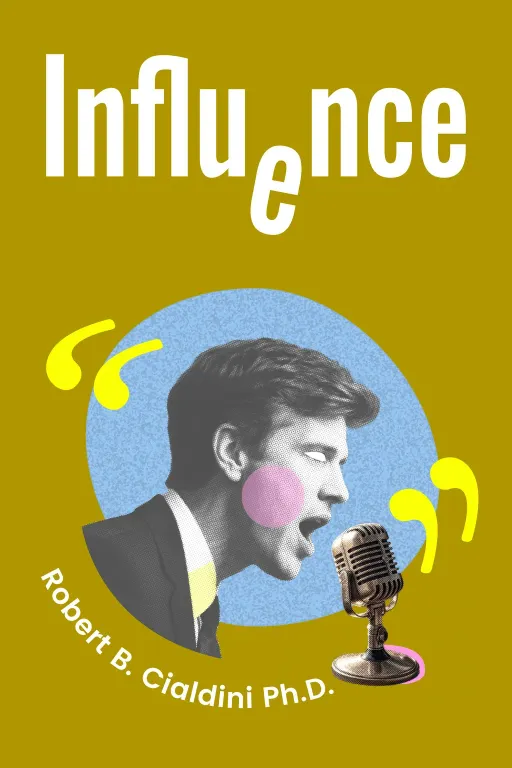
Nova: Close! We’re diving into the fascinating world of how our minds work, and more specifically, the hidden forces that shape our decisions and perceptions. Today, we're dissecting two monumental works: "Influence: The Psychology of Persuasion" by the legendary Robert Cialdini, and Daniel Kahneman's groundbreaking "Thinking, Fast and Slow."
Atlas: Kahneman, as in the Nobel Prize-winning psychologist Kahneman? That's quite the pairing. It sounds like we're about to uncover some serious secrets to human behavior. I'm already picturing all the ways I've been subtly manipulated without even realizing it.
Nova: Exactly! Cialdini, a professor of psychology and marketing, spent decades researching the science of compliance, even going undercover to learn the tricks of the trade from car salesmen and telemarketers. His work isn't just theory; it's a deep dive into real-world applications of influence. And Kahneman, alongside Amos Tversky, completely revolutionized our understanding of decision-making, earning him that Nobel Prize in Economic Sciences, even though he's a psychologist, for integrating insights from psychological research into economic science.
Atlas: That’s amazing. So Cialdini is giving us the playbook of how we're influenced, and Kahneman is explaining we fall for it? This is going to be incredibly insightful for anyone who wants to understand themselves and others better, especially those of us trying to make more rational choices in a world full of noise.
The Science of Persuasion: Cialdini's Six Principles
SECTION
Nova: Precisely. Let's start with Cialdini’s "Influence." He distills persuasion into six universal principles that are so powerful, they’re almost like psychological shortcuts our brains use. The first is reciprocity.
Atlas: Ah, reciprocity. The old "I scratch your back, you scratch mine" principle. But how does that play out in the subtle art of persuasion? It feels so straightforward.
Nova: It’s deceptively simple, but incredibly potent. Imagine you get a free sample at a store. Even if you didn't ask for it, you suddenly feel a small, almost unconscious obligation to buy something from that vendor. Cialdini found that even an unsolicited small gift can create a powerful sense of indebtedness. It's not just about favors; it's about giving something first, often unexpectedly. It's why waiters who give you a small candy with the bill often see a bump in their tips.
Atlas: Wow, that’s so true! I definitely feel that little nudge. So, it's not just about being polite; it’s a deep-seated human tendency to return a favor, even if it wasn't requested. That's actually really profound, especially for those of us navigating professional interactions. How often do we think about offering value first?
Nova: Exactly. It's about building a connection through initial generosity. Then there's commitment and consistency. Once we make a small commitment, we feel an internal and external pressure to remain consistent with that initial stance.
Atlas: So, if I agree to something small, I'm more likely to agree to something bigger later, just to appear consistent? That's almost scary.
Nova: It can be. Think about signing a petition for a cause you believe in. That small act of signing makes you more likely to donate money to that cause later, or even volunteer your time. You've publicly committed, and now your internal drive for consistency kicks in. It’s a powerful tool in sales, too. Getting a customer to agree to a minor detail first, like scheduling a follow-up call, makes them more likely to commit to the larger purchase.
Atlas: That makes perfect sense. It's like our brains want to keep a tidy narrative about who we are. We don't want to seem flaky or contradictory. And then there's social proof, which I feel like we see everywhere now with online reviews and follower counts.
Nova: Absolutely. Social proof is our tendency to look to others to determine appropriate behavior, especially when we're uncertain. If everyone else is doing it, it must be the right thing to do. Think about those "best-selling" labels on books or "most popular" tags on streaming services. We assume if a lot of people like it, there's a reason. It's why laugh tracks exist in sitcoms, even if we consciously dislike them. Our brains register the "social proof" that something is funny.
Atlas: Right, like when you're trying to decide on a restaurant and you pick the one that's bustling over the empty one, even if you don't know anything about the food. It's a shortcut our System 1 brain probably loves.
Nova: Spot on. And that leads us to authority. We tend to defer to experts or those in positions of power. This isn't just about genuine expertise; it can also be about symbols of authority.
Atlas: Like someone in a lab coat, even if they're not a real doctor?
Nova: Precisely. Or a fancy title, a sleek uniform, even an expensive car. These signals can instantly trigger our compliance, often without us critically evaluating the message itself. It’s why testimonials from "doctors" or "scientists" are so effective in advertising, even if the credentials are vague.
Atlas: That’s a tough one to combat because respecting authority is often a good thing. But it highlights the need for critical thinking about the authority is and their actual expertise is.
Nova: Exactly. And then there's liking. We're far more likely to be persuaded by people we like. This can be based on physical attractiveness, similarity to us, compliments, or even simply cooperation towards a common goal.
Atlas: So, if a salesperson is charming and finds common ground with me, I'm more susceptible. That's why building rapport is such a cornerstone of good communication, right?
Nova: Absolutely. It's not just about what you say, but who is saying it and how they make you feel. Finally, Cialdini highlights scarcity. Things become more desirable when they are perceived as being in limited supply.
Atlas: "Limited time offer!" or "Only X items left in stock!" That's a classic one. It creates a sense of urgency.
Nova: It does. The idea that something might be unavailable soon makes us value it more and act faster. It's why exclusive releases or limited editions generate so much hype. Cialdini's work really pulls back the curtain on these psychological triggers, showing us how they're used in everyday life, for better or worse.
Navigating the Mind's Labyrinth: Kahneman's Thinking, Fast and Slow
SECTION
Nova: Now, what Cialdini explains about we're persuaded ties beautifully into Kahneman's work on we're susceptible – our two systems of thinking.
Atlas: Oh, this is the System 1 and System 2 thinking, right? The fast, intuitive one versus the slow, deliberate one. This really resonated with me when I first encountered it. It’s like having two different brains operating at the same time.
Nova: It truly is. Kahneman introduces System 1 as our automatic, intuitive, and often emotional thinking. It operates quickly, with little or no effort, and no sense of voluntary control. It's what allows you to understand simple sentences, drive a familiar route, or react instinctively to a sudden noise.
Atlas: So that's the part of my brain that sees a "limited time offer" and immediately feels a pang of urgency, without really thinking through the logic. It's the gut reaction.
Nova: Exactly. System 1 is brilliant for quick judgments and survival, but it's also prone to biases and errors. Then we have System 2, which is our slow, deliberate, and effortful thinking. It's what you use for complex calculations, focusing on a difficult task, or really weighing the pros and cons of a major decision.
Atlas: And that's the one that kicks in when I try to resist that "limited time offer" and actually compare prices or consider if I really need the item. But it feels like it takes so much more energy to engage System 2.
Nova: It does! System 2 is lazy, for lack of a better word. It prefers to conserve energy, so it often defers to System 1 whenever possible. This is where cognitive biases come in. System 1, in its haste to make quick sense of the world, often takes shortcuts, leading to predictable errors that System 2, if engaged, might catch.
Atlas: So, Cialdini's principles of persuasion are effectively leveraging our System 1 shortcuts. Reciprocity, social proof, scarcity—they all trigger those fast, intuitive responses before our more rational System 2 has a chance to fully engage.
Nova: You've hit the nail on the head. Take the anchoring effect, a classic cognitive bias Kahneman discusses. If you see a high initial price for an item, even if it's artificially inflated, your System 1 latches onto that "anchor," making any subsequent, lower price seem like a good deal, even if it's still overpriced. Your slow, rational System 2 has to actively work to overcome that initial anchor.
Atlas: That's fascinating! So, the first piece of information, even if irrelevant, can disproportionately influence our judgment. That has huge implications for negotiations or even just how we frame information. It’s like our brains are constantly trying to find the easiest path, and System 1 is usually the one paving it.
Nova: Precisely. And this interplay is crucial for understanding behavior. We often believe we're making rational, well-thought-out decisions, but Kahneman shows us how frequently our fast, intuitive System 1 is actually in the driver's seat, guided by heuristics and biases we're often unaware of. This is why a deeper awareness of cognitive biases is so transformative. It's not about eradicating System 1—that's impossible and undesirable—but about recognizing when to engage System 2.
Atlas: That’s the real challenge, isn't it? Knowing when to pause and bring in the heavy artillery of System 2. For someone making daily decisions, whether personal or professional, this distinction is gold. It empowers you to question your gut feelings and ask: "Is this my fast brain reacting, or my slow brain deliberately choosing?"
Synthesis & Takeaways
SECTION
Nova: Absolutely. The synergy between Cialdini and Kahneman is profound. Cialdini gives us the external levers of influence, and Kahneman gives us the internal mechanisms that make us respond to those levers. Understanding these underlying psychological mechanisms isn't about becoming a master manipulator, but about becoming a more conscious and effective decision-maker and communicator.
Atlas: It's about empowering yourself, really. Knowing these principles helps you recognize when you're being influenced and gives you the tools to make more rational choices, rather than just reacting on autopilot. It also gives you a framework for engaging more effectively with others, whether that's in a negotiation, a team meeting, or even just a casual conversation.
Nova: Exactly. It shows us that our minds are complex, often surprising machines. And the first step to navigating that complexity is understanding its basic operating system. It's about making the invisible visible. So, for anyone listening, I'd encourage you to observe a recent decision you made. Can you identify if System 1 or System 2 was primarily at play? And how might a deeper awareness of cognitive biases change your approach to daily problem-solving or communication?
Atlas: Those are excellent questions to ponder. It's about self-awareness and then applying that awareness to make better choices. It’s a journey of continuous learning, and these books provide an incredible roadmap.
Nova: Absolutely. It's about bringing intentionality to our interactions and decisions.
Atlas: This is Aibrary. Congratulations on your growth!