** The Wisdom of the Body: Somatic Healing and the Future of Healthcare
Golden Hook & Introduction
SECTION
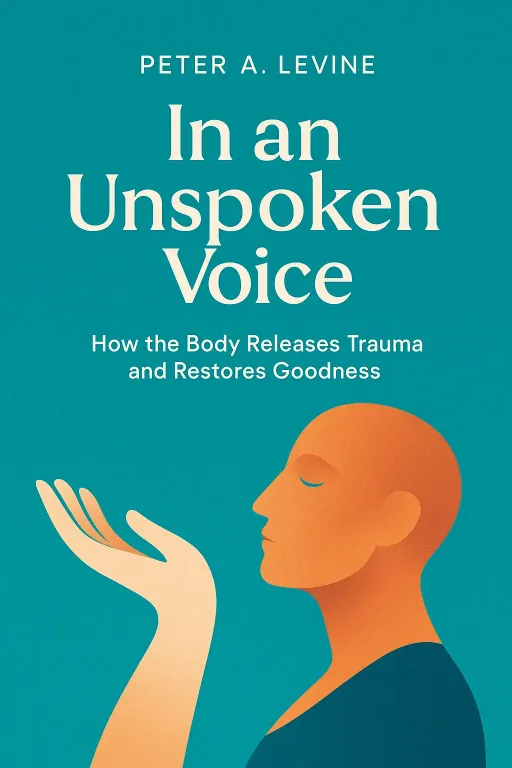
Prof. Eleanor Hart: Imagine you are walking down a busy street on a beautiful, sunny morning. The air is crisp, and you are feeling completely at ease. Then, in a split second, a car swerves. There is a deafening screech of tires, a violent impact, and suddenly you are lying on the asphalt, unable to move. Your mind is in a state of absolute chaos, but beneath that mental panic, your body is initiating a primal, evolutionary survival sequence. Today, we are diving deep into Peter Levine's seminal book, In an Unspoken Voice, to explore how trauma is not merely a psychological affliction, but a deeply rooted physical event. And we will look at how understanding this bodily response can completely revolutionize the way we approach modern medicine, digital health, and clinical leadership. We are incredibly fortunate to have digital health innovator and registered nurse Dorcas Omotoso with us today to bridge the gap between this profound somatic science and the future of healthcare delivery. Welcome, Dorcas.
Dorcas Omotoso: Thank you so much, Eleanor. It is an absolute pleasure to be here. As a nurse, I see the physical manifestations of stress and trauma in patients every single day. Levine's work is incredibly close to my heart because it challenges the traditional, highly compartmentalized view of medicine that separates the mind from the body. When we look at healthcare innovation, especially in digital health and telehealth, we have to ask ourselves how we can capture and honor these unspoken bodily signals.
Prof. Eleanor Hart: Exactly. Today, we are going to tackle this from three distinct angles. First, we will explore the core concept that trauma is a physical injury, not a mental disease, using Levine's own dramatic car accident as our guide. Second, we will unpack the clinical map of the nervous system through the lens of Polyvagal Theory. And finally, we will discuss how healthcare leaders and innovators can leverage these insights to design more empathetic, technology-driven care models.
Trauma as a Bodily Experience
SECTION
Prof. Eleanor Hart: Let us start with that car accident. In the book, Peter Levine describes being hit by a car in Southern California. He was walking to a friend's birthday party, stepped into a crosswalk, and was struck. Now, as a trauma expert, he found himself in the unique position of experiencing a potentially traumatizing event while fully understanding the physiology of what was happening to him. He describes lying on the road, feeling completely paralyzed and disoriented. But instead of suppressing his physical reactions, he did something counterintuitive. He allowed his body to shake and tremble violently. He focused entirely on his internal sensations, what he calls interoceptive awareness. Dorcas, from a clinical perspective, why is this physical release of shaking so absolutely critical?
Dorcas Omotoso: It is fascinating, Eleanor, because in a standard emergency room or clinical setting, our immediate instinct as healthcare providers is often to quiet the patient down. We want to stop the shaking. We might administer sedatives or tell them to calm down and stay still. But Levine argues that this shaking is actually the autonomic nervous system's natural way of discharging the massive amount of survival energy that was mobilized during the threat. Think about a wild animal, like a deer that has just escaped a cheetah. Once the danger has passed, the deer does not just walk away. It stands there and shakes violently for several minutes. It takes deep, spontaneous breaths. That physical discharge resets its nervous system, allowing it to return to equilibrium without developing post-traumatic stress. If we suppress that shaking in humans, we essentially lock that survival energy in the body, keeping the patient frozen and stuck in a state of chronic threat.
Prof. Eleanor Hart: That is such a powerful parallel. Levine actually discusses a conversation he had with a park biologist in Malawi, Andrew Bwanali, who confirmed this exact behavior in wild animals. Bwanali noted that if captured animals do not tremble and breathe deeply before they are released back into the wild, they simply will not survive. They die. It is as if their internal compass, their reflex of purpose, is completely broken.
Dorcas Omotoso: Yes, and that is a massive wake-up call for clinical practice. In nursing, we are trained to look at vital signs, heart rate, blood pressure, respiratory rate. But how often do we look at these subtle, instinctual somatic releases? Levine refers to a study by Arieh Shalev in Israel that tracked the heart rates of patients admitted to the emergency room after a trauma. The patients whose heart rates naturally returned to near-normal levels by the time they were discharged were highly unlikely to develop post-traumatic stress disorder. But those whose heart rates remained elevated were almost guaranteed to develop chronic post-traumatic stress. This tells us that the body's ability to self-regulate in the immediate aftermath of an event is the primary determinant of long-term psychological health.
Prof. Eleanor Hart: It really reframe the whole concept of trauma. It is not what happens to us, but what we hold inside in the absence of an empathetic witness. Levine emphasizes that during his accident, a pediatrician happened to be nearby and sat with him, holding his hand and simply being a calm, compassionate presence. She did not try to fix him or ask him a million overwhelming questions like the paramedic did. She just provided a safe container.
Dorcas Omotoso: That concept of the empathetic witness is the cornerstone of great nursing care, and frankly, it is the foundation of effective healthcare leadership. When a patient is in shock, their cognitive brain, the neocortex, is essentially offline. They cannot process complex verbal instructions. They are operating from the brain stem and the limbic system. The pediatrician's calm demeanor, her gentle touch, and her steady voice sent a physiological signal of safety directly to Levine's nervous system. This allowed him to feel safe enough to let his body go through the natural shaking process. In healthcare, whether we are designing a physical clinic or a digital health platform, we must prioritize creating these environments of relative safety. If the patient's nervous system perceives threat, no amount of clinical intervention or high-tech monitoring will lead to true healing.
Polyvagal Theory and Clinical Application
SECTION
Prof. Eleanor Hart: That leads us beautifully into our second topic, which is Stephen Porges's Polyvagal Theory. Levine uses this theory as a literal map for therapy. For decades, we thought of the autonomic nervous system as a simple see-saw between the sympathetic fight-or-flight system and the parasympathetic rest-and-digest system. But Porges discovered that the vagus nerve actually has two distinct branches, creating three primary neural subsystems. Dorcas, can you walk us through this triune system and how it dictates our response to stress and trauma?
Dorcas Omotoso: Absolutely, Eleanor. This is where the science gets incredibly exciting for clinical practice. The evolutionary oldest system is the unmyelinated visceral vagus, which Porges calls the immobilization or shutdown system. This is our primitive emergency brake. When we are faced with an overwhelming, life-threatening danger from which we cannot escape, this system kicks in. It drops our heart rate, lowers our blood pressure, and puts us into a state of tonic immobility, basically playing dead. Think of a mouse in the jaws of a cat. It goes completely limp. The second system is the sympathetic nervous system, which is our mobilization system, responsible for fight or flight. It increases our heart rate, floods our muscles with blood, and prepares us for intense action. And the third, most evolutionarily recent system is the myelinated smart vagus, which governs our social engagement system. This system is unique to mammals. It controls the muscles of our face, our vocal intonation, and our middle ear bones, allowing us to communicate, connect, and self-soothe through social interaction.
Prof. Eleanor Hart: It is a beautiful hierarchy. And Levine notes that when we are healthy and feel safe, the social engagement system is active, and it actually inhibits the more primitive fight-or-flight and shutdown systems. It acts as a natural pacifier. But when we perceive danger, a process Porges calls neuroception, which happens entirely below conscious awareness, we default down the evolutionary ladder.
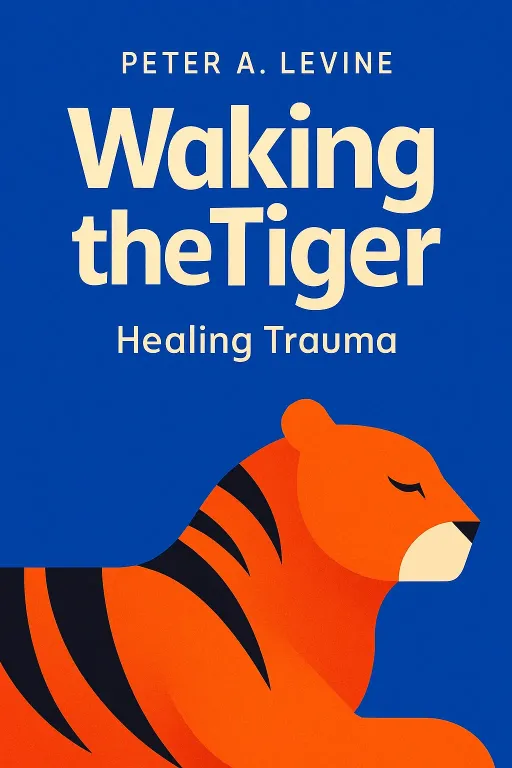
Dorcas Omotoso: Exactly. We go from social engagement to sympathetic mobilization. And if fight or flight fails, or if we are physically restrained, we drop all the way down into the immobilization shutdown state. Now, the tragedy of trauma is that a person can get stuck in this shutdown state. Levine shares the case of Nancy, a client he worked with early in his career. Nancy suffered from severe agoraphobia, migraines, and panic attacks. During a session, she went into a state of absolute terror, freezing completely. Her face turned pale, her breathing became shallow, and she was convinced she was dying. Levine, trusting his instincts, told her to imagine a tiger was chasing her and to run. This simple instruction tapped into her latent sympathetic mobilization system. Her legs began to make running movements, her body started to shake, and she finally discharged that frozen survival energy. She realized that her panic attacks were actually repressed memories of a traumatic tonsillectomy she had at age four, where she had been physically restrained and etherized, forcing her into a terrifying shutdown.
Prof. Eleanor Hart: That story is so vivid. The physical restraint combined with the terrifying threat of suffocation from the ether created a perfect storm for chronic immobilization. Her body had been trying to complete that escape response for decades. By guiding her to physically experience the running and the shaking, Levine helped her uncouple the intense fear from the physical state of immobility.
Dorcas Omotoso: Yes, and that uncoupling is the key to healing. Immobility itself is not inherently traumatic. We go into states of immobility when we sleep, when we meditate, or during intimacy. But when immobility is coupled with terror and helplessness, it becomes trauma. In Nancy's case, her body had associated any state of deep relaxation or stillness with the terrifying suffocation of the anesthesia. So, whenever she started to relax, her nervous system screamed danger, triggering a panic attack. By helping her complete the active defensive response of running, she was able to transition from shutdown, through mobilization, and finally back to a healthy, functioning social engagement system.
Healthcare Innovation and Digital Empathy
SECTION
Prof. Eleanor Hart: This has profound implications for how we design healthcare systems. Dorcas, you are deeply passionate about digital health, telehealth, and healthcare leadership. When we look at the current landscape, a lot of technology can feel cold, clinical, and highly disembodied. How can we take these somatic principles, the understanding of the nervous system's need for safety and connection, and apply them to healthcare innovation?
Dorcas Omotoso: This is the frontier of healthcare innovation, Eleanor. Think about telehealth. During a virtual consultation, we lose a lot of the physical, nonverbal cues that we rely on in person. But if we understand Polyvagal Theory, we know that the social engagement system is highly sensitive to facial expressions and vocal prosody, the rhythm and pitch of the voice. As digital health developers and clinicians, we need to design interfaces and training programs that emphasize digital empathy. This means ensuring high-definition video that allows for clear facial tracking, and training clinicians to use a warm, soothing, melodic tone of voice to actively calm the patient's nervous system through the screen. We can also integrate wearable technology that monitors heart rate variability, which is a direct measure of vagal tone. Imagine a digital health platform that detects when a patient's nervous system is shifting into a sympathetic fight-or-flight state and automatically prompts them with a gentle, somatic grounding exercise, like Levine's voo sound.
Prof. Eleanor Hart: Ah, the voo sound. Let us explain that to our listeners. Levine describes this as a simple, powerful way to stimulate the vagus nerve and vibrate the viscera. You take a deep breath and, on the exhale, make a sustained, low-pitched voooo sound, focusing on the vibration in your belly. It sends a direct, bottom-up signal of safety to the brain stem.
Dorcas Omotoso: Exactly. It is a physiological intervention that bypasses the cognitive mind entirely. As healthcare leaders, we need to champion these evidence-based, somatic practices. In leadership, we often focus so much on top-down strategies, policies, and procedures. But true leadership requires an understanding of the collective nervous system of our teams. Healthcare workers are experiencing unprecedented levels of burnout and moral injury, which are essentially chronic states of sympathetic hyperarousal and shutdown. If we want to foster innovation and resilience, we have to create a culture of psychological safety where staff feel seen, heard, and supported. We need to build physical and digital workspaces that allow for somatic decompression, places where clinicians can literally shake off the stress of a difficult shift.
Prof. Eleanor Hart: I love that concept of collective nervous system regulation. Levine notes that the human nervous system is designed to receive and offer a regulating influence to another person. We are co-regulators. If a nurse or a physician is in a state of chronic burnout and dysregulation, they cannot effectively co-regulate with their patients. The patient's neuroception will detect that underlying tension, which can hinder their healing process.
Dorcas Omotoso: Absolutely. It is a ripple effect. If we want to innovate in healthcare, we must start by healing the healers. We need to integrate somatic education into nursing and medical curricula. We need to teach clinicians how to track their own bodily sensations, how to recognize when they are shifting into shutdown or hyperarousal, and how to use simple tools like grounding, pendulation, and containment to return to equilibrium. By doing so, we not only improve clinician well-being, but we also dramatically enhance the quality of patient care. We move from a model of medicine that asks, what is wrong with you, to a somatic model that asks, what happened to you, and how is your body holding it?
Synthesis & Takeaways
SECTION
Prof. Eleanor Hart: This has been an incredibly rich conversation, Dorcas. We have covered so much ground, from the biological necessity of shaking off trauma, to the polyvagal map of our survival systems, and finally to the revolutionary potential of digital empathy and somatic leadership in healthcare. As we wrap up, what is the single most important takeaway you want our listeners, especially those in the healthcare and technology sectors, to carry forward from Peter Levine's work?
Dorcas Omotoso: I think the most profound realization is that the body possesses an innate, evolutionary wisdom for healing. Trauma is a fact of life, but as Levine beautifully writes, it does not have to be a life sentence. Whether you are a clinician, a technology developer, or a healthcare leader, our job is not to force healing from the top down, but to create the safe, supportive, and co-regulating environments that allow the body's natural capacity for recovery to unfold. We need to listen to that unspoken voice of the body and design our technology, our clinics, and our leadership styles to honor it.
Prof. Eleanor Hart: Well said, Dorcas. Thank you so much for sharing your profound clinical insights and your inspiring vision for the future of healthcare. And to our listeners, we leave you with this question to ponder: In your own life and work, how can you begin to step out of your cognitive mind and truly listen to the unspoken voice of your body? Until next time, stay grounded, stay curious, and keep listening.