The Art of Asking: How Better Questions Drive Better Outcomes.
Golden Hook & Introduction
SECTION
Nova: Alright, Atlas, five words. Give me your five-word review of leadership in the modern age. Go.
Atlas: Too many answers, not enough wonder.
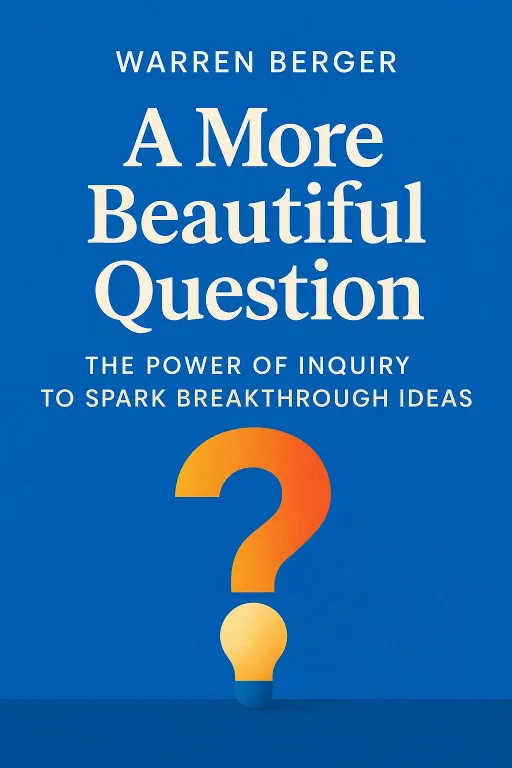
Nova: Oh, I love that! "Too many answers, not enough wonder." That's actually a perfect lead-in for today's deep dive. We're exploring the art of asking, and how better questions truly drive better outcomes. Our insights today are heavily influenced by two brilliant minds: Warren Berger, author of "A More Beautiful Question," and Edgar H. Schein, who gave us "Humble Inquiry."
Atlas: I'm curious. What brought these two to focus so intensely on questions?
Nova: That's a great initial question! Berger, a journalist by trade, spent years investigating how the world's most innovative leaders and companies consistently used powerful questions to spark breakthroughs. He's really a detective of inquiry. Schein, on the other hand, is a renowned organizational psychologist from MIT. He spent decades embedded in companies, observing how communication, or the lack thereof, shaped entire organizational cultures. He saw firsthand how genuine curiosity, expressed through what he termed 'humble inquiry,' could transform relationships and unlock hidden information. So, while one came from a journalistic pursuit of innovation and the other from a deep dive into human and organizational dynamics, they both converged on this undeniable truth: the question is often more powerful than the answer.
Atlas: That's fascinating. It's like they're tackling the same problem from different angles but arriving at the same conclusion. But it feels so counter-intuitive to how many of us are taught to lead.
The Power of Inquiry Over Answers
SECTION
Nova: Exactly! And that's our first core idea today: the power of inquiry over answers. The cold, hard fact is, leaders often fixate on providing answers, when the true power, the real leverage, lies in asking the right questions. Poor questions lead to superficial understanding and limited solutions. Great questions? They unlock deeper insights and foster genuine ownership.
Atlas: But wait, isn't a leader supposed to the answers? That's what we're paid for, right? To have all the solutions, to be the expert in the room? For someone who's building a team and trying to motivate them strategically, projecting that knowing posture feels essential.
Nova: I hear you. It's a deeply ingrained cultural expectation, especially in leadership. We reward certainty. We often equate leadership with having all the answers. But Berger argues that this mindset often stifles innovation and disempowers your team. Think about a classic scenario: a company is facing a declining market share for one of its flagship products. The CEO calls a meeting, outlines the problem, and then, feeling the pressure to provide direction, announces a new, aggressive marketing campaign as the solution.
Atlas: Happens all the time. Sounds decisive.
Nova: It does. But what if, instead, that CEO had started the meeting by saying, "We're facing a significant challenge with Product X. Before we jump to solutions, I want us to spend some time really understanding this is happening. What assumptions are we making about our customers that might no longer be true? What market shifts are we missing? And what if our competitors aren't the problem, but something internal is?"
Atlas: That’s a fundamentally different starting point. It forces a different conversation.
Nova: Absolutely. By asking those open-ended, challenging questions—the "Why?" and "What if?" questions—the CEO shifts the burden, and more importantly, the opportunity, back to the team. In a hypothetical scenario like this, perhaps a junior product manager, who's been quietly observing customer feedback on social media, speaks up. They reveal that customers are actually frustrated with a specific, under-the-radar feature that's become buggy, not the marketing.
Atlas: Oh, I see. So the cause of the problem wasn't what everyone assumed. The process of questioning uncovered a hidden truth.
Nova: Precisely. And the outcome? Not only do they fix the real problem, but that junior product manager now feels a profound sense of ownership and empowerment. The team learns to look beyond surface-level issues, and the leader strengthens their influence by demonstrating trust in their team's collective intelligence, rather than just their own. It’s a complete shift in dynamics.
Atlas: That makes so much sense. It's not just about getting to the right answer, it's about you get there and who's involved. For someone like me, who's hands-on and wants to build a strong team, I can see how that cultivates a different kind of engagement. But how do you even start to rewire that instinct to just jump in with the solution? It feels like it goes against years of conditioning.
Cultivating a Culture of Curiosity and Empowerment
SECTION
Nova: That's a brilliant segue, Atlas, because it brings us to our second core idea, which is all about cultivating a culture of curiosity and empowerment through what Edgar Schein calls "Humble Inquiry." While Berger focuses on the power of the question itself, Schein emphasizes the we ask—with genuine curiosity, aiming to build relationships and uncover information, rather than just telling people what to do.
Atlas: Humble inquiry? That sounds a bit... soft. As a strategic motivator, I need to project confidence. Is there a risk of appearing indecisive or weak by being 'humble'? I mean, a leader has to lead, right?
Nova: I understand that concern completely. Many leaders worry that showing vulnerability or admitting they don't have all the answers will erode their authority. But Schein argues the opposite. Humble inquiry isn't about being weak; it's about strategic vulnerability and genuine curiosity. It's asking questions like, "What do you think is going on here?" or "How are you seeing this situation?" or "What can I do to help you achieve this?" with a real desire to understand, not to test.
Atlas: Okay, so it’s not about acting like you know nothing, but genuinely wanting to know what know, or how feel.
Nova: Exactly. Let me give you another example. Imagine a team struggling to meet its monthly targets. The leader, feeling the pressure, typically might say, "We need to work harder. Here's what I want you all to do: X, Y, and Z." The team might comply, but they're likely disengaged, maybe even resentful.
Atlas: And probably burning out quickly. I imagine a lot of our listeners who manage high-pressure teams can relate to that.
Nova: Right. Now, picture that same leader, instead, approaching a team member and genuinely asking, "I've noticed we're struggling this month. From your perspective, what's really getting in the way? What challenges are you facing that I might not be aware of?" And then, crucially, actively listening to the response without interrupting or judging.
Atlas: I can see how that would change the entire dynamic immediately. It shifts from a directive to a partnership.
Nova: It does. Through this humble inquiry, the leader might discover that the team is grappling with an outdated software system, or a communication breakdown between departments, or even a personal issue that's affecting morale. Things the leader would never have known if they just issued commands. By asking, and truly listening, the leader builds trust. They empower the team to articulate their own problems and, often, to propose their own solutions.
Atlas: That makes sense. It's not about being weak, it's about being strategic. It strengthens the team's ability to find their own solutions, and that, in turn, strengthens the leader's influence because they're seen as a facilitator, not just a taskmaster. For someone building a team, how do you actually implement 'humble inquiry' without it feeling forced? Because sometimes, that genuine curiosity can be hard to fake.
Synthesis & Takeaways
SECTION
Nova: That's the key, isn't it? It has to be genuine. The synthesis here is that both Berger and Schein are essentially telling us that great leadership is less about having all the answers and more about mastering the art of asking the right questions. Berger's "More Beautiful Question" is about sparking innovation and breakthroughs, often by challenging assumptions. Schein's "Humble Inquiry" is about building relationships, fostering trust, and empowering your team by genuinely seeking to understand their perspective.
Atlas: So it's really about leadership as an act of discovery, not just delivery. For a team architect, it's about building a foundation of trust through curiosity, and for a growth seeker, it’s about unlocking new potential in yourself and others. This makes me think of the "Tiny Step" we often talk about.
Nova: Absolutely. And our tiny step for today is perfectly aligned: Before your next team meeting, prepare three open-ended questions designed to challenge assumptions or encourage new thinking, rather than seeking simple affirmations. Don't ask, "Does everyone agree with the plan?" Ask, "What's one potential pitfall we haven't considered in this plan?" or "If this plan fails, what will be the most likely reason?"
Atlas: That's a tangible takeaway right there. No more 'Any questions?' just... better questions. It's about shifting from an endpoint of knowing to a starting point of learning.
Nova: Exactly. Imagine the collective intelligence you unleash when everyone feels empowered to ask, and to answer, even the toughest questions. That's where true impact and lasting growth happen.
Atlas: That gives me chills. It’s a powerful shift in perspective.
Nova: This is Aibrary. Congratulations on your growth!