Deepening Bonds in the Digital Age
Golden Hook & Introduction
SECTION
Nova: Networking online is easy, right? Just add, like, follow, share. But what if all that digital "connecting" is actually making you feel alone, superficial, and less genuinely impactful? We’re peeling back the layers today.
Atlas: Whoa, Nova, that's a bold statement right out of the gate! I think a lot of our listeners, especially those building a professional presence, feel that tension. It's like we're constantly 'on,' but are we really with anyone?
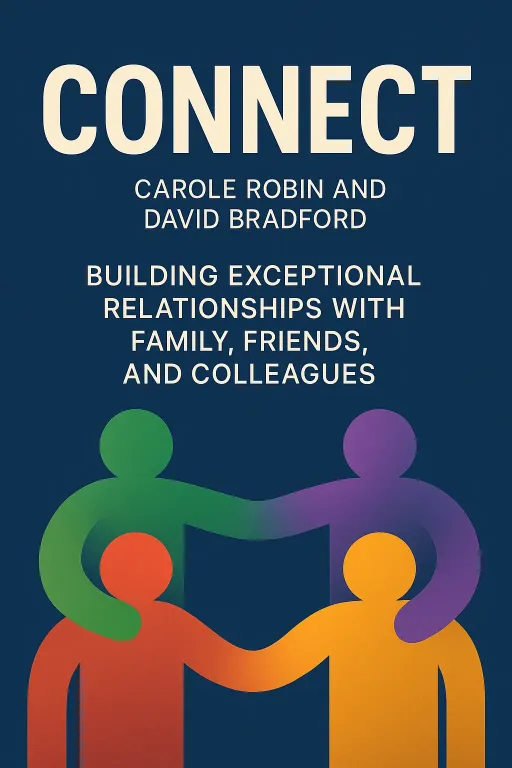
Nova: Exactly! It’s the paradox of our hyper-connected world. And it’s why we’re diving into two fascinating books today that, together, offer a powerful antidote. First, we have by David Bradford and Carole Robin. This book springs from Stanford University’s legendary interpersonal dynamics course, often affectionately called the "touchy-feely" class, which has profoundly shaped generations of leaders.
Atlas: Oh, I've heard whispers about that Stanford course! It’s known for being transformative, almost like a rite of passage. But it sounds incredibly analog, focused on in-person, deep interaction. How does that square with the second book?
Nova: That’s the brilliant part of the pairing! The second book we’re looking at is Brent Cole's. Cole takes Dale Carnegie's timeless human relations strategies and updates them for our modern, screen-dominated lives, teaching us how to apply them effectively through social media, virtual meetings, and online networking.
Atlas: So, we have the foundational, deep-dive human connection from Stanford, and then the strategic, digital application of classic influence. My first thought is, are these even compatible? Or are we just talking about two different beasts entirely?
The Power of Deep Connection in the Digital Age
SECTION
Nova: That's the question, isn't it? And it’s where the magic happens. Let’s start with. The core idea is that truly deep relationships—the ones that fuel us, help us grow, and make us feel truly seen—are built on three pillars: vulnerability, curiosity, and authenticity.
Atlas: Vulnerability? In a professional digital space? I imagine a lot of our listeners, especially those in competitive fields, might hear that and immediately think, "Risky. Absolutely risky." We're taught to protect our image, to project strength.
Nova: That's a completely natural reaction, Atlas, and it’s a valid concern if vulnerability is misunderstood. The authors aren't advocating for oversharing or emotional dumping. Instead, they frame vulnerability as the willingness to be seen, to share your true thoughts, feelings, and even your struggles, in a way that invites connection rather than judgment. It’s about being real, not perfect.
Atlas: So you’re saying it's not about airing all your dirty laundry on LinkedIn, but more about acknowledging, say, a challenge you faced on a project, and how you learned from it?
Nova: Exactly! Imagine a team leader, let’s call her Sarah, who’s managing a remote team. Deadlines are tight, and morale feels low. Sarah could just push harder, demand more. But after reading, she decides to try something different. In a team video call, she admits, "I'm feeling the pressure on this project, and I know you all are too. I'm a bit worried about hitting our targets, but I'm also really proud of the effort I'm seeing."
Atlas: Wow. That's a shift. Most leaders might feel that's exposing a weakness.
Nova: It can feel that way initially. But what Sarah is doing is demonstrating appropriate vulnerability. She’s not saying, "I give up!" She’s sharing her authentic experience, her concern, and her appreciation. And what happens next is crucial: she follows it with genuine curiosity. She asks, "What are you all finding most challenging? What support do you need from me?"
Atlas: That’s incredible. I can see how that immediately creates a sense of psychological safety. Her team probably feels permission to be honest about their own struggles, rather than just nodding along.
Nova: Precisely. That moment of shared humanity, that authentic exchange, transforms the team dynamic. They move from just being colleagues working on a task to a group of people facing a challenge together. The outcome? They start collaborating more openly, sharing solutions, and ultimately, they not only hit their targets but feel more connected and resilient as a unit. It’s a powerful testament to how vulnerability, when coupled with curiosity, builds trust and deepens bonds, even through a screen.
Strategic Influence and Rapport-Building in Digital Spaces
SECTION
Atlas: That story about Sarah really drives home the power of deep connection. But what about the other side of the coin? How do you even to that level of connection in the first place, especially if you're trying to expand your network or influence a broader audience in the digital world? It feels like we're constantly shouting into the void sometimes.
Nova: That's where Brent Cole's steps in. While is about depth, Cole focuses on strategic reach and rapport-building. He essentially asks: how do we take Dale Carnegie's timeless principles—like showing genuine interest in others, remembering names, and making people feel important—and apply them to the often-impersonal digital landscape?
Atlas: Isn't that just... marketing? Or, dare I say, manipulation with a digital veneer? I mean, "winning friends and influencing people" sounds a bit transactional when you put it that way.
Nova: That's a fair challenge, and it's a critical distinction. Cole emphasizes that the digital age amplifies both authenticity and inauthenticity. The core isn't about manipulation; it's about genuine engagement, amplified by digital tools. For example, Carnegie stressed remembering names. In the digital age, that translates to paying attention to someone's profile, their recent posts, their interests. It's about showing you've actually or what they've shared.
Atlas: So, it's not just a generic "Great post!" comment, but something specific like, "That point you made about AI ethics really resonated with me, especially given your background in philosophy."
Nova: Exactly! It’s the digital equivalent of making someone feel important by truly seeing and acknowledging them. Another Carnegie principle is to "become genuinely interested in other people." Online, this means actively seeking out content from people you admire or want to connect with, engaging thoughtfully, asking open-ended questions in comments, and sharing their valuable insights with your network.
Atlas: I can see how that builds rapport. It’s like you’re saying, "I value what you have to say," without having to physically be in the same room. It’s a strategic way to open doors.
Nova: It absolutely is. Think of someone like a "Strategic Builder" from our audience—someone looking to expand their professional influence. They might use LinkedIn not just to scroll, but to identify key players, genuinely engage with their content, and then, crucially, use that engagement as a bridge to a more direct, personalized message or even a virtual coffee. It's about being intentional with every digital interaction, seeing it as an opportunity to build a connection, however small, rather than just consuming content passively.
Balancing Depth and Reach: Cultivating Authentic Digital Presence
SECTION
Atlas: Okay, Nova, this is where it gets really interesting. We’ve talked about the deep, vulnerable connection from and the strategic, rapport-building influence from. The deep question on my mind, and I'm sure for many listeners, is: how do we actually these? How do we cultivate both meaningful influential relationships in a world that often demands both?
Nova: That’s the ultimate challenge, isn’t it? The magic happens when you stop seeing them as separate and start viewing them as complementary. gives you the bedrock—the "why" and "how" of truly meaningful human interaction. gives you the "where" and the "what" for initiating and sustaining those interactions across digital platforms.
Atlas: So, it's not either-or, it's both-and. You use the strategic reach to find the right people, and then you apply the depth principles to actually build something lasting.
Nova: Precisely. Imagine you've identified a potential mentor or collaborator using Cole's digital strategies—you've engaged with their posts, shared their work, shown genuine interest. That creates a slight opening, a sense of familiarity. When you then reach out for a virtual coffee, you don't just talk about business. You bring in the principles: you listen with intense curiosity, ask thoughtful questions that go beyond surface-level, and share a touch of your own authentic self or a challenge you're genuinely grappling with.
Atlas: So, you're using the digital tactics to get the conversation, and then the vulnerability and authenticity to make that conversation actually. It's like the digital tactics are the invitation, and the principles are the quality of the party itself.
Nova: That's a brilliant analogy, Atlas! It means your digital presence isn't just a highlight reel; it becomes a genuine reflection of who you are and what you value. The tiny step we can all take this week is to choose one online interaction and consciously apply a principle—like asking a truly curious question—alongside a "Digital Age" influence tactic to build rapport.
Atlas: That’s such a tangible way to approach it. Instead of just scrolling or posting generically, you’re being intentional. You're saying, "I'm going to find one person, connect with them on a deeper level, and use the digital tools to facilitate that." That could be incredibly powerful for someone who wants to amplify their influence without sacrificing their integrity.
Synthesis & Takeaways
SECTION
Nova: Absolutely. The profound insight here is that the digital age doesn't have to be a race to the bottom of superficiality. It’s actually an unparalleled opportunity to deepen our bonds and broaden our influence simultaneously. The true power doesn't come from having thousands of fleeting connections, but from strategically cultivating meaningful ones, even if that means fewer, but richer, interactions.
Atlas: That gives me chills, honestly. It reframes the entire digital experience. It's not about being a performative influencer; it's about being a genuinely connected human being who uses digital tools thoughtfully. It’s about impact, not just impressions.
Nova: Exactly. So, for all our listeners out there, your challenge this week is simple but profound: pick one online interaction. Maybe it's a comment on a colleague's post, a response to a direct message, or initiating a virtual coffee with someone new. Apply the curiosity and authenticity from, and the genuine interest and personalized engagement from. See how it shifts the dynamic. You might be surprised at the depth and influence you can cultivate.
Atlas: I love that. It’s a tangible step towards building a digital life that feels less like a performance and more like a true extension of yourself.
Nova: And remember, true influence always stems from genuine connection.
Atlas: This is Aibrary. Congratulations on your growth!