Academic Edge: Focus & High-Performance Study
Golden Hook & Introduction
SECTION
Nova: What if the secret to academic excellence isn't more hours hunched over textbooks, but fewer? Today, we're flipping the script on traditional study habits to reveal the surprising truth behind truly high-performance learning.
Atlas: Whoa, fewer hours? That sounds almost heretical in the world of all-nighters and caffeine-fueled cram sessions. Are you telling me I've been doing it wrong all this time?
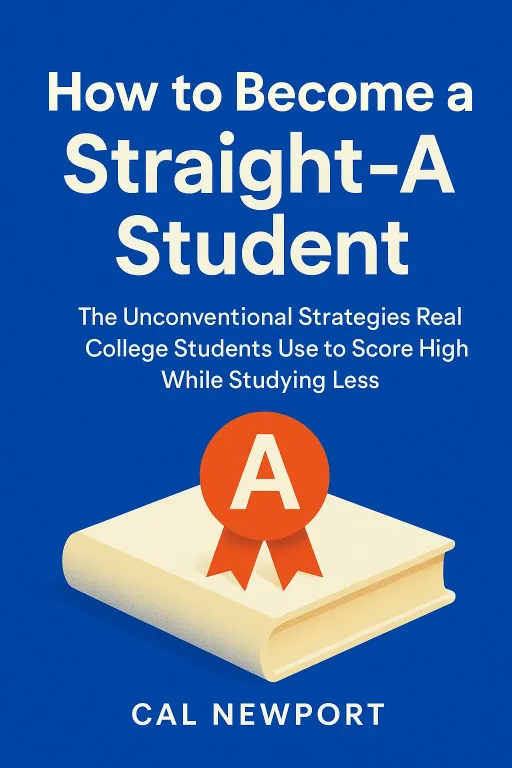
Nova: Well, Atlas, what if I told you the conventional wisdom of "study harder, study longer" is actually a trap? Our deep dive today is into two phenomenal books that challenge that very notion. We're talking about Cal Newport's acclaimed work, "How to Become a Straight-A Student," and Brian Tracy's influential classic, "Focal Point."
Atlas: Cal Newport, the deep work guru? And Brian Tracy, the productivity legend? This is a powerhouse combination. I know Newport himself is a professor at Georgetown and earned his PhD from MIT, so he definitely walked the walk when it comes to academic success. And Tracy has been shaping personal development for decades.
Nova: Exactly. Newport isn't just theorizing; he's distilling strategies from top students and his own experience. His insights come from interviewing and observing students who consistently achieve top grades without burning out. And Tracy, with his extensive career in personal and professional development, brings that strategic lens to everything he touches. His work has been a cornerstone for countless individuals seeking to maximize their potential. Together, they offer a blueprint not just for studying, but for mastering the art of focused academic output.
Atlas: So, it's not just about getting good grades, but about you get them, and maybe even enjoying the process more? I'm intrigued. For anyone out there who feels like they're just grinding away, who wants to build better habits and think clearer, this sounds like a breath of fresh air.
Nova: Absolutely. Today, we'll first unpack Newport's revolutionary approach to studying smarter, not just longer, giving you the tactical edge. Then, we'll shift gears to Brian Tracy's insights on identifying your academic focal points for maximum impact, providing that strategic direction.
Deep Dive into Core Topic 1: The Art of Efficient Study (Cal Newport)
SECTION
Nova: So, Atlas, have you ever felt that overwhelming pressure to just keep studying, even when you know you're not really absorbing anything? That feeling that more time equals better results?
Atlas: Oh, I know that feeling all too well. It’s like you’re just physically present with the material, but your brain checked out an hour ago. You feel guilty if you stop, but unproductive if you continue. It's a common struggle for anyone trying to master complex subjects.
Nova: That's precisely the myth Cal Newport debunks in "How to Become a Straight-A Student." He argues for quality over quantity. It's about designing your study sessions for maximum efficiency, almost like an athlete training smarter, not just longer. He found that straight-A students weren't necessarily spending the most hours, but the most hours.
Atlas: So, how does one actually that? What are these magical techniques that make fewer hours more effective?
Nova: One of his cornerstone strategies is. This isn't just about scribbling down what the lecturer says. Newport advocates for transforming your lecture notes into study guides. Think about it: you're in class, taking notes. As soon as that class ends, or at least that same day, you go back through those raw notes and actively rewrite, summarize, or reorganize them into a coherent study guide.
Atlas: Wait, isn't that just re-writing what you already wrote? That sounds like work, not less, especially when you're already swamped with other responsibilities.
Nova: That's the common misconception! It’s not about transcription; it’s about. When you immediately engage with the material again, you're forcing your brain to identify the core concepts, make connections, and structure the information in a way that makes sense to. It’s like having a conversation with your future self, clarifying what you understood and what needs more attention. This active engagement prevents the passive re-reading trap later, where you just skim over familiar words without truly recalling the meaning. It’s about front-loading the cognitive effort for long-term retention.
Atlas: I get it. It’s the difference between merely seeing the words and actually the information. That makes sense. That's going to resonate with anyone who struggles with remembering details from a lecture a week later. So, what’s another one of these efficiency boosters?
Nova: It leads directly into the next big one:. Instead of passively re-reading chapters or notes, you frequently test yourself. Close the book, look away from your notes, and try to retrieve the information from scratch. Ask yourself questions like, "What were the three main points of this chapter?" or "Can I explain this concept in my own words without looking?"
Atlas: So, like flashcards, but more... intense? It sounds like a mental workout, trying to pull things out of thin air.
Nova: Precisely! It's a mental workout. Every time you successfully pull information from your memory, you're strengthening that neural pathway. It's like a muscle building strength. The harder you work to retrieve it, the more deeply embedded it becomes. Passive re-reading creates an illusion of knowledge, making you feel familiar with the material, but it doesn't build the retrieval strength you need during an exam. It’s challenging yourself to perform, not just to review.
Atlas: That’s a great way to put it. We've all had that moment where you know you've "seen" the answer, but you just can't pull it out when it counts. Active recall sounds like it directly addresses that. It’s like, if you can teach it, you know it.
Nova: And to make all of this possible, Newport emphasizes. This means creating dedicated, distraction-free study blocks. No phone notifications, no open social media tabs, no background TV. Just you and the material, for a focused period. He calls it "deep work" in other contexts, and it applies perfectly to studying. He argues that even short, intensely focused sessions are far more effective than long, interrupted ones.
Atlas: Oh, this one hits home for a lot of us. In our hyper-connected world, even a 15-minute distraction-free block feels like a Herculean task sometimes. The constant pings and alerts are designed to pull our attention. But I can see how that laser-like focus would supercharge those strategic note-taking and active recall sessions. Without it, the other strategies just can't take root.
Deep Dive into Core Topic 2: Strategic Focus & Priority (Brian Tracy)
SECTION
Nova: And speaking of that laser-like precision, that brings us perfectly to Brian Tracy's "Focal Point." If Newport gives you the of efficient study, Tracy gives you the and – how to ensure you're applying that efficiency to the right things.
Atlas: So, it's not just about studying well, but about studying the things well? Because, let's be honest, in academia, especially with diverse academic schedules, everything can feel like a priority. You're juggling multiple classes, projects, maybe even work.
Nova: Exactly! Tracy's central thesis is about the power of concentrated effort and priority setting. He argues that most people are busy, but not necessarily productive. The key is. In an academic context, this means pinpointing the tasks that will yield the greatest impact on your understanding, your grade, or your overall learning objectives.
Atlas: How do you even figure out what's "highest value" when you have a syllabus full of readings, essays, and problem sets, and everything feels equally important? It's a common dilemma for students and professionals alike.
Nova: It requires a strategic mindset. It might mean spending more time deeply understanding a core concept that underpins the entire course, rather than memorizing a list of dates that might only appear as a single multiple-choice question. It’s about asking: what are the few things, if I master them, that will make everything else easier or less critical? Not all study hours are created equal; some are gold, others are lead. It's like a chef focusing on the quality of their main ingredients, knowing they'll elevate the whole dish.
Atlas: That makes sense. It’s about understanding the hierarchy of importance, not just checking boxes. So, it's not just about doing tasks, but doing the tasks. That’s a powerful distinction.
Nova: Which ties directly into his emphasis on, or the Pareto Principle. Tracy suggests that 80% of your academic results often come from 20% of your effort. Applied to studying, it means concentrating your energy on that crucial 20% of the material or tasks that will give you the biggest return.
Atlas: So you're saying I don't need to study? That's a bold claim for a student with a packed schedule!
Nova: Not that you don't need to study everything, but that you need to prioritize where your goes. It's about proportionate effort. If a concept is foundational for the entire course, or a certain type of problem makes up 50% of the exam, that's your 20% that deserves 80% of your focused attention. It's about making smart choices about where to deploy your limited time and energy, much like an investor allocates capital to high-growth areas.
Atlas: Okay, so it’s about maximizing leverage. That’s a different way to think about a syllabus. Instead of a flat list of demands, it’s a landscape of strategic opportunities. It's about getting the most bang for your academic buck.
Nova: And to ensure you actually those high-impact activities, Tracy stresses by starting with your most important task first. He advocates for tackling the "biggest frog" early in the day, when your willpower is highest and distractions are often fewer. That initial surge of accomplishment can then fuel the rest of your day.
Atlas: Oh, this one hits home for a lot of us. The urge to clear out the small, easy tasks first, or just distract ourselves, is so strong. But I can totally see how getting that most critical thing done first would create massive momentum and reduce anxiety. It's almost like a psychological hack to conquer the day.
Synthesis & Takeaways
SECTION
Nova: So, when you combine Newport's tactical genius for efficient study with Tracy's strategic wisdom on focus, you get an incredibly powerful academic accelerator. Newport gives you the tools to learn smarter; Tracy gives you the direction to apply those tools to what truly matters. It’s about combining smart methods with strategic focus.
Atlas: That's a brilliant synthesis. It's not just about working hard, and it's not just about having a great strategy; it's the potent combination of both. It feels like this approach directly addresses the deep question we often hear: How can you integrate focused, high-impact study sessions into your diverse academic schedule without sacrificing your well-being?
Nova: Precisely! The answer isn't to cram more in or sacrifice sleep. It's to be incredibly intentional. By applying strategic note-taking and active recall to your highest-value activities in distraction-free blocks, you actually the total time needed and the associated stress. You protect your well-being by being more effective, not by grinding yourself down. It’s about creating an academic edge that supports a balanced life.
Atlas: I love that. It's about working to create more space, not just for academics, but for everything else that contributes to a well-rounded life. For anyone looking to build better habits and think clearer, this is actionable gold. It truly transforms the learning journey.
Nova: Absolutely. So, for our listeners, here’s a tiny, powerful step you can take right away: for your next study session, identify your single most important task. Commit to working on it for just 15 minutes with zero distractions, and try an active recall technique from your notes. Just 15 minutes to kickstart that new, focused habit and experience the power of concentrated effort.
Atlas: That’s a perfectly manageable micro-action. It's a great way to start building that academic edge. This whole conversation makes me rethink how I approach learning in general, not just formal study. It’s about valuing quality over sheer volume and mastering the art of deliberate practice.
Nova: It truly is. Embracing the journey of learning means constantly refining we learn, making every step forward progress.
Atlas: Well said. This is Aibrary. Congratulations on your growth!