The Science of Self-Care: How Food Rewires Your Brain and Body
Golden Hook & Introduction
SECTION
Nova: Have you ever felt like you're in a constant battle with food? You try to eat well, you follow the rules, but the cravings win, and you're left with this heavy feeling like you've failed. Again. What if I told you that feeling of failure is by design? That the game has been rigged from the start?
chengzi353: That’s a powerful thought. It immediately shifts the focus from personal blame to curiosity about the system itself.
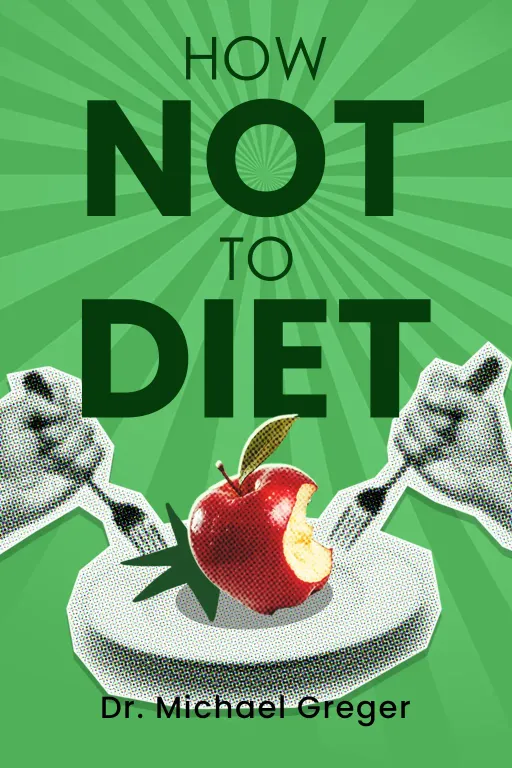
Nova: Exactly! And that's the journey we're taking today. We're diving into Dr. Michael Greger's "How Not to Diet," a book that acts like a detective story for our own bodies. And I'm so glad to have you here, chengzi353, because your analytical mind is perfect for this. Today, we're going to explore this from three powerful angles. First, we'll expose the invisible systems designed to make us overeat.
chengzi353: The external forces. I like that.
Nova: Then, we'll dive into the shocking chemistry of how certain foods hijack our brain's reward centers, which directly impacts our emotions.
chengzi353: The internal battle. That's where the self-care piece really comes in.
Nova: And finally, we'll uncover the revolutionary science of the gut microbiome and how nurturing it might be the ultimate act of self-care. So, let's start with that first idea: the rigged game. chengzi353, in your own exploration of self-care, how much does the idea of 'willpower' come up?
chengzi353: Constantly. It's often framed as the core of self-discipline. You either have it or you don't. But the book suggests that might be a complete misreading of the situation.
Deep Dive into Core Topic 1: The Engineered Battlefield
SECTION
Nova: It really is. Dr. Greger paints a picture of what he calls a "Toxic Food Environment," where our choices are being manipulated in ways we don't even notice. There's this one experiment in the book that just blew my mind. It's the French Accordion Music experiment.
chengzi353: Oh, I'm intrigued. Tell me more.
Nova: Okay, so picture a grocery store. Researchers set up a display with French and German wines, pretty much side-by-side. On alternate days, they played stereotypical music over the speakers. One day, it was French accordion music. The next, it was German Bierkeller music, you know, oompah-pah stuff.
chengzi353: Okay, I can picture it.
Nova: Here's the wild part. On the days French music was playing, French wine outsold German wine by a ratio of three to one. And on the German music days? The exact opposite happened. German wine flew off the shelves.
chengzi353: That's... astonishing. So the music was directly influencing what people bought?
Nova: Directly. But here’s the kicker. When the researchers interviewed the shoppers afterward and asked if the music had influenced their choice, the vast majority—we're talking almost everyone—said no. They had no idea. They'd make up other reasons, "Oh, I just felt like a French red tonight." Their conscious minds were completely unaware of the subconscious push.
chengzi353: Wow. That completely reframes the guilt so many people feel. It's not a simple lack of willpower when you grab that candy bar at the checkout. It's that the entire environment—the placement, the packaging, maybe even the background music—was meticulously engineered to make you do it.
Nova: Precisely. It’s what the book calls "credibility engineering" and "marketing excesses." The National Academy of Medicine's report on food ads opens with two simple words: "Marketing works." It's not a fair fight.
chengzi353: It's not. And knowing that, it allows for so much more empathy. Both for ourselves when we struggle, and for others. We're not just making choices in a vacuum; we're navigating a psychological minefield. That understanding, in itself, is a form of self-care. It replaces judgment with awareness.
Nova: I love that framing. Replacing judgment with awareness. And that engineering goes beyond just marketing—it goes right into the chemical makeup of the food itself, which brings us to our next point: the hijacking of our brain chemistry. This is where it really connects to our emotions, isn't it?
Deep Dive into Core Topic 2: The Chemistry of Cravings
SECTION
chengzi353: Absolutely. The emotional rollercoaster of cravings and guilt is something so many people can relate to. It feels so personal, so deep-seated.
Nova: Well, the book shows just how biological that feeling is. Dr. Greger talks about how the food industry designs what are called "hyperpalatable foods." They're not just trying to make food taste good; they're trying to find the "bliss point." That's the exact amount of salt, sugar, and fat that maximizes craveability and makes it almost impossible to stop eating.
chengzi353: The "bliss point." That sounds both amazing and terrifying.
Nova: It is! And the book highlights this concept of "hedonic synergy." It's the idea that sugar and fat together are more rewarding to the brain than either one alone. Think about it: ice cream, donuts, chocolate bars. It's almost always a combination. This synergy lights up the same reward pathways in our brain as addictive drugs. There was a study, and this is just stunning, where rats that were already addicted to cocaine were given a choice: they could have more cocaine, or they could have sugar-sweetened water.
chengzi353: And what did they choose?
Nova: The vast majority chose the sugar. Nine out of ten rats preferred the sweet taste over one of the most addictive drugs on the planet.
chengzi353: That is a powerful illustration. So when we're struggling with a craving for something sweet and fatty, it's not just a simple desire. It's a deeply ingrained biological drive being expertly manipulated.
Nova: Exactly. And processing makes it worse. A whole potato has fiber and water. It's satisfying. But when you process it into a potato chip—stripping out the water and fiber and adding fat and salt—you concentrate the calories and speed up their absorption. The book shows that these ultra-processed foods are the ones most associated with addictive-like eating behaviors.
chengzi353: You know, that's a huge insight for self-care. It means that when you're reaching for that bag of chips or pint of ice cream, it's not a moral failing. It's a predictable chemical and emotional response to a deliberately engineered product. Approaching that moment with curiosity—'Ah, there's that bliss point calling to me'—instead of self-criticism, is a profound shift. It turns a moment of weakness into a moment of understanding.
Nova: That's so well put. It’s about understanding the 'why' behind the craving. And if we understand the external and internal forces working against us, the book reveals we also have a powerful force working us. We have trillions of tiny allies on our side, if we just know how to feed them.
Deep Dive into Core Topic 3: The Microbiome Revolution
SECTION
chengzi353: Okay, this sounds like the hopeful part of the story. Trillions of allies?
Nova: Trillions. I'm talking about our gut microbiome. This is where the science gets really exciting and, frankly, a little weird. The book tells this absolutely shocking true story that proves just how powerful these microbes are. A 32-year-old woman, who had been a normal weight her whole life, developed a severe intestinal infection. The best treatment was a fecal transplant.
chengzi353: A... fecal transplant. Okay.
Nova: Stay with me! The donor was her daughter, who was healthy but overweight. The transplant cured the infection, which was fantastic. But then, something strange happened. The woman, despite eating the same and exercising the same, started gaining weight. She gained over 40 pounds and became clinically obese. Her doctor said she felt like "a switch had been flipped inside her body" and she just couldn't lose the weight.
chengzi353: So she... she caught obesity? From the transplant?
Nova: In a way, yes! She inherited the metabolic profile of her daughter's gut bacteria. It's a game-changing story because it proves that our gut flora can play a pivotal role in how our bodies manage weight.
chengzi353: That is a complete paradigm shift. It means self-care isn't just about 'me,' it's about the entire ecosystem I'm hosting. It's not just about what I want to eat; it's about what my microbes need to eat. It's... ecosystem management.
Nova: Ecosystem management! I love that. And what do these good microbes eat? They eat fiber. Dr. Greger calls fiber "comfort food for your colon." When we eat fiber-rich foods like beans, whole grains, and vegetables, our good bacteria ferment it and produce these amazing compounds called short-chain fatty acids, or SCFAs.
chengzi353: And what do those do?
Nova: They're like little messengers. They get into our bloodstream and tell our brain to turn down our appetite. They boost our metabolism. They reduce inflammation. They are the key to that natural feeling of satiety that processed foods are designed to short-circuit.
chengzi353: So, by eating fiber, we're not just filling ourselves up. We're actively cultivating an internal pharmacy that helps regulate our weight and mood for us. That's a much more empowering and collaborative way to think about eating.
Synthesis & Takeaways
SECTION
Nova: It really is. And that brings everything together so perfectly. When we look at the insights from "How Not to Diet," it's a powerful three-part story. First, we learned that the system is engineered against us through marketing and a toxic food environment.
chengzi353: Which gives us permission to be more empathetic with ourselves.
Nova: Exactly. Second, we saw how our brain chemistry can be hijacked by hyperpalatable, processed foods, turning cravings into a biological, not a moral, issue.
chengzi353: Which allows us to approach our struggles with curiosity instead of judgment.
Nova: And finally, we've just discovered that we can fight back by nurturing our gut microbiome—our inner ecosystem—with the one thing it craves: fiber from whole plant foods.
chengzi353: It's a beautiful reframe. Instead of the old, punishing question, 'What should I restrict today?', the book really encourages us to ask a more compassionate and proactive one: 'How can I best care for my inner ecosystem today?'
Nova: I love that. It's not about deprivation at all.
chengzi353: Not at all. Maybe that care just looks like adding a serving of beans to your salad, or choosing an apple over apple juice. It’s a small act of radical nourishment. It’s a shift from a mindset of fighting your body to a mindset of feeding your allies. And that, to me, feels like the truest form of self-care.