The Art of Adapting and Unlearning
Golden Hook & Introduction
SECTION
Nova: Atlas, five words to describe something you you knew, but had to completely unlearn to make progress?
Atlas: Oh, that's easy. "Multitasking makes me more productive."
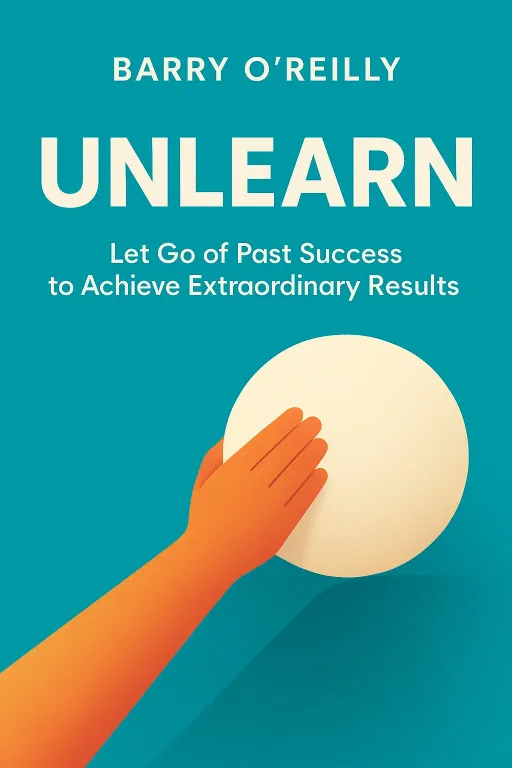
Nova: Classic! And, as it turns out, profoundly wrong. That’s actually a perfect lead-in to what we’re unraveling today: the profound art of unlearning. We're diving deep into two fascinating perspectives: Barry O'Reilly's insightful book, "Unlearn," and the timeless educational critique, "How Children Fail" by John Holt. O'Reilly, with his background as a successful tech entrepreneur and leader, brings a really practical, systematic approach to shedding outdated habits. And Holt, a pioneering voice in progressive education, offers a foundational understanding of how fear and rigid systems can stifle our natural capacity for growth.
Atlas: So it's not just about learning things, it's about actively dismantling the old. That sounds… exhausting, but also incredibly necessary for anyone feeling stuck. My mind immediately goes to people who are just overwhelmed by all the options out there, trying to figure out where to even start.
Nova: Exactly. Because sometimes, the biggest obstacle isn't what you know, but what you you know, or what worked in the past.
The Paradox of Past Success
SECTION
Nova: That brings us to our first core idea, which O'Reilly champions so brilliantly: the paradox of past success. He argues that the very strategies, habits, and assumptions that propelled us to where we are today can become the biggest roadblocks to where we need to go next.
Atlas: Wait, are you saying that my past achievements could actually be sabotaging my future? That feels incredibly counter-intuitive. I mean, we’re taught to build on our successes, right?
Nova: Absolutely. And that's precisely the paradox. Imagine a company, let's call it "Apex Innovations." For years, their success was built on a specific product line and a highly centralized decision-making structure. They dominated their market. Everyone praised their efficiency.
Atlas: Sounds like a dream. High-fives all around.
Nova: For a time. But then, the market shifted. New, agile competitors emerged with disruptive technologies. Apex Innovations, despite its history of winning, found itself struggling. Their 'best practices' for product development were too slow. Their centralized command-and-control structure couldn't respond fast enough to rapid changes. Their leaders were clinging to the belief that "this is how we've always done it, and it's always worked."
Atlas: So their very success created a kind of inertia. It sounds like they were blinded by their own shine. But how do you even identify that? How do you figure out what to unlearn when it's so deeply ingrained and has been validated by years of profit? For someone trying to make sustained progress, this is a huge hurdle.
Nova: That’s where O'Reilly introduces his "unlearn cycle." It starts with identifying the outdated assumption. For Apex, it was "our product development cycle is perfect" or "only top leadership makes strategic decisions." The next step is actively questioning it, then experimenting with new approaches, and finally, relearning. It's about creating a safe space for controlled failure to discover new, better ways.
Atlas: So it’s not just about being flexible, it’s a deliberate, almost surgical process of dismantling. I can see how that would be terrifying for some leaders, especially if their identity is tied to those past successes. It takes real courage to admit that what got you here might not be enough.
Nova: It absolutely does. O'Reilly emphasizes that leadership is crucial here. They have to model the unlearning behavior, showing that it's okay, even necessary, to challenge the status quo, even if it was status quo. Otherwise, people will just cling to the comfortable, albeit outdated, methods. And that's where the deeper, more psychological aspect of unlearning comes in, which John Holt explored so profoundly.
Unseen Chains: How Fear and Rigidity Block Natural Adaptation
SECTION
Nova: This naturally leads us to the second key idea, which often acts as the silent saboteur of O'Reilly's proactive unlearning: the unseen chains of fear and rigidity. John Holt, though writing about children in classrooms, offers a profound metaphor for how fear of failure and rigid structures stifle natural learning and adaptation, not just in schools, but in our professional and personal lives too.
Atlas: Like, how does a book about kids failing in school relate to a professional trying to navigate new industry trends? That's quite a leap.
Nova: It’s more connected than you think. Holt observed that children, naturally curious and eager to learn, often become disengaged and fearful when subjected to rigid, test-driven environments where mistakes are punished. They stop exploring, they stop asking genuine questions, and they start performing for approval rather than truly understanding.
Atlas: Oh, I see. So it’s about the environment. If you create an environment where failure is costly, people stop trying new things. I imagine a lot of our listeners, who are momentum seekers, might recognize this in their own workplaces or even in their personal goals. If every attempt at something new feels like it carries a huge risk of public failure, why bother?
Nova: Precisely. For adults, this translates to organizations that punish experimentation, where every new idea must be "perfect" before it's even voiced. It fosters a culture of silence and stagnation. Or, on a personal level, it’s the fear of looking foolish, of not being an expert immediately, that keeps us from trying new skills or adopting new mindsets. We cling to what we know, even if it's ineffective, because the unknown feels too risky.
Atlas: That makes me wonder, how do we unlearn the of unlearning? Because that’s a deep, primal fear of the unknown, of losing control, of looking incompetent. It's not just about identifying an outdated assumption; it's about being brave enough to let it go.
Nova: Holt's work suggests that true learning, and by extension, true unlearning, flourishes in environments of psychological safety, where mistakes are seen as data points, not failures. For an organization, that means leadership fostering a culture where experimentation is encouraged and learning from missteps is celebrated. For an individual, it means cultivating self-compassion, recognizing that growth is messy, and giving yourself permission to be a beginner again. It’s about replacing that fear-driven perfectionism with curiosity and a growth mindset.
Atlas: So, it’s like we need to both actively prune our mental garden of old, withered ideas, and also make sure the soil isn't toxic with fear and rigidity. It’s a two-pronged approach to really make time count for effective learning.
Synthesis & Takeaways
SECTION
Nova: That’s a fantastic analogy, Atlas. Barry O'Reilly gives us the systematic tools to identify and actively unlearn outdated methods, pushing us to constantly adapt. And John Holt, through his observations on learning, reminds us that for that process to truly take hold, we must first dismantle the unseen barriers of fear and rigid thinking that prevent natural curiosity and adaptation.
Atlas: This isn't just theoretical; it's about real, tangible shifts that can empower you to filter signal from noise and build real momentum.
Nova: Absolutely. So, for our tiny step this week: identify one outdated assumption in your professional life – maybe it's about how you manage your time, or how you approach a specific task – and actively seek out a new perspective or method to replace it. Read an article, ask a colleague, try a different technique.
Atlas: And for a deeper question, something to really chew on: Where are you clinging to old methods or beliefs that might be preventing you from adapting to new industry trends or personal growth opportunities? Be honest with yourself. The answer might surprise you.
Nova: Because the true art of adapting isn't just about accumulating new knowledge; it's about gracefully, and sometimes courageously, letting go of what no longer serves your growth.
Atlas: Powerful stuff.
Nova: This is Aibrary. Congratulations on your growth!