The Silent Language of Consumers: Unlocking Deeper Psychological Insights
Golden Hook & Introduction
SECTION
Nova: What if I told you that the most important thing your customers say about your product... isn't what they say at all?
Atlas: Hold on, Nova, that sounds almost heretical in marketing circles. Are you saying we shouldn't listen to our customers? Because if I go back to my team and tell them to ignore customer feedback, I might get some very confused looks.
Nova: Not at all, Atlas. It's about understanding the story, the silent language of consumers. It's the profound difference between what people they'll do, and what they do. Their actions, their subconscious motivations, their habits – that's where the real gold is for strategic branding and creating lasting impact.
Atlas: Ah, so it's peeling back the layers. For strategic analysts and innovators, that's the ultimate quest: to truly understand human behavior beyond the surface. We're talking about unlocking insights that drive real-world results.
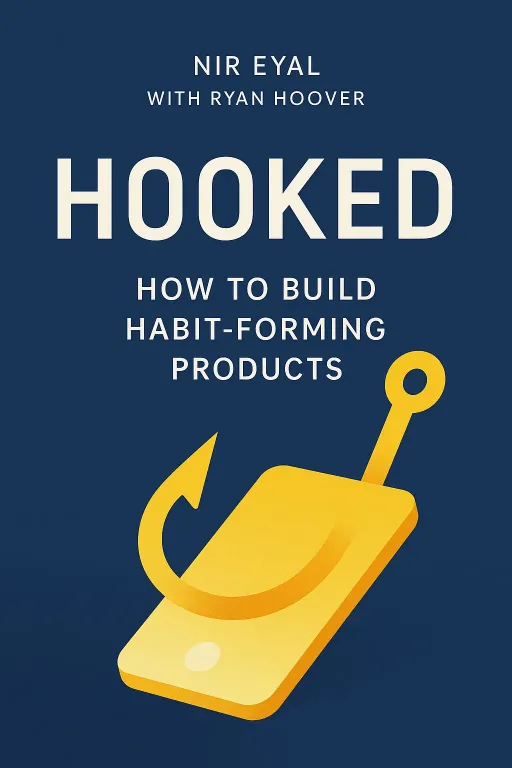
Nova: Exactly. And today, we're diving deep into this silent language, guided by two titans in the field: Nir Eyal, with his groundbreaking work, Hooked, and Robert Cialdini, with his essential insights from Influence. Eyal’s framework is globally adopted by companies from tiny startups to tech giants, showing just how universally applicable the science of habit formation is. And Cialdini, after decades of research, has recently offered critical updates to his classic principles, emphasizing the ethical application of persuasion, which is more relevant now than ever.
Atlas: The ethical application – that's key. Because for anyone looking to make a significant mark, it's not just about influence; it's about building genuine connections and loyalty. I'm ready to unpack these.
Deep Dive into Core Topic 1: The 'Hook Model' & Engineering Habit-Forming Products
SECTION
Nova: So, let's start with Nir Eyal's Hook Model. It's a powerful four-step framework for building habit-forming products and services. Think Trigger, Action, Variable Reward, and Investment. It's designed to create experiences that naturally integrate into users' lives, fostering long-term engagement almost unconsciously.
Atlas: Okay, so a four-step model. Can you walk us through a real-world example? Because "habit-forming" can sound a bit abstract. How does a company actually 'hook' someone without them even realizing it, and what does that look like in practice for a product?
Nova: Absolutely. Let's take a common example: a popular social media app. Imagine you're just going about your day. Suddenly, your phone buzzes—that's an. It could be a notification from the app, or maybe it's just a moment of boredom, a feeling of mild anxiety, or a desire for connection—that's an.
Atlas: Oh, I know that feeling. That little buzz, or that moment of downtime when you just instinctively reach for your phone. It's almost automatic.
Nova: Right. That's the trigger. What follows is the, which has to be simple and easy to do. For a social media app, it's literally opening the app and scrolling through your feed. There's minimal cognitive effort required. You don't have to think; you just do.
Atlas: So, the barrier to entry for the action is almost nonexistent. It's frictionless.
Nova: Precisely. And then comes the. This is crucial. When you scroll, you're not guaranteed to see something amazing every time. Sometimes it's mundane, sometimes it's a hilarious meme, sometimes it's a friend's exciting update, sometimes it's a "like" on your own post. That unpredictability, that variability, is what makes it so compelling. It's like a slot machine for your brain. Dopamine spikes when you anticipate something new and rewarding, keeping you coming back for more.
Atlas: That makes perfect sense. If it were always the same, it would get boring. The uncertainty keeps you engaged, hoping for that next hit of connection or novelty. But then, what about the last step, "Investment"? How does that work in this context?
Nova: The is where the user puts something into the product, which then loads the next trigger. For our social media app, this could be posting a photo, writing a comment, updating your profile, or even just curating your feed by following new people. These actions improve the service for the next go-around. The more you invest—your time, your data, your content, your social connections—the more valuable the service becomes to you, and the harder it is to leave. You've built up personal capital within the platform.
Atlas: Wow, that’s incredibly powerful. It's a self-perpetuating loop. But wait, Nova, that sounds almost a bit manipulative. For someone trying to drive impact ethically and build genuine connections, how do we ensure we're building products that truly improve users' lives, not just creating digital addiction?
Nova: That's a vital question, and Eyal himself addresses it directly. He emphasizes that the Hook Model is a tool, and like any tool, it can be used for good or ill. The key is to design products that genuinely solve a user's pain point and improve their life. If your product doesn't deliver intrinsic value, people won't stick around, no matter how clever your hooks. The "why" behind your product's value proposition must be strong and positive. It's about designing for intrinsic value, not just engagement for engagement's sake.
Atlas: So, for innovators, it's about understanding these psychological mechanics to build products that are so seamlessly useful and rewarding that they become a natural, positive part of someone's routine. It's not about tricking people; it's about designing for human nature. That's a powerful distinction.
Deep Dive into Core Topic 2: Cialdini's Principles & Ethical Persuasion for Lasting Connection
SECTION
Nova: And speaking of genuine connections and ethical design, that naturally leads us to another master of consumer psychology, Robert Cialdini, whose work on influence has profoundly shaped how we understand persuasion. His updated work, especially, puts a spotlight on the ethical application of these principles.
Atlas: Okay, so Cialdini's classic insights are legendary. But for a strategic analyst focused on future-proofing their brand and impact, what are some of these updated principles that really hit differently now, especially with that ethical lens?
Nova: One that immediately comes to mind is. The idea that we look to others for cues on how to think, feel, and act. In the digital age, this has exploded with online reviews, testimonials, and social media trends. Cialdini's updated work emphasizes that this isn't just about showing a high number of followers. It's about social proof. Real people, real experiences. If it's fabricated, trust erodes instantly.
Atlas: I see. So, it's not just about "everyone else is buying this," but "people are genuinely finding value in this." That feels much more impactful than just a number. It's about relatability and genuine endorsement.
Nova: Exactly. Another powerful one is. The perception that opportunities are more valuable when their availability is limited. "Limited time offer," "only a few left in stock." This taps into our innate fear of missing out. The ethical update here is crucial: the scarcity must be genuine. If you constantly run "limited-time" offers that never truly end, consumers catch on, and you destroy trust. Genuine scarcity, whether it's a unique product, a limited edition, or a time-sensitive opportunity, can drive action because it's perceived as truly valuable.
Atlas: I can see how social proof works, but how do you leverage scarcity without just creating artificial urgency that erodes trust in the long run? Because I've seen brands do that, and it just makes you cynical.
Nova: Cialdini himself would argue that the long-term damage to your brand from perceived manipulation far outweighs any short-term gains. Ethical application means being transparent. If you have genuinely limited stock, say so. If a promotion genuinely ends, honor that. It's about aligning your communication with reality. The goal isn't to trick people; it's to highlight genuine value and opportunity. When these principles are used with integrity, they don't feel like persuasion; they feel like helpful guidance.
Atlas: That's a huge distinction. It's about being authentic with these psychological levers, building trust rather than just chasing a quick sale. That's crucial for building long-term brand equity and loyalty, especially in a market where consumers are increasingly savvy. It's about profoundly understanding human tendencies and then meeting them with integrity.
Synthesis & Takeaways
SECTION
Nova: So, bringing Eyal and Cialdini together, we see a powerful synergy. Eyal gives us the blueprint for building products people can't live without, by understanding the mechanics of habit. Cialdini offers the ethical framework for communicating the value of those products in a way that resonates deeply and builds lasting trust. Both are about moving beyond surface-level interactions.
Atlas: Absolutely. It's about seeing consumers not as targets, but as complex psychological beings. For our listeners who are all about driving impact and leading innovation, what's that one spark of insight they should carry forward from today's deep dive into the silent language of consumers?
Nova: The ultimate competitive advantage lies in designing experiences that genuinely resonate with consumers' subconscious needs and desires. It's about building intrinsic value into your products and communicating that value authentically. When you master the silent language, you're not just selling; you're becoming an indispensable, trusted part of their lives. That’s the true path to lasting impact and future-proofing your brand.
Atlas: That's it. It's about empathy at a foundational level, not just marketing tactics. It’s about designing for humanity and building trust into every interaction. And that, truly, is future-proofing your impact.
Nova: We'd love to hear how you're applying these insights in your own work. Consider a product or service you market: how could you apply Eyal's 'Hook Model' to encourage more consistent user engagement? Share your thoughts and experiences with us.
Atlas: We're always keen to hear how these ideas resonate in the real world.
Nova: This is Aibrary. Congratulations on your growth!