The Empathy Advantage: How to Build Products People Love
Golden Hook & Introduction
SECTION
Nova: Atlas, quick, in five words or less: what's the biggest mistake product designers make? Don't overthink it!
Atlas: Oh man, that's easy! "Users are not like us." Boom. Five words. Nailed it.
Nova: You absolutely nailed it! That's brilliant. Because so often, we as creators, as engineers, we build for ourselves, or for some idealized version of a user that doesn't actually exist. We assume everyone thinks like we do.
Atlas: Exactly. And then we wonder why our brilliant, feature-rich product just... sits there, gathering digital dust. It's like we're speaking a different language than the people we're trying to serve.
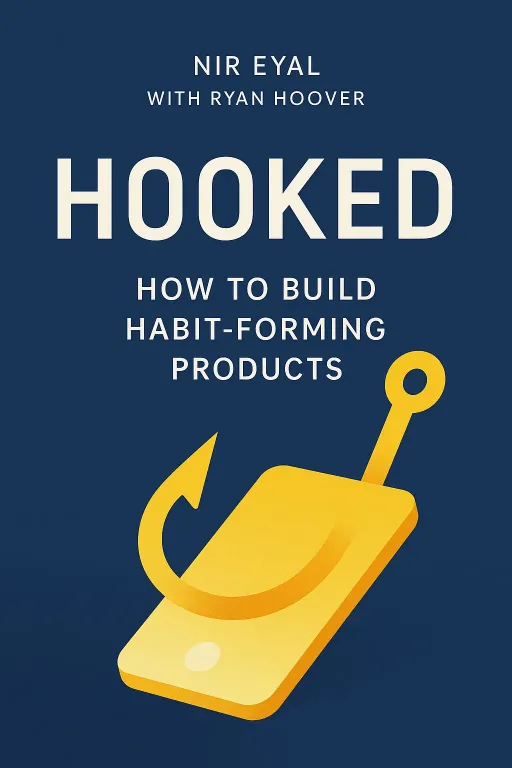
Nova: And that's precisely where today's episode, "The Empathy Advantage," truly begins. We're diving into two foundational texts that, when put together, offer a complete playbook for building products people not only use but genuinely love. We're talking about "Hooked: How to Build Habit-Forming Products" by Nir Eyal, and "Don't Make Me Think, Revisited" by Steve Krug.
Atlas: I mean, "Hooked" sounds a bit... ominous, doesn't it? Like, are we talking about ethical product design here, or are we just learning how to make people addicted to our apps? As an engineer, I want to build things that have, not just things that suck up people's time.
Nova: That's a fantastic question, and it's why Eyal's work is so powerful. He actually comes from a unique background, bridging behavioral economics with the tech industry. He spent years in advertising and gaming, observing these patterns, and then he codified them. His goal isn't manipulation; it's understanding the psychology of engagement so you can build solutions that truly resonate and become indispensable.
Atlas: And Krug? "Don't Make Me Think" sounds like the holy grail for anyone who's ever wrestled with a confusing interface. It feels timeless, even though the digital world changes every six months.
Nova: It timeless! Krug's book, first published in 2000, has remained a cornerstone for over two decades. That longevity in an industry that moves at light speed is a testament to the fundamental human truths he uncovered about intuitive design. He’s essentially the godfather of usability, and his principles are as relevant today as they were then. So, let's start with the "hook." What makes a product so compelling that it becomes a part of our daily rhythm?
The Science of Habit-Forming Products: Beyond Utility to Engagement
SECTION
Nova: Nir Eyal's "Hooked" introduces us to the Hook Model, a four-step cycle that explains how successful products build user habits. It starts with a Trigger, moves to an Action, then a Variable Reward, and finally, Investment. It's a continuous loop that, if designed empathetically, creates delightful experiences.
Atlas: Okay, so break that down for me. Trigger, Action, Variable Reward, Investment. It sounds very scientific, very systematic. How does that translate to, say, a fitness tracker or a social media app?
Nova: Let's take a social media app—one of the most common examples. The could be internal, like feeling bored or lonely, or external, such as a notification popping up on your phone. That little red badge, that vibration – that's an external trigger.
Atlas: Right, that immediate pull. It's like a digital tap on the shoulder saying, "Hey, something's happening!"
Nova: Exactly. That trigger then prompts an. In this case, it's a simple, effortless action: opening the app, scrolling through your feed, tapping a like button. The easier the action, the more likely you are to do it. Krug would love that!
Atlas: So, low friction, almost unconscious. Makes sense.
Nova: And here's where it gets interesting: the. This is the core of the "hook." When you scroll, you don't know what you're going to see next. It could be something hilarious, something inspiring, or just another cat video. That unpredictability, that variability, is incredibly powerful. Our brains are wired to seek out those unpredictable rewards. It's why gambling is so compelling, but in a product, it's about discovery and connection.
Atlas: Oh, I see. So it's not just "I get a reward every time I do X." It's "I get a reward, and that uncertainty keeps me coming back for more." But wait, isn't that just... trying to get people addicted? How do we build products with using a "hook"? As an engineer, I want to build things that have, not just things that suck up people's time.
Nova: That's the crucial distinction, Atlas, and it's where empathy comes in. Eyal isn't advocating for manipulation; he's showing how human psychology works. The "empathy advantage" means using this knowledge to solve and create. Think about a language learning app. The trigger is wanting to learn a new language. The action is a quick daily lesson. The variable reward could be a new word learned, a streak maintained, or an unexpected encouraging message. The comes when you customize your lessons, track your progress, or even connect with other learners.
Atlas: Ah, so the "investment" is the final piece. You've put time, effort, or data into the product, which makes you more likely to return because you've committed to it. You've built up something personal.
Nova: Precisely. And if the product provides true value—you learn a language—then that "hook" is ethical and beneficial. The cost of ignoring these principles isn't just lost users; it's creating products that don't truly serve human needs, that don't become integrated into lives in a meaningful way. For a strategic engineer, understanding this means you're not just building features; you're building habits that lead to desired outcomes.
Atlas: So for someone building something new, where do they even start with this 'hook'? Is it about designing the trigger first, or the reward?
Nova: You start with the user's problem and their internal triggers. What pain are they trying to alleviate? What desire are they trying to fulfill? Then, design the simplest possible action to address that. The rest builds from there. It's about solving a problem so elegantly that the solution becomes a second nature. And that elegance brings us directly to Steve Krug.
The Art of Invisible Design: Why Less Thinking Means More Loving
SECTION
Nova: Think about it: how many times have you been on a website or used an app and felt utterly lost, frustrated, or just plain stupid? That feeling of "I can't figure this out" is precisely what Steve Krug's "Don't Make Me Think" aims to eliminate. His core principle is that users shouldn't have to think to navigate your product. Intuitive design isn't about being fancy; it's about being invisible.
Atlas: Oh, I know that feeling! It’s like when you’re trying to check out online, and suddenly there are six fields for your address, and you can’t tell which one is for the street number. Or when every button looks the same, and you have to guess. That just makes me want to close the tab and walk away.
Nova: Exactly! That's cognitive load in action. Every extra step, every moment of confusion, adds friction. And friction is the enemy of delight. Krug argues that good design is obvious, self-evident. When you use an intuitively designed product, you don't even notice the design; you just achieve your goal effortlessly.
Atlas: It's like a well-designed door handle. You don't think about how to open it; you just open it. The design disappears.
Nova: That's a perfect analogy! Now compare that to a door with a confusing handle—do you push? Pull? Twist? You stand there for a moment, feeling a tiny bit silly. That's a bad user experience. In the digital world, those tiny moments of confusion add up, eroding trust and satisfaction.
Atlas: But engineers love complexity! We love showing off all the features, all the power we've packed into a system. How do we reconcile "don't make me think" with "build powerful tools"? It feels like a contradiction.
Nova: It’s a brilliant tension, Atlas, and it’s where true innovation often happens. The power doesn't have to be to the user. Think of a high-performance sports car. The engine is incredibly complex, but the driver experiences a seamless, intuitive ride. The complexity is and by brilliant engineering and design. True power in product design isn't about exposing every knob and dial; it's about simplifying the user's interaction while maintaining robust functionality underneath. It often requires sophisticated engineering to make something appear simple.
Atlas: That’s a great way to put it. Invisible complexity. So, for an engineer who's always thinking about the next feature, the next big thing, what's the one simple thing they can do today to start applying 'don't make me think'?
Nova: The tiny step from the book is incredibly powerful: observe a user—or even yourself—interacting with your product for just five minutes. Look specifically for moments of hesitation, confusion, or frustration. Then, brainstorm even one small fix for one of those moments. It's about actively listening to the user's experience, not just their feature requests.
Synthesis & Takeaways
SECTION
Nova: So, when we combine Eyal's Hook Model with Krug's "Don't Make Me Think," we see a holistic picture emerge. It's not about tricking people into using your product, nor is it about dumbing down powerful tools. It's about profound empathy. It's about understanding the user's desires and frustrations so deeply that you can build products that fit seamlessly into their lives, products that solve their problems elegantly, and products they genuinely love.
Atlas: It's almost like both books are saying that the most powerful products are those that feel like a natural extension of ourselves, not something we have to adapt to. So what's the real cost if we build products with this kind of empathy? Beyond just losing users?
Nova: The cost is enormous, Atlas. It's the cumulative frustration in our daily lives, the wasted cognitive energy, the products that could have solved real problems but failed because they couldn't connect with people. It’s a missed opportunity for genuine impact. When we understand how habits are formed and how to reduce friction, we're not just building better products; we're building a better relationship with technology itself. We're creating experiences that empower, not just demand attention.
Atlas: Wow, that’s actually really inspiring. It brings it back to that 'Empathetic Innovator' mindset. It’s not just about the code; it's about the human on the other side of the screen. And that 'tiny step' – just observing for five minutes – feels incredibly doable.
Nova: It is. It’s a continuous journey of active listening and iterative improvement. The empathy advantage isn't a destination; it's the mindset you bring to every single interaction you design.
Atlas: It’s a reminder that even the most strategic engineering needs a heart at its core.
Nova: Absolutely.
Atlas: This is Aibrary. Congratulations on your growth!