Stop Guessing, Start Building: The Blueprint for Sustainable Product Growth
Golden Hook & Introduction
SECTION
Nova: Atlas, I’m going to throw out a phrase, and I want your immediate, unfiltered reaction: "Build it and they will come." Go.
Atlas: Oh, I love that. It sounds like a heartwarming movie quote, right? But in the startup world? That’s usually the prelude to a financial disaster movie.
Nova: Exactly! Because many brilliant ideas falter not from a lack of vision, but from a fuzzy understanding of their users. It’s the cold, hard fact of product development.
Atlas: I totally know that feeling. For anyone who’s ever poured their soul into a project only to watch it… well, not quite take off, that hits home.
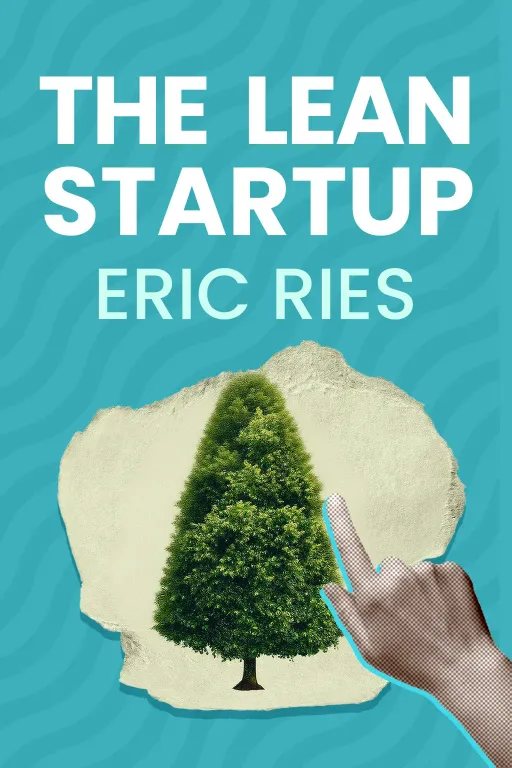
Nova: Absolutely. And that’s why today, we’re digging into a powerful blueprint for sustainable product growth, drawing heavily from the foundational insights of Eric Ries’s "The Lean Startup" and Nir Eyal’s "Hooked." What’s fascinating about Ries, in particular, is how he distilled lessons from Silicon Valley’s rapid-fire innovation cycles into a methodology that’s now adopted by everyone from tiny startups to Fortune 500 companies. It essentially democratized innovation, making these powerful testing frameworks accessible to anyone.
Atlas: That’s a great way to put it. I’m curious, how do these two seemingly different books, one about lean methodologies and the other about user psychology, connect to form a cohesive blueprint?
Deep Dive into Validated Learning & The MVP
SECTION
Nova: They connect at the most critical juncture: understanding your users. Ries’s core argument is for continuous innovation through what he calls 'validated learning.' Forget spending years in stealth mode perfecting something in a vacuum. His approach says: build a Minimum Viable Product, an MVP, measure its impact with real users, and then pivot or persevere based on that real data.
Atlas: Okay, but isn't an MVP just a fancy word for launching something unfinished? For our listeners who are building complex, foundational systems – the architects among us – how do you even define an MVP without compromising the integrity or quality of what you’re trying to build? That sounds rough.
Nova: That’s a common misconception, and a really important one to address. An MVP isn’t about being unfinished or shoddy. It’s about being. It’s the smallest possible version of your product that allows you to test your riskiest assumption about your users or market. Think of it less as a half-built house and more as a single, perfectly crafted brick that proves your foundation can hold.
Atlas: That’s a great analogy. So, you’re saying you identify the core assumption, build just enough to test it, and then see if users actually bite?
Nova: Precisely. Let me give you a hypothetical example. Imagine a startup, let’s call them 'MealKitPro.' They had a brilliant idea for an AI-powered meal-planning app, complete with grocery list integration, nutritional tracking, and smart recipe suggestions. They spent a year and a fortune building this incredibly complex system, based on their internal assumptions of what busy professionals needed.
Atlas: And then?
Nova: They launched to crickets. Users were overwhelmed by the complexity. What they actually wanted was something simpler: quick recipe discovery based on ingredients they already had, not a full-blown life overhaul. MealKitPro’s brilliant vision faltered because their understanding of their users was fuzzy. They built the whole house before testing if anyone wanted to live in that particular neighborhood.
Atlas: Ouch. That sounds like a strategist’s nightmare.
Nova: Now, contrast that with 'QuickBite.' Their core assumption was that busy office workers would pay a premium for healthy, pre-made lunches delivered to their desks. Their MVP? A simple Google Form for orders, and they personally cooked and delivered the first few batches themselves. No fancy app, no complex AI.
Atlas: So, basically, a spreadsheet and a chef.
Nova: Exactly! They gathered data directly from those first few customers. They learned that people loved the convenience but wanted more variety. They iterated, adding more options, streamlining the order process, and slowly, organically, built out their tech. QuickBite didn’t guess; they built, measured, and learned. They found product-market fit quickly because they validated demand at every tiny step.
Atlas: That’s actually really inspiring. For founders who are driven by a clear strategic vision, that 'pivot or persevere' concept can feel daunting. How do you know when to pivot versus when to just push through a tough patch? What are the signposts?
Nova: That’s the art of it. Ries emphasizes quantitative and qualitative data. When you’re consistently running experiments and the data shows that your core hypothesis isn't holding true, and you’re not seeing the expected user engagement or problem-solving, that’s a strong signal. It’s about listening to the market, not just your ego.
Deep Dive into Habit-Forming Products & The Hook Model
SECTION
Nova: Speaking of building something people want, what if we could design products that people not only use but? That brings us to Nir Eyal’s "Hooked." Eyal reveals the psychology behind habit-forming products, breaking down how they engage users through a four-stage 'Hook Model.'
Atlas: So you’re saying there’s a secret sauce to making products sticky? That sounds a bit out there, but I’m listening.
Nova: It’s not secret sauce as much as it is a systematic understanding of human psychology. The Hook Model has four parts: Trigger, Action, Variable Reward, and Investment. Products that successfully integrate these elements become ingrained in users' daily routines, almost automatically.
Atlas: Can you give me an example? Like how does this actually work in practice?
Nova: Let’s take a social media platform, for instance. The can be external – a notification pops up on your phone saying someone liked your post. Or it can be internal – you’re feeling bored or lonely, and you instinctively reach for your phone.
Atlas: Oh, I’ve been there. Definitely.
Nova: Right? The is the simplest behavior done in anticipation of a reward. So, you open the app, you scroll. It’s easy, almost mindless.
Atlas: And the? That's what keeps you coming back, isn't it?
Nova: Exactly. It’s the psychological magic. You scroll, and you might see a funny meme, a comment from a friend, or breaking news. The reward is – you don’t know what you’re going to get, or when. This unpredictability makes it incredibly compelling, tapping into our primal hunting instincts for novelty. It’s like a slot machine for your brain.
Atlas: Wow, that gives me chills. So, the last part, the?
Nova: The Investment is the user putting something into the product – time, data, effort, social capital. You upload photos, you invite friends, you comment, you build your profile, you customize your feed. This investment makes the product more valuable to you, making you more likely to re-engage with the next trigger. The more you use it, the more you invest, the harder it is to leave.
Atlas: Hold on, that sounds a bit manipulative. For a founder focused on long-term, ethical business models, the strategists and architects who want to build something truly valuable, how do we use this without feeling like we’re just... hooking people unethically?
Nova: That’s a crucial distinction, and Eyal addresses it directly. The Hook Model is a tool, like any other. Its ethical application depends entirely on the value the product genuinely provides. If your product truly helps people solve a problem, connects them, or improves their lives, then designing it to be habit-forming ensures more people benefit from that value. Good products to be sticky. It’s about creating healthy habits, not harmful addictions.
Atlas: That makes sense. So, if you’re a strategist trying to build a new business model, where does 'validation' meet 'habit-forming'? Do you build a habit-forming MVP?
Synthesis & Takeaways
SECTION
Nova: That’s the crux of it, isn’t it? The two ideas are synergistic. Validated learning, with its MVPs and rapid experimentation, ensures you’re building something people and that solves a real problem. The Hook Model then provides the framework to ensure they to that solution, making it an indispensable part of their lives.
Atlas: So, it’s about identifying that core assumption about what your user needs, testing it with a tiny, focused experiment, and then, if it works, designing the experience to make it a natural, valuable part of their lives through those psychological hooks.
Nova: Exactly. And the tiny step for our listeners this week is this: Identify one core assumption about your product or even just an idea you have. Design a small experiment to test it, and gather data from five potential users. Don’t guess; start building and learning.
Atlas: That’s actually really inspiring. For those of us who seek frameworks, who crave models, who want to build not just products but entire businesses, these insights fundamentally solve the problem of market uncertainty. It’s about building a reciprocal relationship with your users, where your growth is directly tied to the value you consistently deliver.
Nova: It's about turning uncertainty into a systematic quest for understanding. It's about building a legacy, not just a product. Trust your inner compass, but validate it with real-world data. That's the blueprint.
Atlas: That’s such a hopeful way to look at it. It empowers you to move with purpose.
Nova: Absolutely. This is Aibrary. Congratulations on your growth!