Stop Building Features, Start Building Habits: The Guide to Lasting User Engagement.
Golden Hook & Introduction
SECTION
Nova: Most product teams, especially in the fast-paced world of Agent development, believe that if they just build one more groundbreaking feature, success is guaranteed. They pour resources into functionality, performance, and scalability. And they're often wrong.
Atlas: Wow, hold on. That's a bold statement, Nova. I imagine a lot of our listeners, the engineers and architects out there, are probably thinking, "But isn't building robust, high-performing features exactly what we're supposed to do? That's the core of value creation, right?"
Nova: Exactly! It seems intuitive, doesn't it? We've been conditioned to think that more features equal more value, which equals more users. But the cold, hard truth is that many brilliant products, packed with incredible functionality, still fail. They gather dust, get uninstalled, or simply fade into the digital ether.
Atlas: That's relatable. I’ve seen it happen. Products that, on paper, should be home runs just… don't take off. So, if it's not the features, what's the silent killer?
Nova: It's a fundamental misunderstanding of what truly drives long-term user engagement. And that's precisely what we're dissecting today, drawing insights from a powerful guide. We’re talking about the core idea: "Stop Building Features, Start Building Habits: The Guide to Lasting User Engagement." It's a concept that fundamentally shifts your focus from merely building functionality to strategically engineering user behavior.
Atlas: That makes me wonder. For our listeners who are deep in the trenches, building complex Agent products, where the mantra is often "solve a problem, deliver a solution," why isn't a well-engineered solution, by itself, enough to secure that lasting engagement you're talking about? What's the missing piece?
The Silent Killer: Why Great Products Fail Without Habits
SECTION
Nova: That’s the million-dollar question, Atlas. The missing piece is the habit. Users are busy. Their lives are already overflowing with apps, tools, and demands on their attention. A product, no matter how brilliant, won't succeed if it doesn't seamlessly fit into their lives and become part of their daily routine. It’s the difference between having a gym membership and actually going to the gym every day. The membership is the feature; the daily workout is the habit.
Atlas: I see that. So, it's not enough for the product to or even just; it needs to become an extension of the user's workflow, almost invisible. But from an architect's perspective, designing an Agent system, what does "seamlessly fit into their lives" even mean? We focus on system stability, expandability, efficient resource allocation. How does habit formation translate into those technical considerations?
Nova: It means designing for consistency, predictability, and minimal cognitive load for the user. Think about it: if an Agent product requires constant manual intervention, or its interface is confusing, or its responses are inconsistent, it's creating friction. Every bit of friction is a barrier to habit formation. On the flip side, an Agent that anticipates needs, offers relevant suggestions at the right time, and executes tasks effortlessly—that's a product designed for seamless integration. It’s about building a system that encourages effortless, repeated interaction.
Atlas: So basically you’re saying that the engineering excellence we strive for in terms of performance and reliability also needs to extend to the. The 'value creator' in me is now thinking about the cost of. If we build these incredible Agent capabilities, but users drop off after a few uses because it doesn't stick, that's a massive waste of development resources and unrealized business value.
Nova: Absolutely. The true cost of non-engagement isn't just lost revenue; it’s lost potential. It's all that brilliant engineering talent and effort poured into something that doesn't fulfill its purpose because it didn't cross that invisible threshold into being a user habit. Consider an Agent designed to proactively manage a developer's cloud resources. If the interface is clunky, or the notifications are overwhelming, that developer will quickly revert to manual checks, even if the Agent is technically superior. The system might be stable, but the won't be.
Atlas: That’s a powerful point about user base stability. I'm curious, how do you even measure "habit formation" in a complex system like an Agent? What are the key performance indicators for "seamless integration" from an architect's standpoint, beyond just uptime or throughput? Are we looking at things like session frequency, depth of interaction, or even time between manual overrides versus Agent-driven actions?
Nova: Precisely. We move beyond simple adoption rates to metrics like daily active usage, retention curves, frequency of specific core actions, and even the "time to value" a user experiences. For an Agent, it could be the percentage of tasks it successfully automates without user intervention, or how quickly users trust its recommendations and act on them. It’s about observing if the product is becoming the solution for a specific problem. That's the ultimate sign of a habit taking root.
Engineering Engagement: The Blueprint for Habit-Forming Products
SECTION
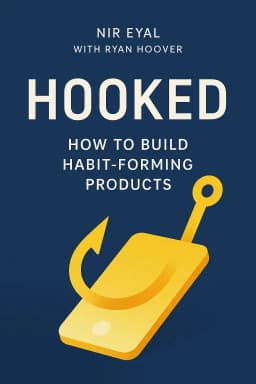
Nova: Now that we’ve established habits are critical, let’s talk about the. How do we, as product builders and engineers, actually this engagement? This is where tactical insights from brilliant minds like Nir Eyal and James Clear come into play. Eyal, in his book "Hooked," introduces the Hook Model. It’s a four-stage process that successful products use to create user habits: Triggers, Actions, Variable Rewards, and Investment.
Atlas: Okay, so the Hook Model. Triggers, Actions, Variable Rewards, Investment. Let's dig into "Variable Rewards" first, because that sounds particularly intriguing, especially for an Agent product. For an architect designing an Agent's decision logic, or a full-stack engineer implementing its core interactions, how do we integrate genuinely valuable, variable rewards without compromising the system's integrity or feeling like we're just 'tricking' users? Can you give a concrete example relevant to Agent tech?
Nova: That's a fantastic question, Atlas, and it gets to the heart of ethical design. Variable rewards aren't about manipulation; they're about delight and unexpected utility. Think of it like this: an Agent product's primary function is often predictable and routine. But what if, occasionally, it delivered something? For example, imagine a code-optimization Agent. Its routine reward is faster, cleaner code. But a variable reward might be an occasional, highly personalized insight into a novel optimization technique, or a prediction of a future bug based on a pattern it observed across your entire codebase that is truly groundbreaking. The key is that the is consistent, but the or of that value is unpredictable, keeping the user engaged and curious.
Atlas: I like that! It's not just a "gamified" badge; it's a genuine, unexpected piece of intelligence or foresight that genuinely helps me as an engineer. That's a variable reward that creates real value and reinforces trust, rather than feeling like a cheap trick. That example makes me think about the "Tiny Step" from our core content: identifying one core interaction in an Agent product and brainstorming how to introduce a variable reward. That's a practical starting point.
Nova: Exactly! It’s about leveraging that human desire for the novel and the useful. And this leads us beautifully to James Clear’s "Atomic Habits." Clear explains how small changes can lead to remarkable results. He provides practical methods for designing environments that make good habits easy and bad habits hard. This is incredibly relevant to product design.
Atlas: "Small changes leading to remarkable results"... for an engineer, this often translates to iterative development, microservices, or continuous integration. But how do we "design environments" for habit formation within, say, an Agent's user interface or its interaction protocols? Where does the full-stack engineer start to ensure these 'small changes' in user behavior are supported by the underlying architecture?
Nova: It starts with reducing friction. Clear talks about making habits obvious, attractive, easy, and satisfying. In product terms, that means making the desired action incredibly simple to perform. If your Agent requires ten clicks to start a common task, that's friction. If it can anticipate the task and offer a one-click confirmation, that's making the good habit easy. It’s about designing the digital environment so that the path of least resistance is the path to desired behavior. For an Agent, this could mean optimizing its natural language processing to understand complex commands more intuitively, or streamlining its output to present information in the most digestible way possible, thereby making the of interacting with the Agent effortless.
Atlas: So, it's about thinking like a behavioral scientist an engineer. It’s about structuring the system, from the front-end interaction to the back-end logic, to gently nudge users towards consistent, valuable engagement. It’s not just about what the Agent, but how easy and rewarding it is for the user to.
Synthesis & Takeaways
SECTION
Nova: Precisely, Atlas. Nova's Take on this is that these insights fundamentally shift your focus from merely building functionality to strategically engineering user behavior, creating products that truly stick. It's about understanding human psychology and embedding those principles into your product's DNA.
Atlas: Ultimately, is this about chasing engagement metrics, or is it about creating deeper, more sustainable value for both the user and the business? As a value creator, I need to know we’re not just 'hooking' people for the sake of it.
Nova: That’s a crucial distinction. True habit-forming products aren't about manipulation; they're about aligning product value with natural human behavior. When a product genuinely solves a problem, and makes that solution easy, rewarding, and integrated into daily life, then engagement becomes a natural byproduct of value. It's a win-win. The user gets consistent value, and the product achieves lasting success. It’s about creating systems that empower users to effortlessly achieve their goals.
Atlas: That’s a much more empowering perspective. And that "Tiny Step" we mentioned earlier, identifying one core interaction in an Agent product and brainstorming how to introduce a variable reward, it feels like exactly the kind of '打破边界' thinking between tech and business that our listeners, especially those building Agent systems, need to embrace. It’s not just about the code; it’s about the human interacting with the code.
Nova: Absolutely. It’s about stepping back and asking: how can we make our products not just functional, but indispensable? How can we make them an effortless, valuable part of someone's day? The solutions often lie not in adding more features, but in understanding and designing for the power of habits.
Atlas: That definitely gives me a lot to think about, especially for optimizing Agent decision logic and interaction flows. It's a profound shift in perspective.
Nova: Indeed. So, what small habit can you help your users build today? That’s where the true magic begins.
Atlas: A powerful question to end on.
Nova: This is Aibrary. Congratulations on your growth!