The Power Dynamics of Empires: Why History Repeats Itself
Golden Hook & Introduction
SECTION
Nova: Here's a thought that might rub you the wrong way: what if the biggest challenges facing the world today aren't new at all? What if we're just seeing history echoing, playing out patterns as old as civilization itself?
Atlas: Oh, I like that. So much of our news cycle feels like an endless stream of unprecedented events, doesn't it? Like we are constantly navigating uncharted waters.
Nova: Exactly! It's that "blind spot" people have, believing their moment in time is entirely unique. But the truth is, history offers an incredibly powerful lens, revealing that many of our current power struggles, strategic shifts, and even economic realignments are just new verses in an ancient song.
Atlas: That makes me wonder, how do we even begin to decipher those echoes? It sounds like you need a pretty robust framework to see those deep patterns.
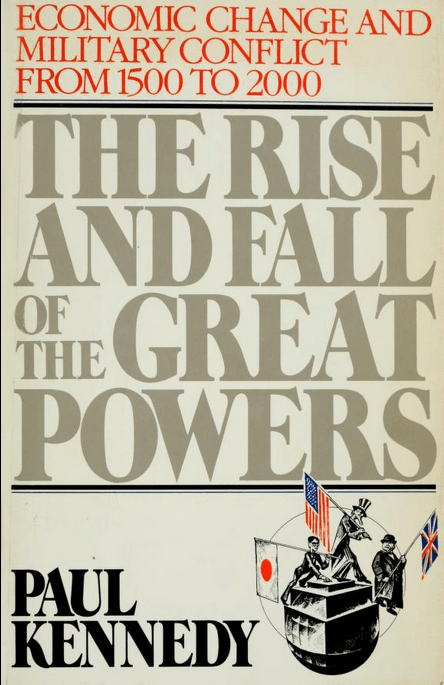
Nova: You absolutely do. And that's why today, we are diving deep into that very idea, drawing heavily from two seminal works: Paul Kennedy's "The Rise and Fall of the Great Powers" and Jared Diamond's "Guns, Germs, and Steel." These aren't just history books; they are blueprints for understanding why power shifts, why certain civilizations dominate, and why the global chess board keeps rearranging itself in familiar ways.
Atlas: So you're saying these books help us look beyond the daily headlines and see the deeper currents? Like a historical GPS for global power?
Nova: Precisely. They challenge us to look beneath the surface and see the predictable cycles driven by underlying economic, technological, and geographical forces. It's truly fascinating.
The Inevitable Echoes of Empire: Understanding Cyclical Power Shifts
SECTION
Nova: Let's start with Kennedy. In "The Rise and Fall of the Great Powers," he posits a rather chilling but compelling idea: that the long-term shifts in a state's economic and technological capabilities ultimately dictate its military strength and geopolitical influence. He argued that empires often fall victim to something called "imperial overstretch."
Atlas: Imperial overstretch. That sounds like a fancy term for biting off more than you can chew.
Nova: It is, but on a grand, world-shaping scale. Think about it: a powerful nation expands its military commitments, builds vast navies, garrisons distant lands, and maintains extensive alliances. All this requires immense resources. Over time, the cost of maintaining this global reach starts to outpace the economic base that supports it. The empire becomes stretched too thin, economically and militarily.
Atlas: Can you give an example? Like, which empire best illustrates this?
Nova: The British Empire is a classic case. For centuries, they were the undisputed naval power, controlling vast swathes of the globe. But by the late 19th and early 20th centuries, maintaining that massive empire, especially with rising industrial powers like Germany and the United States, became an unsustainable drain on their resources. They were spending more on defense and administration than their economy could comfortably bear, leading to a gradual but inevitable decline in relative power.
Atlas: That's a great example. But wait, isn't that just hindsight? Couldn't they have just pulled back? Or are modern states too clever for this "overstretch" thing?
Nova: The pattern is surprisingly resilient. It's not about being "clever," it's about the inherent tension between ambition and finite resources. And that brings us to Jared Diamond's "Guns, Germs, and Steel," which offers another foundational layer to understanding power dynamics. Diamond looks even further back, exploring the environmental and geographical factors that gave certain civilizations initial, often accidental, advantages.
Atlas: Okay, so Kennedy is about what happens you become a great power, and Diamond is more about you became one in the first place?
Nova: Exactly! Diamond argues that things like the availability of domesticable plants and animals, or the orientation of a continent, provided massive head starts. For instance, the Fertile Crescent had a rich array of easily domesticable crops and animals, allowing for early agricultural surpluses, which in turn supported larger, denser populations, specialized labor, and eventually, complex societies and technologies.
Atlas: So, geography literally shaped destiny? That sounds a bit deterministic. Doesn't that diminish human ingenuity or culture?
Nova: Diamond would say it doesn't diminish them, but rather provides the raw materials and the initial conditions. Culture and ingenuity then build upon those foundations. The point is, certain regions got a several-thousand-year head start due to environmental luck, and that initial advantage compounded over millennia, leading to massive disparities in power and technology. It challenges any simplistic view of cultural superiority, revealing deeper, systemic causes. It's about understanding the deep, often invisible, currents that shaped the distribution of power long before any empire even conceived of overstretch.
Applying the Historical Lens: Deciphering Modern Global Power Dynamics
SECTION
Nova: So, if we accept these ideas – that empires overstretch and that geography provides foundational advantages – how do these historical "echoes" help us understand a current global power dynamic? What's a modern example where these lenses might offer a different understanding of its trajectory and potential outcomes?
Atlas: I'm curious. Where do we see this "imperial overstretch" playing out right now, and what does it look like in a globalized, economically interconnected world? It can't be as simple as building a bigger navy anymore, can it?
Nova: It's certainly more complex, but the underlying principle remains. Look at the increasing military and economic commitments of major global powers today. They are maintaining vast defense budgets, projecting power across multiple continents, engaging in proxy conflicts, and providing extensive foreign aid or economic influence campaigns. The sheer cost, not just financially but in terms of political capital and domestic opportunity cost, can be immense.
Atlas: So it's not just about troop numbers, but also about the economic burden of maintaining global influence, even if it's through soft power or economic leverage?
Nova: Absolutely. If a nation's economic growth slows, or its domestic challenges mount, yet its external commitments continue to expand, that's a classic Kennedy-esque recipe for overstretch. The resources are simply not matching the ambition, and eventually, something has to give. It creates vulnerabilities that competitors can exploit, leading to shifts in the global hierarchy.
Atlas: That makes sense. And what about Diamond's insights? How do geographical factors or resource distribution still influence modern geopolitical strategies, especially with all our technology? Aren't we past the point where a river or a mountain range determines our fate?
Nova: Not entirely. While technology can mitigate some geographical challenges, it often amplifies others or creates new dependencies. Think about access to critical minerals essential for modern technology, like rare earths. Or control over vital maritime trade routes and chokepoints. These are modern manifestations of geographical advantage. A nation that controls a significant portion of these resources or transit points still wields immense power.
Atlas: But wait, isn't technology supposed to neutralize some of these geographical disadvantages? How does the historical lens account for rapid technological shifts?
Nova: Technology is a game-changer, yes, but it often operates within existing frameworks. For example, while satellites overcome some communication barriers, the physical infrastructure of the internet still relies on undersea cables, which follow geographical paths. And while we can extract resources from more difficult locations, the fundamental distribution of those resources is still geographically determined. So, technology becomes a tool to leverage or overcome these geographical realities, but it doesn't erase them. It often just creates new points of vulnerability or advantage.
Synthesis & Takeaways
SECTION
Nova: So, what we've discovered is that by understanding these historical patterns—from Kennedy's imperial overstretch to Diamond's geographical advantages—we gain a much clearer framework for analyzing current global power dynamics. We move beyond simply reacting to the immediate news cycle.
Atlas: In other words, by looking at ancient Rome or the British Empire, we can actually see the hidden gears turning in today's headlines, giving us a clearer view of why things are happening and maybe even what's coming next?
Nova: Exactly. It's about recognizing that the forces shaping our world today are not random or unprecedented. They are the latest iterations of cycles that have played out for millennia. This perspective equips us with something far more valuable than predictions: it gives us clarity. It helps us discern the signal from the noise in a complex world.
Atlas: That’s actually really inspiring. It means we're not just passive observers in a chaotic world. We have a way to understand the underlying logic. So, for our listeners, what's one way they can start applying this historical lens to their own understanding of current events?
Nova: It's simple: when you read a headline about a geopolitical tension or an economic shift, pause and ask yourself: "What historical parallel does this evoke? Are we seeing an echo of overstretch, or a struggle over foundational resources?" That simple question can unlock profound insights.
Atlas: Fantastic. That’s a powerful invitation to critical thinking.
Nova: This is Aibrary. Congratulations on your growth!