

The 'Growth Debt' Trap: Why You Need Strategic Foresight Now
8 minGolden Hook & Introduction
SECTION
Nova: What if I told you that the very thing many companies chase most relentlessly—growth—could actually be silently destroying them from the inside out?
Atlas: Whoa, hold on. Growth? Isn't that the holy grail for every business, every leader? You're telling me our pursuit of more, bigger, faster... could be a dangerous trap? That sounds like a counter-intuitive bombshell.
Nova: It absolutely is, Atlas. And it’s a trap we call "growth debt." Think of it like technical debt, but on a much grander, more systemic scale. It’s the hidden cost of prioritizing rapid expansion without genuine strategic foresight. It leads to burnout, broken systems, and a future that’s far less sustainable than the flashy present.
Atlas: So, it's not just about hitting quarterly numbers, it's about you hit them, and what you leave behind in the process. I can definitely see how that would resonate with leaders who are trying to build lasting foundations, not just temporary structures.
Nova: Exactly. And today, we’re unpacking this insidious concept. We're going to dive into why 'growth for growth's sake' often backfires, and then, crucially, how to escape the trap. We'll explore powerful frameworks from giants like Richard Rumelt’s "Good Strategy/Bad Strategy" and A. G. Lafley and Roger Martin’s "Playing to Win," which offer a blueprint for truly proactive, deliberate strategic design.
Atlas: I like that. Moving from just reacting to designing. I imagine a lot of our listeners, especially those focused on anticipating market shifts, are already leaning in.
The Hidden Cost of 'Growth for Growth's Sake': Unpacking Growth Debt
SECTION
Nova: Let's really dig into this idea of growth debt. Imagine you're building a magnificent skyscraper. You're under immense pressure to go taller, faster, to impress investors and grab market share. So, you cut corners. You use cheaper materials for the internal plumbing, you rush the electrical wiring, you skip crucial safety inspections. From the outside, it looks impressive, it's growing at an incredible rate!
Atlas: That sounds like a recipe for disaster. Eventually, those hidden flaws are going to manifest. The pipes will burst, the lights will flicker, the whole thing might even collapse.
Nova: Precisely. That’s growth debt in action. It's not just technical debt, though that's a huge component. It's also organizational debt, cultural debt, even emotional debt. It's the burnout of your team because you're constantly pushing for more without investing in their well-being or hiring adequate support. It's the fragmented systems that don't talk to each other because you quickly acquired five different companies and never integrated them properly.
Atlas: So you're saying that initial rush of success, that dopamine hit from rapid growth, can actually mask these deeper structural problems until it’s almost too late? It's like a company getting a sugar rush instead of real nutrition.
Nova: Exactly! It’s the illusion of vitality. We often celebrate companies for their meteoric rise, but we don't always see the frantic, unsustainable effort happening behind the scenes, or the brittle foundations they're building on. Consider a hypothetical startup, 'HyperGrowth Inc.' They raised massive rounds of funding, their user numbers exploded. Everyone lauded their speed and agility.
Atlas: I've seen that story play out. The headlines are always about the valuation, never the infrastructure.
Nova: Right. HyperGrowth Inc. prioritized onboarding new users at any cost. Their engineering team was constantly patching, not building robust solutions. Their customer support team was overwhelmed, leading to high turnover and low morale. They had a fantastic marketing engine, but their product kept breaking. The cause was clear: growth was the metric that mattered. The process involved ignoring warning signs, deferring critical maintenance, and pushing their people to the breaking point.
Atlas: I can imagine the outcome. Eventually, users get frustrated, the tech stack becomes a tangled mess that no one can manage, and the best talent leaves. It's a slow, painful implosion. For leaders who want to build a culture that lasts and truly values their people, this kind of story is heartbreaking. You can't build lasting foundations on a house of cards, no matter how quickly it goes up.
Nova: It’s a profound lesson. The human cost of growth debt is immense, and it directly impacts a leader's ability to weave a strong culture. When the organization is constantly reacting to crises born from past "growth," there's no space for innovation, psychological safety, or long-term vision.
Architecting a Sustainable Future with Strategic Foresight
SECTION
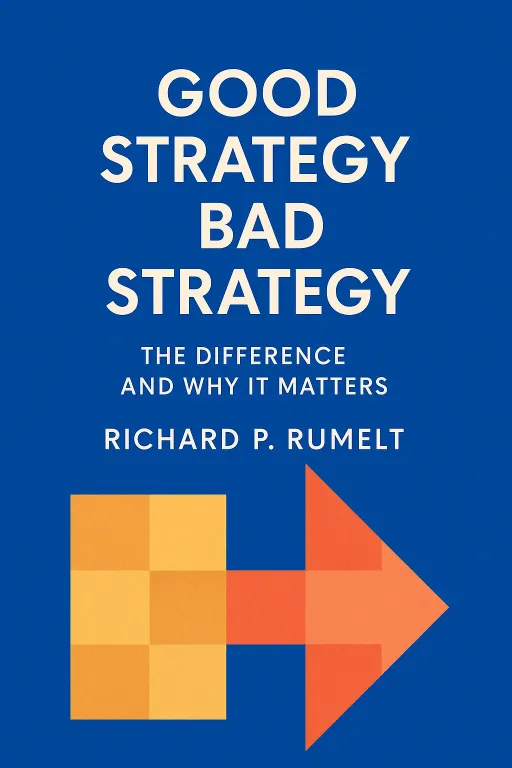
Nova: So if 'growth debt' is the problem, what's the antidote? It's not just 'more planning,' it's. And to understand that, we have to turn to someone like Richard Rumelt. In his seminal work, "Good Strategy/Bad Strategy," Rumelt argues that bad strategies are often just fluffy goals, vague aspirations, or lists of things to do. They lack a clear 'kernel.'
Atlas: Okay, but for leaders grappling with daily fires, what differentiates 'good' from 'bad' strategy? How do they move beyond what feels like just 'fluffy goals' to something truly actionable? I'm curious what this 'kernel' actually looks like.
Nova: That's the core of it! Rumelt’s 'kernel' of a good strategy has three parts: a diagnosis, a guiding policy, and coherent actions. Think of it like a doctor. A bad strategy would be saying, "My goal is to be healthy." A good strategy starts with a clear: "I have high cholesterol and low energy due to a sedentary lifestyle."
Atlas: That makes sense. You can’t solve a problem until you accurately define it.
Nova: Exactly. Then comes the: "I will reduce cholesterol and increase energy through a plant-based diet and daily exercise." It's a clear approach for overcoming the obstacles identified in the diagnosis. Finally,: "I will meal prep on Sundays, join a gym, and track my steps." These are coordinated steps that align with the guiding policy.
Atlas: That’s a brilliant analogy. It breaks down something that often feels abstract into concrete, sequential steps. So, the guiding policy isn't just you'll do, but you'll tackle the core challenge. Can you give an example of a company that really nailed this 'guiding policy' and used it to see around corners?
Nova: Absolutely. This is where A. G. Lafley and Roger Martin's "Playing to Win" comes in, using the Procter & Gamble story. They didn't just say, "Our goal is to grow." They developed a clear framework for 'where to play' and 'how to win.' For example, P&G diagnosed a challenge in a specific market segment, then formulated a guiding policy to win by out-innovating competitors in a particular way, and then executed coherent actions like investing in specific R&D and marketing channels.
Atlas: That’s a perfect example. They weren't just reacting to market shifts; they were anticipating them by making deliberate choices about where they would compete and how they would differentiate themselves. For leaders trying to anticipate market shifts, this proactive approach feels incredibly powerful. It’s about being the architect, not just the responder.
Nova: Precisely. Strategic foresight isn't some crystal ball. It's the disciplined application of diagnosis, guiding policy, and coherent actions to build a sustainable future. It’s seeing around corners by understanding the terrain, plotting your course, and then executing with intention. It's about designing value, not just chasing volume.
Synthesis & Takeaways
SECTION
Nova: So, what we’ve really explored today is that growth without foresight isn't just inefficient; it's a dangerous form of self-sabotage that creates immense 'growth debt.' The antidote lies in embracing robust strategic frameworks like those from Rumelt and Lafley & Martin. It's about shifting from reactive problem-solving to proactive, deliberate strategic design.
Atlas: It’s empowering, actually. Instead of feeling overwhelmed by the pressure to just "grow," leaders can reframe their challenge. They can become true strategic architects, building resilient organizations and fostering a culture that thrives on clarity and intentionality, not just speed. It’s about trusting that inner wisdom and making truly conscious choices.
Nova: Absolutely. And sometimes, the most profound insights come from the simplest actions. For our tiny step this week, we challenge all strategic architects, culture weavers, and resilient leaders listening: take just 30 minutes to articulate your company's 'guiding policy' for the next quarter. What's the core challenge you're truly addressing? What's your chosen path to overcome it?
Atlas: That’s a fantastic, actionable step. It moves from abstract theory to immediate practice, which is exactly what our listeners crave. It's about taking ownership of your future, rather than just letting it happen to you.
Nova: It’s about building a future, not just wishing for one.
Atlas: I love that.
Nova: This is Aibrary. Congratulations on your growth!









