Personalized Podcast
Golden Hook & Introduction
SECTION
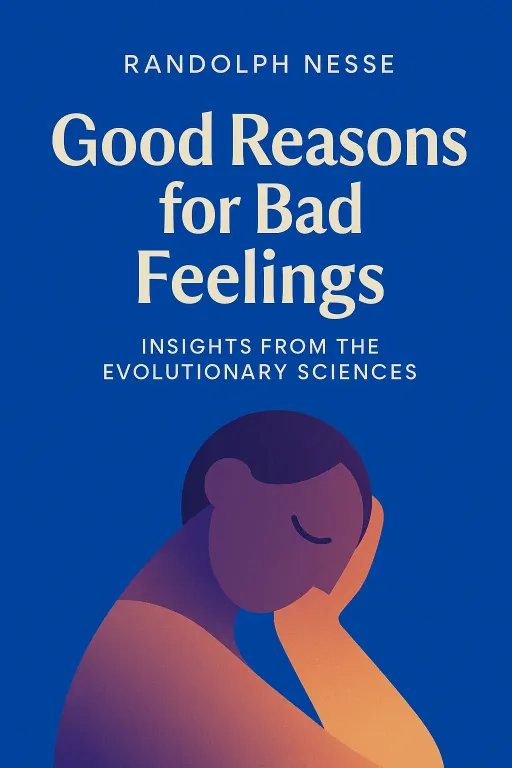
Dr. Celeste Vega: Imagine you are running a state-of-the-art security system. Suddenly, the alarm blares. You panic, check the cameras, but there is nothing there, just a stray cat. It is a false positive. In cybersecurity, we absolutely hate false alarms. They waste resources and cause unnecessary panic. But what if I told you that when it comes to your nervous system, your brain is actually programmed by natural selection to scream fire when there is only smoke? Today, we are diving into Randolph Nesse's masterpiece, Good Reasons for Bad Feelings, to understand why our minds and bodies are so vulnerable to anxiety, depression, and physical dysregulation. And to help us unpack this from a truly unique perspective, I am joined by Tinotenda Jaine Chikomo, a cybersecurity student, AI prototyper, UX designer, and certified counselor. Tinotenda, welcome.
Tinotenda Jaine Chikomo: Thank you, Celeste. It is wonderful to be here. You know, when I first read Nesse's work, it immediately clicked with how I think about systems in technology. In cybersecurity, we are constantly trying to balance sensitivity. If you set your intrusion detection system to be too relaxed, a hacker slips through and destroys the network. If you set it to be too sensitive, you get flooded with thousands of false alarms. Nesse is essentially arguing that our nervous system is the ultimate high-sensitivity security system, optimized over millions of years of evolution to keep us alive, even if it makes us miserable in the process.
Dr. Celeste Vega: That is such a perfect way to frame it. Nesse's central question is simple yet profound: Why did natural selection leave us so vulnerable to mental suffering? Why hasn't evolution weeded out anxiety, depression, or the capacity for intense physical dysregulation? And his answer is that we have to stop looking at these symptoms as defects, and start looking at them as defenses.
Tinotenda Jaine Chikomo: Exactly. It is the classic distinction between a bug and a feature. As a UX designer and someone who studies AI, I always look at the intent behind a system's design. If a system is throwing an error message, is it because the code is broken, or is the code doing exactly what it was programmed to do to protect the core database? Nesse's work suggests that much of what we call mental illness or nervous system dysregulation is actually the system's protective code running exactly as programmed, but in an environment it was never designed for.
Dr. Celeste Vega: Today, we are going to tackle this from three distinct angles. First, we will explore the Smoke Detector Principle and why our bodies are wired for false alarms. Second, we will examine the Cliff Edge Hypothesis to understand why severe, complex disorders persist in our gene pool. And finally, we will discuss how we can use these systems-level insights to actively soothe and recalibrate a hyper-reactive nervous system.
Deep Dive into Core Topic 1
SECTION
Dr. Celeste Vega: Let us start with that first pillar: the Smoke Detector Principle. Nesse uses a brilliant mathematical analogy here. Imagine a smoke detector in your house. The cost of a false alarm is minor, maybe some annoying noise and having to open a window. But the cost of a single missed fire is catastrophic, you lose your house, or worse, your life. Therefore, it is mathematically optimal for the smoke detector to be incredibly sensitive, triggering an alarm even when there is just a tiny bit of burnt toast. Nesse argues that natural selection applied this exact same math to our emotions and physical defenses.
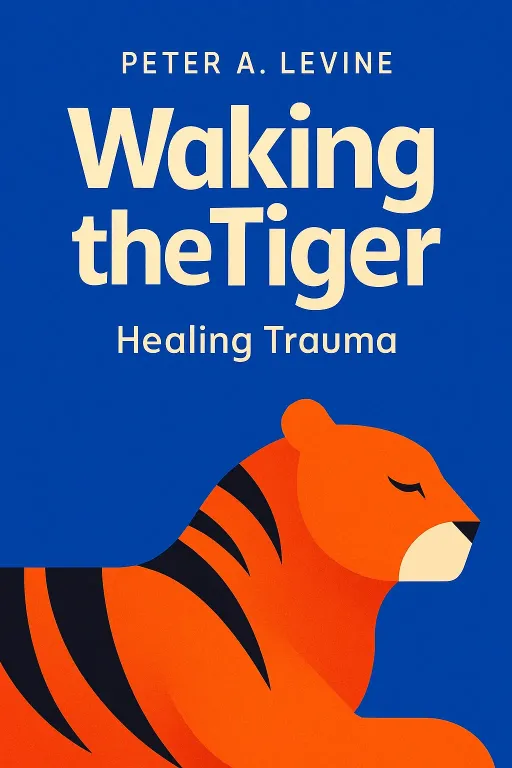
Tinotenda Jaine Chikomo: This is incredibly eye-opening when you think about anxiety or somatic symptoms. If our ancestors heard a rustling in the bushes, it could be a tiger, or it could be the wind. If they assumed it was the wind but it was a tiger, they died. Their genetic line ended. If they assumed it was a tiger, ran away, and it was just the wind, they wasted a few calories, but they lived to reproduce. So, natural selection favored the paranoid. It favored the nervous system that was constantly generating false positives.
Dr. Celeste Vega: Right, the cost-benefit ratio is completely asymmetrical. Nesse actually lays out the math. If a real threat costs one thousand units of fitness, like death, and a false alarm costs only one unit of fitness, like a burst of adrenaline and running away, then the system should trigger an alarm even if there is only a one-in-a-thousand chance that the threat is real. That means nine hundred and ninety-nine times out of a thousand, your anxiety is a false alarm, but it is still biologically normal and adaptive.
Tinotenda Jaine Chikomo: As someone who lives with Functional Neurological Disorder, or FND, this concept resonates with me on a deeply personal level. FND is essentially a problem with the software of the nervous system. The brain is sending and receiving incorrect signals, causing real, physical symptoms like tremors or fatigue, even though there is no structural damage to the hardware of the brain itself. When I look at FND through Nesse's lens, I realize my nervous system isn't broken. It is just operating on an incredibly sensitive smoke detector setting. It is trying to protect me from perceived threats by triggering physical defense protocols, even when there is no actual fire.
Dr. Celeste Vega: That is a profound realization, Tinotenda. In medicine, we often try to treat the symptom as if it is the disease. We want to turn off the alarm. But Nesse warns us that if we just silence the alarm without understanding why it is ringing, we might be putting the patient at risk. For example, we use drugs to block coughs, fever, or pain, which are all evolved defenses. If you block a cough in someone with severe pneumonia, they can drown in their own fluids. The cough is painful and annoying, but it is a defense, not the disease.
Tinotenda Jaine Chikomo: Yes, and in counseling, we see this all the time. Clients come in wanting to completely delete their anxiety. They view it as a system failure. But as a counselor, my job is to help them see that their anxiety is actually a well-meaning, albeit overprotective, guardian. It is trying to keep them safe. When we shift the narrative from 'my system is broken' to 'my system is trying to protect me, but its sensitivity settings are just a bit too high,' it changes the entire user experience of our own minds. We stop fighting ourselves.
Dr. Celeste Vega: It is about changing the relationship with the symptom. But Nesse also points out that because these defenses are controlled by a system that has to make rapid, split-second decisions, the control mechanisms themselves can get stuck in a positive feedback loop. For instance, panic attacks. A person feels a slight increase in heart rate, which is a normal physiological fluctuation. But their brain interprets that heart rate spike as a threat, which triggers more adrenaline, which makes the heart beat even faster, which confirms the threat. The system spirals out of control.
Tinotenda Jaine Chikomo: That is a classic runaway loop, what we would call a system crash or a stack overflow in computing. The input feeds the output, which feeds the input, until the system resources are completely exhausted. In cybersecurity, we have to design rate-limiting protocols to prevent these kinds of loops from crashing a server. In our own bodies, we have to find ways to inject a manual override into that feedback loop to tell the system, hey, the database is secure, you can stand down.
Deep Dive into Core Topic 2
SECTION
Dr. Celeste Vega: That brings us beautifully to our second core topic: the Cliff Edge Hypothesis and the concept of evolutionary mismatch. Now, the Smoke Detector Principle explains why normal, everyday anxiety and low mood are so common. But what about severe, devastating conditions like schizophrenia, autism, or bipolar disorder? Why haven't the genes for these highly disabling conditions been eliminated by natural selection? Nesse introduces this fascinating idea called the Cliff Edge Hypothesis.
Tinotenda Jaine Chikomo: This concept is brilliant. It is essentially about system optimization. In engineering, if you want to make a system incredibly fast or efficient, you push its parameters to the absolute limit. Think of a racehorse. If you breed a racehorse for maximum speed, you are selecting for longer, thinner leg bones. The longer and lighter the bones, the faster the horse can run. But if you push that trait just a fraction of a millimeter too far, the bone becomes too fragile and snaps. The horse falls off the fitness cliff.
Dr. Celeste Vega: Exactly. The genes that contribute to high speed are highly beneficial to the horse's fitness, right up until they reach that cliff edge. Nesse suggests that human cognitive and social abilities are similar. Natural selection has pushed our capacity for language, empathy, theory of mind, and abstract thinking to an absolute peak because these traits gave our ancestors a massive competitive advantage. But this high-performance software runs on incredibly complex neural architecture. If a person inherits a specific combination of genes that pushes these traits just a bit too far, the system destabilizes, and they fall over the cliff into schizophrenia or autism.
Tinotenda Jaine Chikomo: It is a trade-off. The very genes that make us capable of profound creativity, deep social connection, and complex planning are the same genes that, in certain combinations, make us vulnerable to severe mental disorders. It is like overclocking a computer processor. You can get incredible performance out of it, but you are running it so hot that it is constantly on the verge of melting down.
Dr. Celeste Vega: And this vulnerability is dramatically amplified by our modern environment. This is the concept of evolutionary mismatch. Our bodies and minds were shaped over hundreds of thousands of years to function in small, close-knit hunter-gatherer groups, where physical activity was mandatory, food was scarce, and social feedback was immediate and localized. Today, we live in a world of hyper-abundance, social isolation, and constant, artificial stimulation.
Tinotenda Jaine Chikomo: Oh, the mismatch is massive, especially when you look at it through the lens of UX design and technology. We have designed a digital world that perfectly exploits our ancient survival code. Take eating disorders, which Nesse discusses in detail. In our ancestral environment, food scarcity was a constant threat. Our bodies evolved powerful famine protection mechanisms. When food is scarce, our metabolism slows down, and our drive to seek high-calorie food skyrockets.
Dr. Celeste Vega: Yes, and Nesse points out that when a modern person goes on an extreme diet, their ancient brain doesn't understand that they are trying to fit into a societal beauty standard. The brain thinks, oh no, we are experiencing a famine. It triggers those ancient survival mechanisms, slowing down the metabolism and creating intense cravings. If the person resists those cravings through sheer willpower, the system can spiral into anorexia nervosa. If they give in, they might binge, which triggers guilt, leading to purging or more dieting, creating the vicious cycle of bulimia.
Tinotenda Jaine Chikomo: It is a complete system mismatch. The user interface of our modern world, with its airbrushed social media feeds and abundance of highly processed foods, is constantly sending inputs that our ancient biological backend doesn't know how to process. We are running Paleolithic software on modern hardware, in a hyper-connected network, and we wonder why the system is constantly glitching. Even things like artificial sweeteners, Nesse mentions a study where people who drank more than three cans of diet soda a day actually doubled their risk of becoming obese over six years. The sweet taste signals to the brain that high-calorie fuel is coming, but when the calories don't arrive, the system's metabolic expectations are disrupted, leading to increased appetite later.
Dr. Celeste Vega: It is a fascinating example of how we try to hack our biology, but the biology fights back because its core programming is so deeply entrenched. Our brains are constantly trying to maintain homeostasis, and when we introduce artificial inputs, we throw the whole system out of balance.
Synthesis & Takeaways
SECTION
Tinotenda Jaine Chikomo: So, if our nervous systems are designed to be hyper-sensitive smoke detectors, and if our modern world is constantly triggering these false alarms, how do we actually restore calm? How do we apply this to our daily lives?
Dr. Celeste Vega: That is the ultimate question. Nesse's work suggests that the first step is a profound shift in perspective. Instead of viewing our painful emotions or physical symptoms as enemies to be destroyed, we need to recognize them as protective responses. When you feel a wave of anxiety, instead of thinking, 'something is wrong with me, I need to stop this,' you can say, 'my inner smoke detector is working perfectly. It is trying to protect me. But in this situation, there is no actual fire.'
Tinotenda Jaine Chikomo: I love that. It is like reframing a system error as a helpful notification. In counseling, we call this somatic tracking or mindful awareness. When my FND symptoms flare up, instead of panicking and triggering that runaway feedback loop, I try to look at the physical sensations with curiosity. I tell my nervous system, 'I hear you. I know you are trying to protect me from stress right now. But we are safe. You can turn down the volume.' It is about sending safety signals back down the wire to recalibrate the sensitivity of the alarm.
Dr. Celeste Vega: Yes, and we also have to look at our environment. If we are experiencing evolutionary mismatch, we need to actively design our lives to align more closely with our biological needs. This means prioritizing regular physical movement, seeking out deep, face-to-face social connections rather than superficial digital interactions, and giving our nervous systems regular breaks from the constant barrage of notifications and artificial stimulation.
Tinotenda Jaine Chikomo: It is about designing a better user experience for our lives. We can't change our evolutionary source code, but we can change the environment in which that code runs. We can build guardrails to protect ourselves from the exploits of the modern world.
Dr. Celeste Vega: Randolph Nesse's Good Reasons for Bad Feelings doesn't give us a simple cure-all, but it gives us something much more valuable: a map. It helps us understand the architecture of our own suffering, and in doing so, it offers a path toward self-compassion and genuine healing.
Tinotenda Jaine Chikomo: It reminds us that our struggles are not a sign of weakness, but a testament to our survival. Our minds and bodies are beautifully, complexly designed. We just need to learn how to navigate the system.
Dr. Celeste Vega: Tinotenda, thank you so much for sharing your incredible insights and personal journey with us today. This has been a truly illuminating conversation.
Tinotenda Jaine Chikomo: Thank you, Celeste. It has been an absolute pleasure.
Dr. Celeste Vega: And to our listeners, we leave you with this question to ponder: The next time your inner alarm system starts to ring, will you fight the alarm, or will you take a deep breath, look around, and gently thank your brain for trying to keep you safe? Until next time, keep exploring, keep questioning, and take care of your evolved nervous system.