

The Historian's Dilemma: Bridging Ancient Texts and Modern Meaning
Golden Hook & Introduction
SECTION
Nova: What if the most profound wisdom you've ever encountered was just a shadow of its true self, because you were missing half the story?
Atlas: Oh, that's a brilliant hook, Nova! "Half the story." What kind of half are we talking about here? The juicy bits? The secret sauce?
Nova: Exactly! Not just juicy bits, Atlas, but the very essence that gives those profound ideas their true weight and meaning. Today, we're wrestling with a concept that's been rattling around our brains, one we're calling "The Historian's Dilemma: Bridging Ancient Texts and Modern Meaning." It’s fundamentally about how we read the past.
Atlas: And how easily we misunderstand it, right? Because we're not just reading words on a page; we're reading ghosts of conversations from worlds we can barely imagine. It’s like trying to understand a complex piece of music just by looking at the sheet notes, without ever hearing the orchestration or knowing the composer's intentions.
Nova: That's a perfect analogy! Because too often, we approach ancient texts, philosophical works, or even religious scriptures, as if they descended from a vacuum. We strip them of their original environment, their specific historical, cultural, and political context. And when we do that, we create what we call "the historian's blind spot."
The Historian's Blind Spot: Why Context is King
SECTION
Atlas: The blind spot. I like that. So, give me an example, Nova. Are we talking about, like, reading Plato without knowing about Athenian democracy, or is it something even deeper, something more insidious that we're missing?
Nova: It is deeper, Atlas. It's about missing the "living, breathing world" they emerged from. Imagine trying to understand a modern political speech just by reading the transcript ten centuries from now, without knowing anything about today's social movements, economic anxieties, or the speaker's personal background. You'd get the words, sure, but the resonance, the urgency, the would be lost. You'd have a skeletal understanding.
Atlas: That makes sense. It’s like reading a tweet without seeing the thread, the replies, the entire cultural conversation around it. You get the 280 characters, but you miss the entire universe that tweet lives in.
Nova: Precisely! Now, apply that to, say, Aristotle's "Politics" or the Stoics' ideas on virtue. We often read them as timeless, abstract philosophical treatises. But these weren't just academic exercises; they were guides for living, for leadership, for coping with suffering in very specific, often brutal, realities. Understanding the daily lives of ancient Greeks – their city-states, their wars, their social hierarchies, their gods – profoundly alters our reading. Their "spiritual or philosophical statements" weren't just abstract thoughts; they were deeply tied to their mundane existence and political realities.
Atlas: But wait, looking at this from a seeker's perspective, isn't there something universal in these texts? Are you saying we extract universal truths, that it's all just footnotes in history? Because for many of our listeners, the whole point is to find enduring wisdom.
Nova: Absolutely not. It’s about enriching, not negating, those universal truths. Context adds layers, preventing misinterpretation, making those truths even powerful because we understand the crucible they were forged in. It’s like discovering the origin story of a superhero – it makes their powers and their struggles far more meaningful.
Atlas: That's a great way to put it. It’s like knowing the struggles an artist went through to create a masterpiece; it doesn't diminish the art, it elevates it.
Unveiling Depth: The Power of Re-contextualization
SECTION
Nova: Exactly, Atlas. And that leads us beautifully to the "shift" – the power of truly re-contextualizing these works. It's about bringing that living world back into focus. Think about someone like Will Durant and his monumental work, "The Story of Civilization."
Atlas: Oh, Durant. That's a classic. I've always been intimidated by the sheer volume of it.
Nova: And for good reason! It's a colossal undertaking. But what makes Durant so extraordinary is that he doesn't just chronicle kings and battles. He meticulously reconstructs the cultural, political, and social landscapes that historical thought and religious development. He shows you how philosophy didn't just appear, but how it emerged from the specific challenges and triumphs of a people. He reveals the profound interconnectedness of human progress, demonstrating that ideas are never born in isolation.
Atlas: So, for someone trying to build a comprehensive worldview, like many of our listeners, how does someone like Durant help us integrate these seemingly disparate facts? How does his approach actually to reveal those hidden connections? Because that's what we're after, right? The bigger picture.
Nova: That's where the magic happens. Durant paints a vivid, holistic picture. He shows you, for instance, how the economic conditions of ancient Rome influenced its legal system, which then, in turn, shaped its philosophy and even its religious practices. He connects the dots across art, science, politics, and daily life, making the past feel incredibly vibrant and relevant. It’s not just a timeline; it's a tapestry.
Atlas: I can see that. And it probably reveals how much we owe to these earlier civilizations. It's not just a straight line of progress, but a constant interplay.
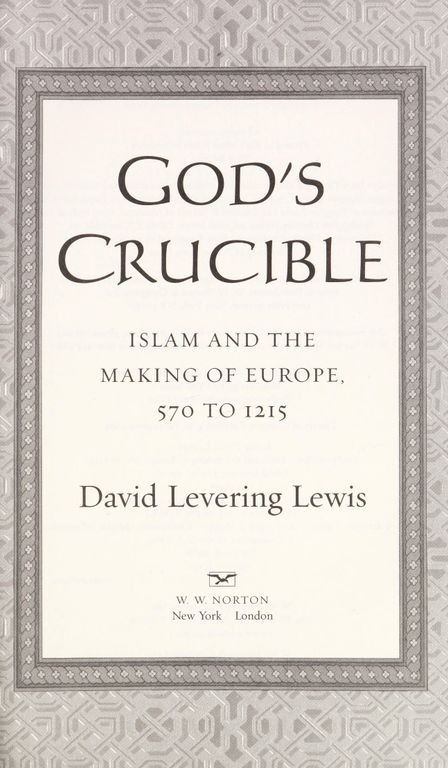
Nova: Precisely. And for another brilliant example, consider David Levering Lewis's "God's Crucible." He illustrates how seemingly disparate cultures, like medieval Islam and Christianity, weren't just isolated entities. They interacted, they influenced each other, often profoundly, enriching the intellectual tapestry of the era. Lewis shows that the great ideas, the scientific advancements, the philosophical debates of the Middle Ages, were often born in these crossroads of cultural exchange, not in hermetically sealed intellectual bubbles.
Atlas: That's fascinating. So, it's not just about knowing they thought, but they thought it, and who they were thinking or. It refines our understanding of knowledge itself, and how diverse interpretations aren’t just different, but often deeply intertwined. It makes you realize how much of our own current thinking is a product of these ancient dialogues.
Nova: Absolutely. It’s a powerful reminder that history is a conversation, not a series of monologues. And when we place intellectual and theological developments within their historical matrix, we gain a richer, more nuanced appreciation for their enduring relevance. It’s like turning a black and white photograph into a full-color, IMAX experience.
Synthesis & Takeaways
SECTION
Atlas: That gives me chills, Nova. The idea that we're missing so much, but also that there's a path to reclaim that depth. If we truly grasp this, if we start to see ancient wisdom in its full, messy, human context, how does that change our own 'quest for meaning' today? Does it make those profound statements more fragile, or more robust?
Nova: It makes them infinitely more robust, Atlas. And far more applicable to our own "real-world dilemmas." It shows us that universal truths don't just exist in some ethereal realm, but they emerge from very specific human struggles, from the daily lives and political realities of people just like us, albeit in different times. Understanding those struggles makes the truths more profound, more resilient, and more deeply human. It transforms our understanding of history from a static set of facts into a dynamic, living narrative that informs our present.
Atlas: So, for those of us who are seekers, who are analysts, who crave that deeper understanding, it means approaching every text, every idea, with a sense of archaeological curiosity. Digging beyond the surface.
Nova: Exactly. It's an invitation to become intellectual archaeologists, to unearth the full context. It's about remembering that behind every profound statement is a person, a culture, a world. And truly seeing that world allows us to connect with the wisdom in a way that transcends time.
Atlas: I love that. "Intellectual archaeologists." What a perfect way to put it. We'd love to hear from our listeners: when have you experienced a "historian's blind spot" moment, and what did re-contextualizing an idea do for your understanding? Share your insights with us.
Nova: This is Aibrary. Congratulations on your growth!