The Strategic Trap: Why You Need to Master the Art of Asking.
Golden Hook & Introduction
SECTION
Nova: What if I told you that your most brilliant business strategy, your meticulously crafted brand story, and your ambitious growth plans are all destined to fail if you haven't mastered one often-overlooked skill?
Atlas: Oh, I'm intrigued. Is this a riddle? Because my strategic mind is already racing.
Nova: Not a riddle, Atlas, but a cold, hard fact: many brilliant strategies and ambitious growth plans fail not from lack of vision, but from an inability to master the art of asking.
Atlas: Wow. That's a bold statement. So, we're talking about the human element of negotiation then? What guides are we leaning on today for this kind of insight?
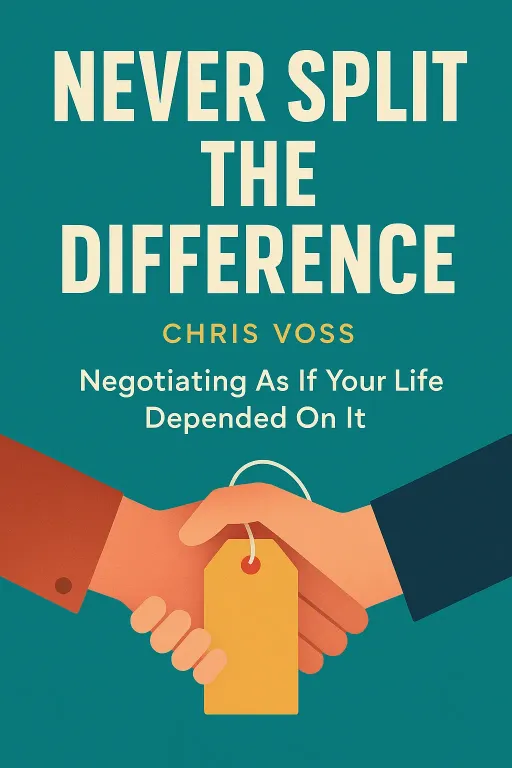
Nova: Exactly. We're diving into the strategic trap of not knowing how to ask. Our guides today are two absolute titans in the field: Chris Voss, a former FBI hostage negotiator and author of "Never Split the Difference," and the timeless classic, "Getting to Yes" by Roger Fisher and William Ury. Voss’s background alone – negotiating with kidnappers – tells you this isn't your average boardroom advice. And Fisher and Ury’s work has shaped how entire generations approach conflict, becoming a foundational text for anyone interested in diplomacy or business.
Atlas: That's quite the pairing. From high-stakes hostage situations to diplomatic tables. I'm already seeing the connection to our listeners who are navigating high-stakes fundraising and complex partnerships.
The Human Element in Negotiation: Beyond Logic to Emotion
SECTION
Nova: So, let's start with Voss. His core insight is that true negotiation isn't about compromise. It's about uncovering the other party's underlying needs. It’s about understanding the emotional landscape.
Atlas: I mean, that sounds almost… counterintuitive for someone who's used to crafting a perfect pitch or a logical argument. What does 'uncovering needs' really mean in a high-pressure scenario?
Nova: It means moving beyond the surface-level demands. Voss teaches that emotions are not a distraction; they are the path. He talks about 'tactical empathy' – the ability to understand the other person's feelings and perspective, and then to articulate that understanding. It's not about being 'nice'; it's about being strategically effective.
Atlas: Can you give me an example? Like, how does a hostage negotiator use 'tactical empathy' when someone's making irrational demands?
Nova: Absolutely. Imagine a bank robber, cornered, making wild demands. Instead of arguing or dismissing them, Voss would say something like, "It sounds like you're feeling incredibly desperate right now, and you believe this is your only way out." He's labeling the emotion, showing he understands, without agreeing with the action. This technique, called 'mirroring' or 'labeling,' creates a bond, however small, that can de-escalate tension and open lines of communication.
Atlas: Oh, I see. So you're not validating the crime, but you're validating the person's internal state. That’s a subtle but powerful distinction. For our strategic architects and brand storytellers, how does this translate into, say, a tough fundraising conversation?
Nova: It means when an investor pushes back with aggressive terms, instead of immediately defending your position, you might say, "It sounds like you're concerned about the market volatility and want to ensure maximum protection for your investment." You're showing you've heard their underlying fear, not just their stated demand. It disarms them, almost forces them to elaborate, and opens up new avenues for discussion that weren't there when you were just battling positions.
Atlas: That’s a great way to put it. It’s like you're creating a psychological bridge instead of a logical wall. So, empathy and tactical listening are your most powerful tools, not just for de-escalation, but for unlocking deeper understanding and ultimately, better outcomes. It's about getting to the 'why' behind the 'what.'
Principled Negotiation: Inventing Options for Mutual Gain
SECTION
Nova: And that naturally leads us to "Getting to Yes" by Fisher and Ury, which builds on this by emphasizing principled negotiation. They say, "Separate the people from the problem." This classic, widely acclaimed since its publication, has been instrumental in teaching generations to approach negotiation with a cooler head.
Atlas: That makes sense, especially after Voss's focus on emotions. So, once you've acknowledged the person's feelings, how do you then 'separate the people from the problem' without alienating them?
Nova: It's about focusing on interests, not positions. A position is what someone says they want – "I want that orange." An interest is they want it – "I want the pulp for juice" or "I want the peel for a cake." When you focus on positions, you often end up in a stalemate, or a poor compromise. When you focus on interests, you open up a world of creative solutions.
Atlas: That’s a perfect example. I imagine a lot of our growth catalysts, when they're negotiating a partnership, might get stuck on a specific number or a specific clause, rather than understanding the other party's overarching objectives, their ultimate 'why.'
Nova: Exactly. Fisher and Ury provide the classic example of two sisters fighting over a single orange. Their position is "I want the orange!" A traditional compromise might be cutting it in half, satisfying neither fully. But by asking about their, they discover one wants the peel for a cake, the other wants the juice. Suddenly, there's enough for both, and they both get 100% of what they actually needed.
Atlas: Wow, that's such a simple yet powerful illustration of inventing options for mutual gain. It’s not about finding a middle ground, but finding a ground that serves both parties more completely. For someone building a brand or managing strategic growth, how does this move beyond simple win-lose scenarios?
Nova: It transforms potential roadblocks into pathways for strategic alliances. Instead of seeing a negotiation as a battle to win, you see it as a joint problem-solving exercise. You're not just trying to get your way; you're trying to find a solution that genuinely benefits both parties in a sustainable way. It refines your vision because you're constantly seeking that broader impact, that 'mutual gain' that strengthens the relationship, not just the current deal.
Atlas: So, it’s not just about getting what you want, but about asking the right questions to uncover what everyone, and then creatively designing a solution. That's a truly strategic approach to growth, moving beyond transactional wins to relational, long-term success.
Synthesis & Takeaways
SECTION
Nova: The profound insight here, Atlas, is that mastering the art of asking is less about demanding and more about discovering. It’s about understanding the complex tapestry of human motivation, both logical and emotional.
Atlas: Right. It’s not just about having a great product or a compelling brand story; it's about being able to articulate its value in a way that resonates deeply with the other person’s underlying needs and fears, not just their stated positions. It's about that deep, empathetic connection.
Nova: Exactly. Whether you're a strategic architect charting an ambitious future, a brand storyteller crafting impactful influence, or a growth catalyst optimizing fundraising, your ability to truly listen, empathize, and then invent solutions for mutual gain will be the differentiator. It’s the difference between a stalled project and a thriving alliance, between a fragile agreement and a resilient partnership.
Atlas: So, for our listeners, the tiny step this week is to identify three potential motivations or fears the other person might have before your next important conversation. It builds that muscle of tactical empathy, of asking the deeper questions.
Nova: Absolutely. Start small, practice daily strategic thinking. Connect every action to that larger goal of building resilient, impactful relationships, because truly, Nova's take is that effective negotiation transforms potential roadblocks into pathways for successful outcomes.
Atlas: Brilliant. It’s not just about what you offer, but how you ask.
Nova: This is Aibrary. Congratulations on your growth!