The Overlooked Skill: How to Influence Without Authority
Golden Hook & Introduction
SECTION
Nova: Forget what you think you know about getting people to say 'yes.' It's not about being the loudest voice in the room, or even having the corner office. Turns out, the most influential people are often the quietest.
Atlas: Whoa, that's a bold claim, Nova. I think most of us have been taught that influence is tied directly to authority, or some kind of natural charisma. So, you're saying it's... a blind spot?
Nova: Absolutely, Atlas. It's a massive blind spot! Many truly believe influence is about power, a title, or some innate charm. But what if I told you that true influence is a subtle art, often missed because we're looking for it in all the wrong places? It's about understanding underlying principles, not about flexing a muscle you might not even have.
Atlas: That's a fascinating reframe. Because if it's not about power, then it becomes accessible to everyone, not just those at the top. So, where are we getting this counter-intuitive wisdom from today?
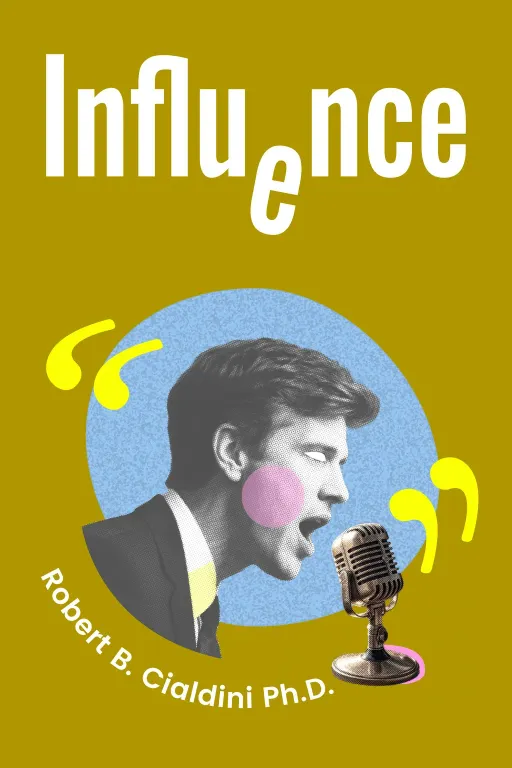
Nova: We're diving deep into two foundational texts. The first is "Influence: The Psychology of Persuasion" by the brilliant Robert Cialdini, and the second, a classic in its own right, is "Getting to Yes" by Roger Fisher and William Ury.
Atlas: Cialdini is a name I recognize. Didn't he do some pretty wild research for that book?
Nova: He did! Cialdini famously went undercover, embedding himself in various influence-professions—think salespeople, fundraisers, advertisers—to observe persuasion tactics in their natural habitat. He wanted to understand people were being influenced in the real world, not just in a lab. And Fisher and Ury, they were pioneers at the Harvard Negotiation Project, fundamentally changing how we think about conflict resolution. Their work shows that influence isn't a mystical quality; it's a skill. And that's where we start today: peeling back the layers on this overlooked skill.
The Subtle Art of Influence Without Authority (The Blind Spot)
SECTION
Nova: So, let's talk about this "blind spot." We're often conditioned to think that to get things done, you need to be the boss, or have a certain level of seniority. But the reality is, the most effective influencers often operate entirely without formal authority. They move projects forward, they inspire others, and they solve problems not by commanding, but by understanding.
Atlas: But doesn't 'influence' just sound like a fancier word for manipulation to some people? Especially when you're talking about psychological principles. How do we distinguish between ethical influence and just... pushing people's buttons?
Nova: That's a critical distinction, Atlas, and it's where the "ethical" part comes in. Manipulation is about coercing someone purely for your own gain, often at their expense, and it erodes trust. Ethical influence, on the other hand, is about guiding decisions towards mutually beneficial outcomes. Think of it like this: a doctor influences a patient to take their medication because it's in the patient's best interest. A con artist manipulates someone into giving away their savings for the con artist's gain. The intent, and the outcome, are vastly different.
Atlas: That makes perfect sense. So, it's not about being born with 'it,' but actually studying a playbook, understanding human nature? That's kind of empowering for anyone feeling stuck in a role without positional power. Can you give me a concrete example of this 'subtle art' in action, especially when someone doesn't have authority?
Nova: Absolutely. Imagine a new junior project manager, let's call her Sarah, in a large tech company. She notices a bottleneck in the software development process, but she has no authority to demand changes from the senior engineers. Instead of complaining or trying to dictate, Sarah starts by observing. She listens to the engineers' frustrations, understands the project's goals, and identifies a small, specific improvement that could alleviate some of their pain points. She then quietly prototypes a solution on her own time.
Atlas: Okay, so she's got a solution, but how does she get the senior team, who might be set in their ways, to even listen, let alone adopt it?
Nova: She doesn't present it as "my brilliant idea you must implement." Instead, she approaches one of the more open-minded senior engineers, shows them her prototype, and says something like, "I noticed you were struggling with X. I tinkered with a small script that might help automate just this one tedious step. Would you mind taking a look and telling me if it's even feasible?" By asking for their expert opinion, she's not challenging their authority; she's inviting collaboration, signaling respect, and offering a solution to problem.
Atlas: Wow, that's incredibly smart. She's not just dropping a solution; she's making them part of the discovery. So it's about making the other person feel valued and heard, rather than just being told what to do.
Nova: Exactly! And when that engineer sees the value, they often become an internal champion, helping Sarah to influence others, not because she's their boss, but because she's solved a real problem for them. The influence spreads organically.
Cialdini's Principles – The Ethical Blueprint for Persuasion
SECTION
Nova: That leads us perfectly into the ethical blueprints for persuasion, specifically Cialdini's work. He identifies six universal principles that govern human behavior and decision-making. When understood and applied ethically, they are incredibly powerful tools for influence.
Atlas: Six principles? Can you give us a quick hit on one or two that are particularly powerful, especially when you DON'T have authority? I'm thinking of someone trying to get buy-in for a new idea from a resistant team, or even just influence their family during a big decision.
Nova: Let's focus on and because they're incredibly potent and often overlooked in their ethical applications. Reciprocity is simple: we tend to repay in kind what we receive. If someone gives us something, we feel an urge to give back.
Atlas: Like when a colleague helps you out with a tight deadline, and then you feel obliged to return the favor next time they're swamped?
Nova: Precisely. Cialdini illustrates this beautifully with the simple example of a restaurant giving a small mint with the bill. Studies show that a single mint can increase tips by about 3%, but if the waiter gives two mints, tips go up by 14%. And if the waiter gives one mint, pauses, then says, "For you nice people, here's an extra mint," tips skyrocket to 23%! It's not just the gift, it's the and the that amplifies the feeling of obligation.
Atlas: That makes so much sense! So, in a professional context without authority, it means offering genuine help or value first, rather than demanding it. Making people feel seen and supported.
Nova: Exactly. Now, let's talk about. This principle states that we often look to others to determine what is correct, especially when we're uncertain. We're more likely to do something if we see others doing it.
Atlas: Like when you see a long line outside a restaurant, you assume it must be good, even if you've never heard of it.
Nova: Perfect example! Or when a product is labeled "best-selling" – that immediately signals quality and desirability. In a work context, if you want to introduce a new initiative, it’s much easier if you can point to a few trusted, respected early adopters. If you can show that a handful of influential colleagues are already on board and seeing positive results, others are far more likely to follow suit, even if you don't have the authority to mandate it.
Atlas: But, hold on. With social proof, how do you avoid just following the crowd, especially if the crowd is wrong? And with reciprocity, how do you give without feeling like you're just 'buying' influence or being seen as manipulative?
Nova: Excellent questions. This is where the ethical application becomes paramount. For social proof, it's about using evidence of others' actions. You're not fabricating popularity; you're highlighting genuine success. And for reciprocity, it's about offering genuine value, freely given, without an immediate expectation of return. It's building goodwill, not engaging in quid pro quo. It's about being helpful, not transactional. Think of the deep question from the book content: where in your current work could you apply one of Cialdini's principles to better understand and guide a situation this week? It's about genuine application, not trickery.
Principled Negotiation – Building Bridges, Not Walls
SECTION
Nova: Okay, so we've talked about understanding the subtle art of influence and knowing the psychological triggers. But what happens when you're in a direct conflict, trying to get to a 'yes' when everyone seems to be saying 'no'? This is where "Getting to Yes" by Fisher and Ury comes in with its concept of principled negotiation.
Atlas: Ah, negotiation. That often feels like a battle of wills, especially when you're not the one calling the shots. When you lack authority, it feels like you're automatically at a disadvantage. How can you negotiate effectively without that positional power?
Nova: That's the beauty of principled negotiation, Atlas. Its core idea is to move beyond rigid and focus on underlying. Most negotiations get stuck because people cling to what they they want – their position. But beneath that position lies a deeper "why" – their interests.
Atlas: Can you give us an example? Because it sounds a bit abstract.
Nova: The classic example is the orange story. Imagine two children fighting over the last orange. Their positions are clear: "I want the orange!" If their mother, acting as the authority, just cuts it in half, both children get half an orange. But if she asks they want it, she uncovers their interests. One child wants the peel to bake a cake, and the other wants the juice to drink.
Atlas: Oh, I see where this is going! If she understands their interests, she can give the first child all the peel and the second child all the juice. Both get 100% of what they actually needed, instead of 50% of what they said they wanted.
Nova: Exactly! That's the power of focusing on interests over positions. When you're without authority, you can't force a position, but you ask questions to uncover interests. You can say, "Help me understand why this is so important to you," or "What problem are we trying to solve here?" By understanding the "why," you can then brainstorm options for mutual gain that satisfy core needs, not just yours.
Atlas: That's a brilliant example! So it's about digging deeper to understand the 'why' behind someone's 'what.' But what if their 'why' seems completely opposed to yours? How do you find a 'mutually beneficial solution' then?
Nova: That's where creativity comes in! Fisher and Ury suggest creating multiple options for mutual gain you decide, and then using objective criteria to evaluate those options. Instead of saying, "My budget is X," you might say, "Given our current market conditions, what are some creative ways we could achieve this goal without compromising quality, keeping in mind our current resource constraints?" You're inventing solutions together, rather than fighting over a fixed pie. It's about finding a fair standard, not just a compromise.
Synthesis & Takeaways
SECTION
Nova: So, bringing it all together, what we've learned today is that influence is far more accessible and ethical than many of us initially believe. It's a skill you can cultivate, not a trait you're born with. It's about understanding the subtle psychological triggers Cialdini outlined, and it's about the principled approach to negotiation that Fisher and Ury championed, moving past rigid positions to uncover shared interests.
Atlas: That's actually really inspiring. It means that true influence isn't about power plays or manipulation. It's about being a better problem-solver, a better communicator, and ultimately, building stronger relationships. It's about leading from any chair, whether you have a fancy title or not.
Nova: Exactly. As Nova's Take sums it up, and I wholeheartedly agree, influence truly is a skill, not a trait. It can be learned and applied to create better outcomes for everyone involved. It empowers you to navigate complex situations, to inspire collaboration, and to drive positive change.
Atlas: And it’s not just about getting what you want; it’s about creating value and finding solutions that benefit everyone, which, in the long run, builds far more sustainable influence. That's such a hopeful way to look at it.
Nova: So, as you go about your week, think about this: where can you apply one of Cialdini's principles, or shift from positions to interests, to better understand and guide a situation? It might just change everything.
Nova: This is Aibrary. Congratulations on your growth!