The Negotiation Trap: Why 'Winning' Isn't Always Your Best Deal.
Golden Hook & Introduction
SECTION
Nova: What if the very act of 'winning' a negotiation is actually setting you up for a bigger loss down the road?
Atlas: Hold on, Nova, that sounds almost heretical in a world that champions getting the best deal. Are we really talking about letting the other side 'win' here?
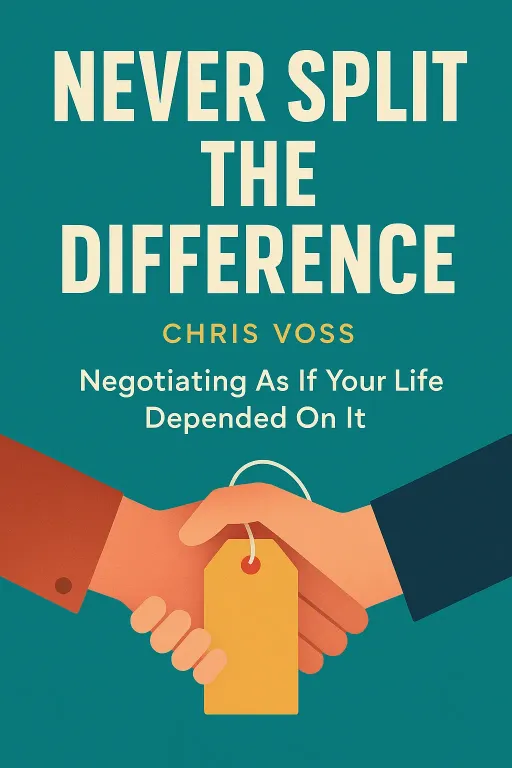
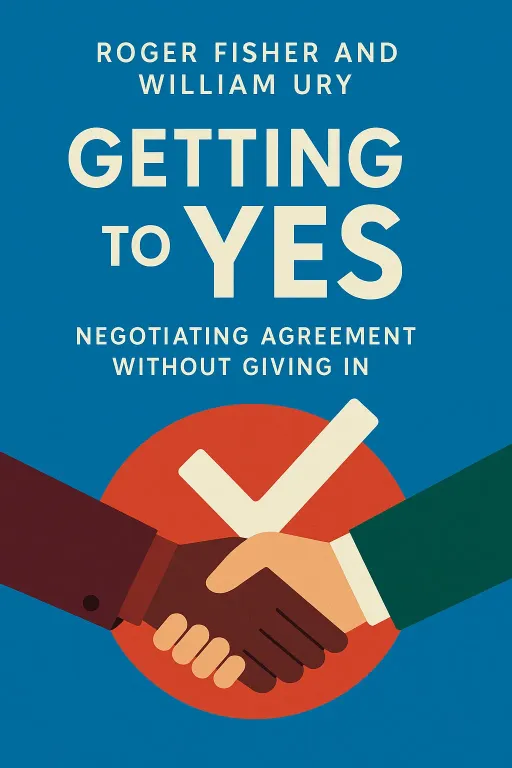
Nova: Not at all, Atlas. We're actually diving into a fascinating reframe, largely inspired by foundational works like by Roger Fisher and William Ury, and the electrifying by former FBI hostage negotiator Chris Voss. What's truly remarkable about Voss's book is that he distills high-stakes, life-or-death negotiation tactics into principles applicable to everyday business, showing how understanding human psychology can unlock breakthroughs even in hostile environments.
Atlas: Wow, that's a wild jump from hostage negotiation to, say, securing a better deal for our listeners, or managing a tricky client. So, not about 'winning' in the traditional sense, but... what's the trap then? What are we missing if we're focused on just 'winning'?
Nova: Exactly. That brings us directly to the 'blind spot' many of us have when we approach negotiation.
The 'Negotiation Trap': Why 'Winning' Can Actually Mean Losing
SECTION
Nova: Most people still view negotiation as a battle to be won. It's a zero-sum game in their minds: if I gain, you must lose. This adversarial mindset focuses intensely on fixed positions—what each party they want. And while you might squeeze out a short-term gain, the long-term costs can be devastating.
Atlas: That sounds rough, but I can totally picture it. For our listeners who are orchestrating complex strategies or leading teams, a 'win' often feels like a necessity. But what are these hidden costs you're talking about? How does that play out in a real-world scenario, especially in a relationship-driven industry like hospitality?
Nova: Let's paint a picture. Imagine a hotel manager, let's call her Sarah, who needs to renew a contract with a long-term linen supplier. Sarah's mandate is to cut costs, so she goes in hard, demanding an aggressive 15% price reduction, citing competitor rates. She's focused solely on her position: lower price. She pushes, she threatens to take her business elsewhere, and eventually, the supplier, feeling cornered, reluctantly agrees. Sarah 'wins.'
Atlas: Okay, so she got her lower price. That seems like a good deal on the surface.
Nova: On paper, yes. But here's where the trap springs. The supplier, feeling alienated and undervalued, starts providing subpar service. Deliveries are late, the quality of the linen subtly drops, and communication becomes strained. When a bigger, more demanding client comes along, the supplier prioritizes them. Eventually, they terminate Sarah's contract, citing 'logistical challenges.' Sarah is then forced to scramble for a new supplier, often at a higher price and with less reliable service, having sacrificed a decade-long relationship for a temporary 'win.'
Atlas: Oh, I see. That's a classic example of winning the battle but losing the war. It's a short-term victory that creates a long-term strategic headache. It’s like, you get what you asked for, but not what you actually needed.
Nova: Exactly. The cost wasn't just the higher price she eventually paid, but the diminished trust, the limited creative solutions that could have emerged from a collaborative relationship, and the operational headaches. This adversarial mindset limits the potential for broader value creation. It's like trying to build a five-star experience with a one-star negotiation strategy.
Atlas: That gives me chills. I imagine a lot of our listeners, who are empathetic leaders driven by impact, are constantly trying to balance securing good deals with maintaining strong relationships. So, what's the alternative? How do we escape this trap without just, you know, being a pushover?
The 'Collaborative Shift': From Positions to Principled Empathy
SECTION
Nova: That's the perfect question, Atlas. If the trap is seeing negotiation as a battle, the escape is what we call the 'collaborative shift.' This is where the insights from and become incredibly powerful. introduces 'principled negotiation,' which is all about shifting from fixed positions to underlying interests.
Atlas: "Interests versus positions"—can you break that down for us? Because for someone trying to secure better deals, those words can sometimes feel a bit abstract.
Nova: Think of it this way: a position is what you say you want – "I want a 15% discount." An interest is you want it – "I need to reduce operational costs to improve profitability and ensure job security for my team." When you focus on interests, suddenly there are many more ways to satisfy them than just one fixed position. Fisher and Ury advocate four key points: separate the people from the problem, focus on interests, invent options for mutual gain, and insist on objective criteria.
Atlas: "Separate the people from the problem" – that sounds great in theory, but when you're dealing with a frustrated client or a stressed team member, the 'people' the problem, aren't they? Their emotions, their demands. How do you actually do that in the thick of it?
Nova: That's precisely where Chris Voss's 'tactical empathy' from comes into play. It's not about agreeing with them, but genuinely understanding their perspective, their 'why.' Call it labeling their emotions. You might say, "It sounds like you're feeling really frustrated by this situation," or "It seems like you're concerned about..." It disarms, it builds rapport, and it shifts the dynamic from 'us versus them' to 'us versus the problem.'
Atlas: That's powerful. So, for our listeners who are constantly dealing with customer satisfaction, this isn't just about giving in, it's about actively listening to what they really need, right? And then finding a creative path?
Nova: Exactly. Let's revisit our hotel manager, Sarah. This time, when the linen supplier pushes back on the 15% discount, Sarah doesn't just reiterate her demand. Instead, she uses tactical empathy. She says, "I understand that a 15% cut is a big ask for you, and it sounds like you're worried about your profit margins if we go that low." She's acknowledging their perspective. Then, she pivots to interests: "My interest is reliable service and predictable costs, so I can plan my budget effectively and ensure our guests always have fresh, high-quality linens. What are your interests here, beyond just the per-unit price?"
Atlas: Okay, so she's opening a door instead of slamming one shut. Now, how does that lead to a better outcome?
Nova: The supplier might reveal their interest is in securing a long-term, guaranteed volume contract, or perhaps they have excess capacity during certain months. With these shared interests on the table, Sarah and the supplier can invent options for mutual gain. Maybe it's a 10% discount for a three-year contract, or a slightly higher price but with a new, eco-friendly linen option that appeals to the hotel's sustainability goals and the supplier's new product line.
Atlas: That's a perfect example of building broader value. She's not just getting a price cut; she's fostering a partnership, securing reliability, and potentially even enhancing the guest experience with a new product. It’s about expanding the pie, not just fighting over a slice.
Nova: Precisely. It’s the difference between a one-off transaction and a relationship that can weather future storms. By focusing on shared interests and using empathy, they co-create a solution that benefits both, building a more robust, lasting agreement.
Synthesis & Takeaways
SECTION
Nova: The real magic of moving beyond the negotiation trap happens when you realize it's not about crushing the opponent, but about co-creating solutions that serve everyone's deeper interests.
Atlas: So, it’s about transforming the entire interaction from a zero-sum game into a positive-sum collaboration, where everyone walks away feeling heard and valued. For anyone who's a strategic orchestrator or an empathetic leader, that's not just good business; it's essential for building long-term customer and team loyalty. It’s about building trust capital.
Nova: Absolutely. And that takes practice, a conscious shift in mindset. The deep question for our listeners today is: Consider a recent negotiation, big or small. How might focusing on shared interests, rather than fixed positions, have led to a more mutually beneficial outcome for everyone involved?
Atlas: We'd love to hear your thoughts and experiences with this. Share your insights and how you've applied these principles on our community page.
Nova: This is Aibrary. Congratulations on your growth!