The 'Influence Audit': How to Negotiate Beyond the Table.
Golden Hook & Introduction
SECTION
Nova: What if the very idea of 'winning' in negotiation is actually stopping you from truly succeeding? That the best negotiators don't try to win, but instead build lasting influence?
Atlas: Hold on, Nova, that sounds almost… counter-intuitive. Aren't we always told to 'go for the win'? I imagine a lot of our listeners, especially those focused on data-driven growth, are thinking, "How is that even possible?"
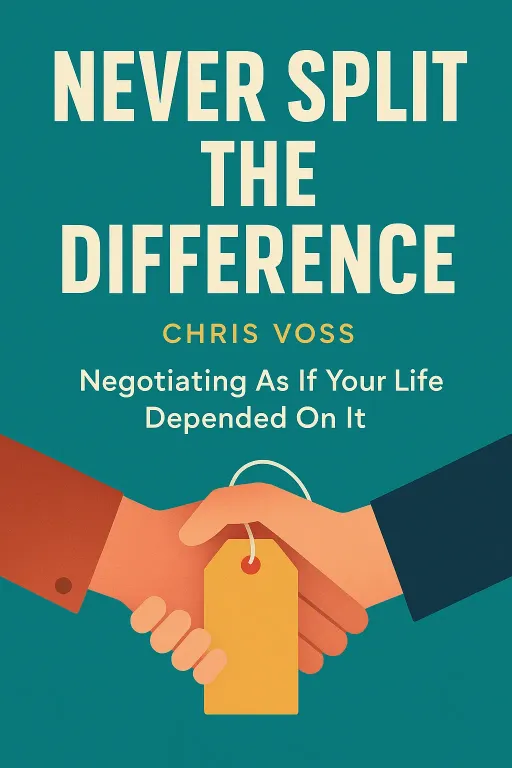
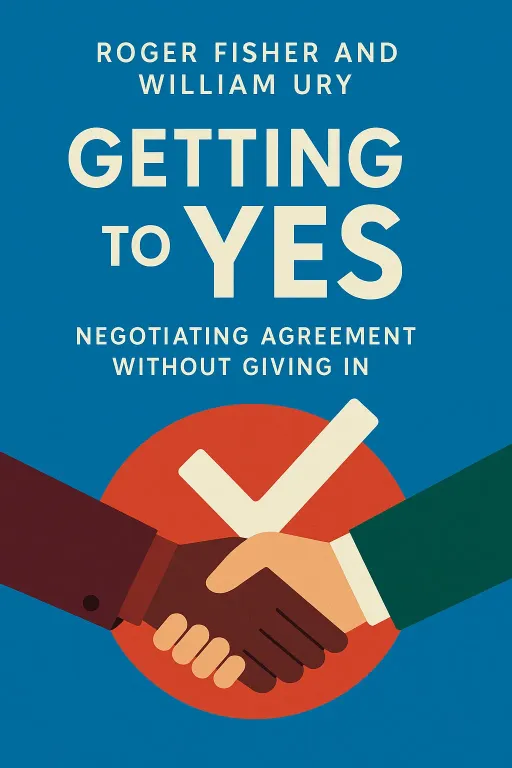
Nova: Exactly! And that's what today's 'Influence Audit' is all about. We're diving into a profound shift in how we approach crucial conversations, drawing wisdom from two seminal works: by Roger Fisher and William Ury, and by Chris Voss. What's fascinating about is that Fisher and Ury developed their approach at the Harvard Negotiation Project, born from mediating international conflicts. This wasn't ivory tower theory; it was forged in the fire of high-stakes global disputes, giving it an enduring, practical power.
Atlas: And Chris Voss, the former FBI hostage negotiator, brings an entirely different flavor to the table. He's translating life-or-death tactics into everyday scenarios. So, we're talking about moving from 'taking' to 'creating value'?
Nova: Precisely. It's moving beyond positional bargaining to a place where you're not just getting what you want, but building something stronger in the process.
Deep Dive into Principled Negotiation (Getting to Yes) & Compelling Case Study 1
SECTION
Nova: So, let's start with the foundational idea from: principled negotiation. It's about separating the people from the problem. Imagine a classic boardroom standoff—two CEOs, let's call them Sarah and David, fighting over the price of a critical acquisition. Sarah wants a lower price, David wants a higher one. They're stuck.
Atlas: That sounds like a typical Tuesday for many of our listeners. The numbers are the numbers, right? How do you separate the person from the problem when the problem the number?
Nova: That's the genius of it. Fisher and Ury argue that when you focus on positions, you miss the underlying interests. Sarah doesn't want a lower price; she might need to hit a certain quarterly earnings target to secure investor confidence. David doesn't want a higher price; he might need to ensure his employees get significant severance packages because he cares deeply about their future. The isn't the number; it's their unmet needs. If Sarah and David can articulate those underlying interests—their motivations, fears, hopes—they can invent options for mutual gain. Maybe Sarah offers a lower upfront price but a profit-sharing scheme. Maybe David gets his severance, and Sarah gets a long-term partnership. It’s a complete shift in perspective.
Atlas: So basically you're saying, instead of drawing lines in the sand, you're looking for the motivations those lines? That’s going to resonate with anyone who struggles with seemingly intractable disagreements. It’s like, the real issue isn't the dirty dishes, it's the feeling of not being heard or respected.
Nova: Exactly! It's about understanding the 'why' behind the 'what.' And it moves you from a win-lose mentality to a win-win, or even a 'win-more-together' outcome. It's a strategic embrace of collaboration.
Atlas: I can see how that would be powerful for authentic leaders. It's about building loyalty and trust, not just closing a deal.
Nova: Absolutely. It transforms a transaction into a relationship opportunity. Think about it: if Sarah had just pushed for her price, David might have conceded, but he'd walk away feeling resentful. By understanding his interest in his employees, Sarah can propose a solution that respects both their needs. That builds a foundation for future collaborations, which is so valuable for long-term data-driven growth.
Atlas: That makes me wonder, how often do we actually take the time to dig for those underlying interests instead of just battling over the surface-level demands? I'd bet it's not often enough.
Nova: Far too rarely, and that's where so much potential value is lost. It requires a conscious effort to shift from "what do want?" to "what do both truly need here?" It's a fundamental mindset change.
Atlas: So, it's not about giving in, but about expanding the pie.
Nova: Precisely. It's about creating a bigger pie, rather than fighting over a fixed slice.
Deep Dive into Tactical Empathy (Never Split the Difference) & Illuminating Case Study 2
SECTION
Nova: Now, building on that, Chris Voss, with his FBI hostage negotiation background, introduces 'tactical empathy.' While Fisher and Ury are about rational problem-solving, Voss goes straight for the emotional core. He says, 'He who has learned to disagree without being disagreeable has discovered the most valuable secret of negotiation.' It’s about understanding the other side's worldview so deeply that they feel understood, even if you don't agree with them.
Atlas: That sounds a bit out there. How do you 'tactically empathize' with someone who's, say, completely unreasonable or even hostile? I imagine for our leaders dealing with difficult stakeholders, this might feel like ceding ground.
Nova: It’s not about agreement, Atlas, it's about understanding. Voss recounts a fascinating story of a bank robber who had taken hostages. Instead of immediately demanding his surrender, Voss's team spent hours just... listening. They mirrored his language, labeled his emotions – 'It sounds like you're feeling desperate,' 'It seems like you're worried about X.' They weren't condoning his actions, but they were demonstrating genuine understanding of his and. This disarmed him, built rapport, and eventually led to a peaceful resolution. The robber felt heard, not judged.
Atlas: Wow. So, you're not just acknowledging their position, you're actively reflecting their emotions back to them. That’s a powerful tool for authentic connection. For our audience, who are driven by impact, that could be the key to unlocking agreements that seemed impossible before.
Nova: Precisely. It's about getting them to say, 'That's right,' not 'You're right.' That 'That's right' is the moment they feel truly understood, and the door to resolution opens. It's a data point, actually—that moment of 'That's right' is often the turning point in high-stakes negotiations. It’s like you’re saying, 'I see you, and I hear you,' before you even begin to address the problem.
Atlas: I can imagine that being incredibly effective in a heated debate or a tough client meeting. It completely changes the energy in the room. It’s almost like a psychological hack, but a very human one.
Nova: It is. Voss emphasizes that emotions are often the biggest barrier to rational agreement. By using tactical empathy, you're not ignoring the emotions; you're actively engaging with them, defusing them, and creating a safe space for the other party to then listen to you. It's a powerful way to build connection, even in adversarial situations.
Atlas: So, it's less about winning them over with logic, and more about winning them over with understanding?
Nova: Exactly. And once they feel understood, their defenses drop, and they become far more open to finding solutions that work for everyone. It’s a very sophisticated form of influence. This is especially relevant for our listeners who are focused on building loyalty; tactical empathy is a cornerstone of that.
Synthesis & Takeaways
SECTION
Nova: So, when you combine principled negotiation—separating the person from the problem, focusing on interests, inventing options—with tactical empathy, you get a potent cocktail for influence. It's not about being soft; it's about being strategically empathetic and rigorously analytical. It’s the difference between trying to win an argument and building a bridge.
Atlas: That’s actually really inspiring. It redefines what 'strength' in leadership means. It’s not just about pushing your agenda; it’s about understanding, connecting, and then collaboratively building something better. For our listeners who are constantly navigating complex relationships and striving for data-driven growth, this feels like an essential skillset.
Nova: Absolutely. It's moving from a transactional mindset to a transformational one. And here's the tiny step for everyone listening: the next time you have a disagreement, before you state your own perspective, try to articulate the other person's viewpoint first. Not just what they said, but what you their underlying interest or emotion might be. Just try to say, 'It sounds like you're feeling X because of Y.' See what happens.
Atlas: That’s a powerful challenge. It forces you to pause, listen, and truly understand, which is so often the missing piece. It's an 'Influence Audit' in real-time, helping you refine your authentic leadership.
Nova: It really is. It shifts the entire dynamic from conflict to curious exploration, paving the way for deeper connections and more impactful outcomes.
Atlas: It's a game-changer for anyone looking to build loyalty and drive growth through genuine influence.
Nova: This is Aibrary. Congratulations on your growth!