The Art of Persuasive Outcomes: Mastering Advanced Negotiation
Golden Hook & Introduction
SECTION
Nova: Atlas, quick game: if I say "negotiation," what's the first image that pops into your head?
Atlas: Oh, I like that! Hmm. Probably two sharply dressed people in a boardroom, maybe a tense silence, lots of folded arms, and someone saying, "My final offer." Very dramatic, very Hollywood.
Nova: Exactly! And that's the image a lot of us carry, right? This idea that negotiation is a battle of wills, a zero-sum game where someone wins and someone loses. But what if I told you that the most powerful negotiators in the world rarely think that way?
Atlas: Oh, I'm already intrigued. You're saying my mental image of a power suit showdown is… outdated?
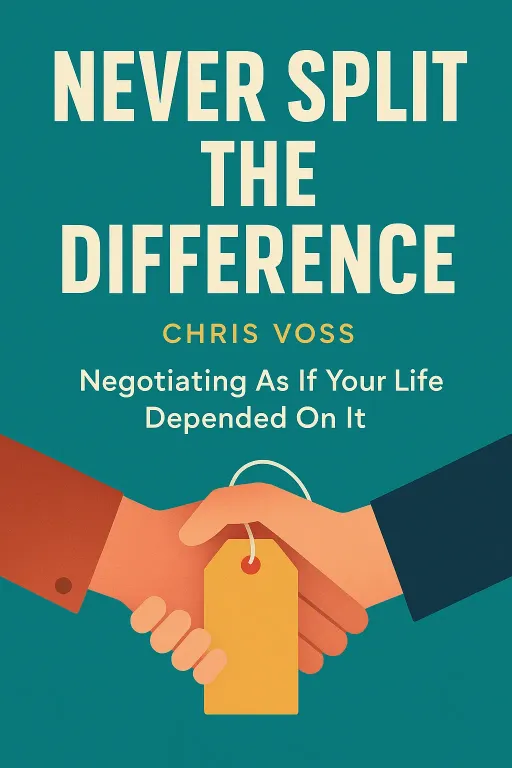
Nova: Massively! And that's precisely what we're unpacking today. We're diving into the brilliant minds behind two seminal works: Chris Voss's "Never Split the Difference" and Roger Fisher and William Ury's "Getting to Yes." These books, especially Voss's, have completely reshaped how we understand human interaction, moving negotiation from a battlefield to a bridge. Voss himself was an FBI hostage negotiator for decades, bringing real-world, life-or-death stakes to his methods. It's not just theory; it's battle-tested psychology.
Atlas: Wow. Hostage negotiation. That's a far cry from my imaginary boardroom. So, the stakes couldn't be higher for him. That makes me wonder, how do principles from such extreme situations even apply to, say, getting a better deal on a car, or even just deciding where to go for dinner with your family?
Nova: That’s the beauty of it, Atlas. The core principles, the human psychology, is universal. Whether you’re dealing with a bank robber or a stubborn teenager, the underlying dynamics of influence, empathy, and perceived value are surprisingly similar. And Voss, in particular, became famous for advocating for something he called "tactical empathy."
Atlas: Tactical empathy? That sounds almost contradictory. Like, how can empathy be "tactical"? Isn't empathy supposed to be this soft, emotional thing?
Nova: Exactly! That's the common misconception, and it's where Voss really flips the script. Tactical empathy isn't about agreeing with your counterpart, or even sympathizing with them in the traditional sense. It's about deliberately and actively understanding their perspective, their feelings, and their motivations. It's about listening so intently that you can articulate their worldview back to them, even better than they can.
Atlas: So you're saying, you don't necessarily have to what they're feeling, but you need to it deeply enough to predict their moves and uncover what they truly want?
Nova: Precisely. Think of it like this: if you know what makes someone tick, what their fears are, what their aspirations are, you have an incredible advantage. Voss emphasizes that it's not about being nice; it's about being effective. He talks about mirroring, labeling emotions, and using calibrated questions—questions that start with "how" or "what" to give your counterpart the illusion of control while you subtly guide the conversation.
Atlas: That makes sense. It’s like, instead of just saying "no" to someone's demand, you might say, "It sounds like you're feeling really frustrated because you believe this is unfair. How am I supposed to give you that when it goes against our policy?"
Nova: You got it! And when you label their emotions, when you say, "It seems like you're feeling X," it has a powerful, almost magical effect. It disarms them because they feel heard. And once someone feels heard, they’re far more open to listening to you. It's a fundamental human need. Voss's book is filled with these incredible anecdotes, like the time he negotiated with a bank robber who had hostages, and instead of demanding their release, Voss focused on understanding the robber's desperation, his fear of going back to jail. By validating those emotions, he built trust and eventually led to a peaceful resolution.
Atlas: Wow, that’s actually really inspiring. To think that even in such extreme, life-or-death situations, the path to a positive outcome isn’t through brute force or intimidation, but through understanding. It’s almost counter-intuitive to how we’re often taught to approach conflict.
Nova: It absolutely is. And that naturally leads us to the second key idea we need to talk about, which often acts as a foundational counterpoint to the more tactical approaches of Voss: the principles of "Getting to Yes" by Roger Fisher and William Ury.
Beyond Compromise: Tactics for Win-Win
SECTION
Atlas: Okay, so if Voss is about tactical empathy in high-stakes situations, what's the core message of "Getting to Yes"? Is it similar, or does it offer a different lens?
Nova: It offers a complementary, yet distinct, lens. While Voss is about the emotional and psychological dance, "Getting to Yes" is about the structural framework for what they call "principle-based negotiation." Their core idea is to move beyond positional bargaining – where you dig your heels in on a specific demand – and instead focus on shared interests.
Atlas: So, less about who gets what piece of the pie, and more about making a bigger pie together?
Nova: Exactly! They lay out four key principles. First, "Separate the people from the problem." This means attacking the issue, not the person. Don't let emotions or personal history cloud your judgment. Second, "Focus on interests, not positions." Your position is what you say you want; your interest is why you want it. Uncovering the "why" unlocks creative solutions.
Atlas: Ah, so going back to our dinner example, my position might be, "I want Italian," but my interest might be "I want comfort food and a relaxed atmosphere." And your position might be "I want sushi," but your interest is "I want something light and fresh." If we just stick to Italian vs. sushi, we're stuck. But if we focus on comfort food vs. light and fresh, maybe we find a Thai place that satisfies both interests.
Nova: Perfect analogy, Atlas! That's precisely it. The third principle is "Invent options for mutual gain." Once you understand underlying interests, you can brainstorm a wider range of solutions that benefit everyone, not just a compromise that leaves both parties feeling dissatisfied. And finally, "Insist on objective criteria." This means using fair standards, independent of anyone's will, to evaluate options. Think market value, expert opinion, or legal precedent.
Atlas: That last one feels really important, especially when emotions are running high. It brings a sense of fairness and rationality into what can often feel like a very subjective, personal debate.
Nova: Absolutely. And what's fascinating is how these two books, "Never Split the Difference" and "Getting to Yes," despite their different origins and approaches, point to a similar fundamental truth: effective negotiation isn't about winning at all costs. It's about understanding human psychology, building rapport, and creating value. "Getting to Yes" was groundbreaking in its time, advocating for a more collaborative, less adversarial approach. It’s been taught in business schools for decades and formed the bedrock of modern negotiation theory.
Atlas: So, Voss provides the tactical, in-the-moment psychological tools, almost like a special forces operative, while Fisher and Ury give you the strategic map and ethical framework for the entire campaign.
Nova: That's a brilliant way to put it! Voss teaches you how to navigate the emotional landscape of a negotiation, often leveraging perceived weaknesses into strengths, while Fisher and Ury teach you how to construct a sturdy, fair bridge to a mutually beneficial agreement. They both emphasize that the best outcomes aren't about brute force, but about insight. They're both about moving beyond that zero-sum, win-lose mindset.
Atlas: It makes me think about the growth recommendations we often give our listeners – the idea of embracing the journey, that every conversation is a practice. This isn't just about closing a big deal; it's about improving every interaction we have.
Nova: Exactly. Nova's take here is that negotiation is a continuous act of understanding and value creation. It's a mindset. It's not just for the boardroom or the hostage situation; it's for deciding on a restaurant, for family plans, for your career trajectory. Every conversation is an opportunity to practice your persuasion muscle.
Synthesis & Takeaways
SECTION
Atlas: So, if I'm an aspiring leader, a strategic communicator, someone who values genuine connection and wants to master influence, what's the one thing I should take away from this powerful combination of insights?
Nova: The most profound insight is that genuine influence and persuasive outcomes are built on a foundation of deep understanding, not just clever tactics. It's about shifting your mindset from "how do I get what I want?" to "how can I truly understand what want, and how can we create something better together?" Voss's tactical empathy and Fisher and Ury's principle-based approach both ultimately lead to this: the understanding that the most powerful agreements emerge when you see the other side not as an opponent, but as a human being with needs, fears, and aspirations.
Atlas: That’s actually really inspiring. It reframes negotiation from something to dread or conquer, into an opportunity for deeper connection and creative problem-solving. It’s about building relationships, which resonates deeply with our listeners who are relationship builders.
Nova: Absolutely. And the action we'd recommend is simple but profound: identify a low-stakes negotiation in your daily life. It could be deciding on a movie, or who does the dishes. And consciously apply just one tactic from Voss or Fisher/Ury. Try to label an emotion, or dig for an underlying interest instead of just arguing positions. Then, reflect on the outcome. Even small shifts can lead to massive changes in your ability to influence and connect.
Atlas: I love that. It makes the abstract feel incredibly tangible and actionable. It’s not just about reading the books; it’s about doing the work.
Nova: Indeed. Because every conversation is a practice. Every challenge is a lesson. And mastering advanced negotiation is ultimately about mastering human connection.
Atlas: Powerful stuff, Nova. This is Aibrary. Congratulations on your growth!