Stop Guessing, Start Influencing: Your Guide to Advanced Negotiation Tactics.
Golden Hook & Introduction
SECTION
Nova: Most people think negotiation is about winning, about getting your way, about dominating the conversation. But what if that mindset is exactly what's holding you back from true influence and lasting agreements?
Atlas: Oh, I know that feeling. It’s like walking into a battleground sometimes, right? You’re prepped for a fight, ready to defend your position. But what else could it be?
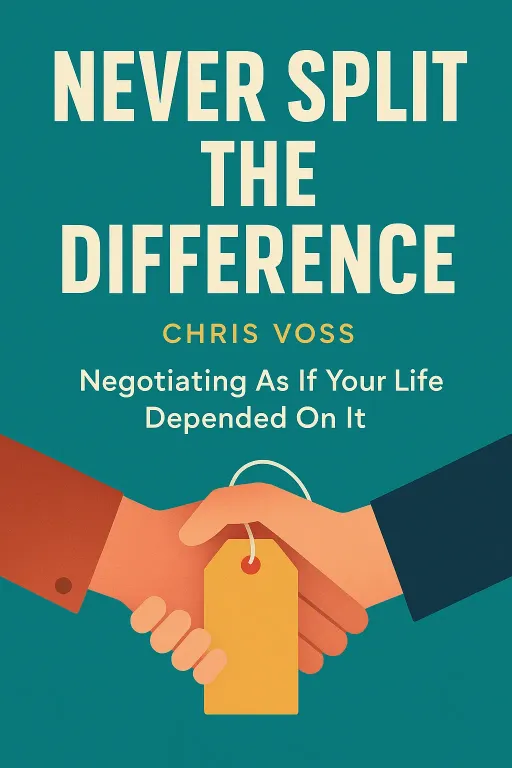
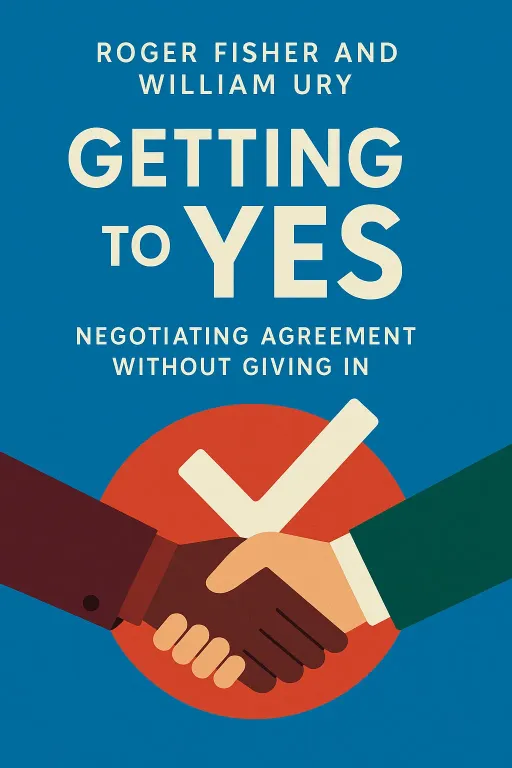
Nova: Exactly! Today, we're diving into the profound world of advanced negotiation, drawing insights from two titans in the field: "Getting to Yes" by Roger Fisher and William Ury, and Chris Voss's "Never Split the Difference." It’s fascinating how Fisher and Ury, from the academic halls of Harvard, laid the groundwork for principled negotiation. Their work, published back in the early 80s, was a real paradigm shift, moving us away from just fighting over positions.
Atlas: So, the ivory tower versus the street fighter? Because Voss, he’s the FBI hostage negotiator, right? That sounds like a very different playbook.
Nova: Absolutely. Voss brought the high-stakes, real-world experience of an FBI hostage negotiator to the table, offering a more psychologically driven approach. Both books, though different in origin and style, offer incredibly powerful, complementary strategies for anyone who wants to solve problems and communicate more effectively. They fundamentally change how you approach disagreement, turning conflict into collaboration and strengthening your influence.
From Battleground to Common Ground: The Principled Negotiation Approach
SECTION
Nova: Let's start with Fisher and Ury's "Getting to Yes." Their core argument is elegant: separate the people from the problem. It sounds simple, but it’s revolutionary. We often conflate the person we’re negotiating with, and their personality, with the actual issue at hand.
Atlas: Right. So, if I’m dealing with a difficult colleague, it’s easy to think, “This person is just being difficult,” instead of, “What’s the actual problem we need to solve?” That’s a great way to put it.
Nova: Precisely. And from there, they say, focus on interests, not positions. Positions are what you say you want: "I want that orange." Interests are you want it: "I want the zest for a cake" or "I want the juice for a drink." Understanding the underlying interests unlocks so much more potential.
Atlas: That makes sense, but what if the other side about my interests? What if they're just focused on getting their own way? For someone who's a natural problem-solver, this principled approach sounds great in theory, but in a high-stakes environment, it can feel a bit idealistic.
Nova: That’s a common and valid concern, and it's one of the criticisms sometimes leveled at the book. People wonder if it's too idealistic for truly adversarial situations. But the power is that by focusing on interests, you often model that behavior, and it creates an opening. Consider this classic scenario: two chefs are arguing over the last orange in the kitchen. One chef insists, "I need the orange!" The other shouts, "No, need the orange!" They argue back and forth, each holding their position.
Atlas: So, a classic positional battle. And if they split it, both are only half-satisfied.
Nova: Exactly. But a smart sous chef walks in and asks, "Why do you need the orange?" The first chef says, "I'm making a cake, I need the zest for the flavoring." The second chef says, "I'm making juice for a special sauce." Suddenly, the problem isn't "who gets the orange." It's "how can we both get what we need from this one orange?"
Atlas: Oh, I see! One gets all the zest, the other gets all the juice. That's a perfect example. Both get 100% of their met, even though their was just "the orange."
Nova: That’s the magic. And then, they advocate inventing options for mutual gain. Don't just settle for splitting the difference. How can we expand the pie? And finally, insist on objective criteria. Don't let it be about who's louder or more stubborn. What's fair market value? What's industry standard? What's the scientific evidence?
Atlas: That’s a great way to put it, making it about external standards rather than just willpower. So, it's about depersonalizing the conflict and finding common ground through shared logic and creativity. But hold on, what if you're dealing with someone who isn't interested in logic or mutual gain? What if they're just being…difficult?
The Art of Tactical Empathy: How to Get to 'That's Right'
SECTION
Nova: And that naturally leads us to the second key idea we need to talk about, which often acts as a powerful counterpoint or a necessary complement: Chris Voss's "Never Split the Difference." While "Getting to Yes" is about reason and collaboration, Voss, from his FBI hostage negotiation days, teaches us that human beings are emotional creatures first, and rational second.
Atlas: That sounds like a much more realistic starting point for a lot of conversations, honestly. So, what's his secret sauce?
Nova: His core concept is "tactical empathy." It's not about agreeing with someone, but about understanding their perspective and emotions so deeply that they feel understood. He says, "Empathy isn't about being nice; it's about knowing what motivates the other side."
Atlas: That’s a great way to put it. So you’re saying it's a strategic weapon, not just a soft skill? That’s going to resonate with anyone who struggles with high-pressure situations and needs to get to a solution efficiently.
Nova: Absolutely. One of his key techniques is "labeling." You observe an emotion, then you vocalize it. "It seems like you're feeling frustrated right now." Or, "It sounds like you're worried about the impact on your team."
Atlas: But isn't that just stating the obvious?
Nova: Not at all. When you label an emotion, you validate it. You disarm the other person because they feel heard. And often, they’ll elaborate, giving you more information. Another technique is "mirroring"—simply repeating the last one to three words the other person said. It encourages them to keep talking, revealing more about their underlying interests, which ties back to Fisher and Ury.
Atlas: Wow, that’s actually really subtle and powerful. Like, if someone says, "I can't possibly meet that deadline," and you just say, "That deadline?" They'll explain why.
Nova: Exactly. And the most powerful tool, in Voss's arsenal, is the "calibrated question." These are open-ended questions that start with "how" or "what" and gently guide the other party to solve your problem. Not "Can you lower the price?" but "How am I supposed to do that?" or "What would you need to see happen to make this work?"
Atlas: Okay, so you're making them do the work of finding a solution, but from your perspective. That sounds less like manipulation and more like smart problem-solving. But it also sounds like it takes a lot of practice. What’s the ultimate goal with Voss's methods?
Nova: The ultimate goal is to get to "that's right," not "yes." "Yes" can be a lie, a quick way to get you off their back. "That's right" signals a moment of genuine understanding, a breakthrough where they feel you truly grasp their situation. When they say "that's right," you know you've uncovered their underlying motivations and can move forward from a place of genuine insight.
Atlas: So basically you’re saying, instead of pushing for agreement, you’re pushing for understanding, and the agreement follows naturally. That’s a huge shift in perspective for someone driven by advancement and efficiency. It might seem like a longer path, but it's probably more effective in the long run.
Synthesis & Takeaways
SECTION
Nova: Precisely. Think about it: Fisher and Ury give you the framework for finding common ground and building value. Voss gives you the psychological tools to navigate the human element, de-escalate tension, and uncover the hidden information you need to apply that framework. They're two sides of the same coin: understanding human behavior to achieve better outcomes.
Atlas: I love that. It’s not just about what you say, but how you listen and how you understand the human behind the position. For problem-solvers like our listeners, who are always looking for core principles, this is gold. It’s about being truly strategic in your communication.
Nova: It really is. So, for our problem-solvers, resilient explorers, and driven communicators listening today, here's your tiny step. In your very next conversation, whether it's at work or home, practice active listening. Then, before you respond, pause. And then, try asking, "What's important about that for you?" See what you uncover.
Atlas: That’s a perfect example. It's so simple, yet it forces you to dig deeper than the surface. It shifts the entire dynamic. It's about turning every interaction into an opportunity for understanding and influence.
Nova: Exactly. Because effective communication isn't just about getting what you want; it's about building bridges, creating value, and strengthening relationships. It's about transforming conflict into collaboration.
Atlas: Absolutely. The next time you're facing a tough conversation, remember it's not a battle. It's an opportunity to connect and create something better.
Nova: This is Aibrary. Congratulations on your growth!