

Stop Guessing, Start Influencing: The Guide to Ethical Negotiation.
Golden Hook & Introduction
SECTION
Nova: What if I told you the single biggest mistake you’re making in every negotiation isn't about what you're asking for, but who you think you're fighting against? Because if you think it's a fight, you've already lost the most valuable part of the deal.
Atlas: Whoa. Lost the most valuable part? That's a bold claim, Nova. I think a lot of people, myself included, walk into negotiations feeling like it's inherently adversarial. Like there's a winner and a loser.
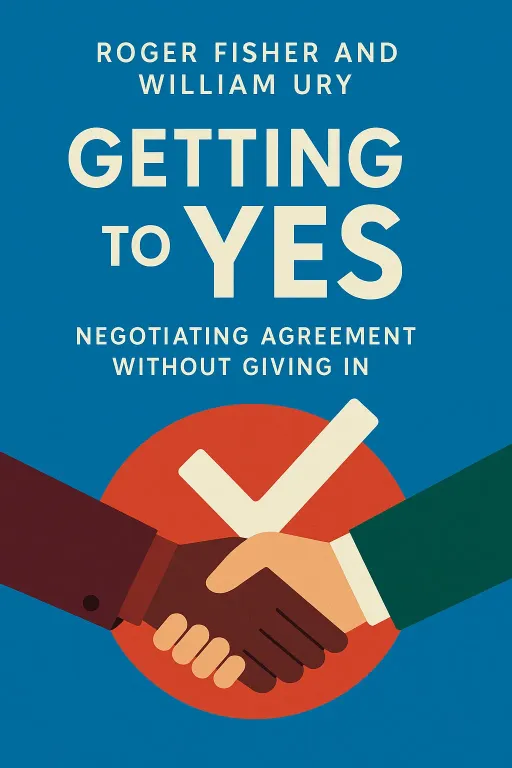
Nova: Exactly, Atlas! That's the cold, hard fact we're tackling today. Many believe negotiation is about winning, but true influence comes from understanding shared interests. When stakes are high, focusing on positions creates stalemates. You need a way to find common ground, even in sensitive situations, to truly advocate for dignity and fairness. And that's what our deep dive into "Stop Guessing, Start Influencing: The Guide to Ethical Negotiation" is all about today. This guide pulls tactical insights from some truly foundational texts, like "Getting to Yes" by Roger Fisher and William Ury.
Atlas: Oh, I love that you brought up "Getting to Yes." That book has been incredibly influential, widely acclaimed for completely reshaping how leaders and advocates approach conflict resolution. It really shifted the paradigm from a zero-sum game to something more collaborative. For anyone who champions dignity and fairness in their work, understanding its principles is just essential. So what's the core idea from Fisher and Ury that kicks us off?
Separating People from the Problem: The Foundation of Collaborative Negotiation
SECTION
Nova: The core idea, the absolute bedrock, is to separate the people from the problem. It sounds simple, but it's revolutionary. Fisher and Ury argue that you should focus on interests, not positions. Think about it: a position is what someone they want. An interest is they want it.
Atlas: So you’re saying... the 'what' versus the 'why.' That makes sense on an intellectual level, but how does that play out in, say, a highly regulated environment? I imagine a lot of our listeners navigate intricate regulations where people often come to the table with very firm positions, like, "We need X amount of budget for compliance," or "This new policy be implemented exactly as written." They're not just saying it; it's often enshrined in policy.
Nova: That’s a perfect scenario, Atlas. Let's create one. Imagine a community council is debating a new waste management regulation. One group, let's call them the "Green Guardians," demands a complete ban on a certain type of industrial waste disposal within city limits – that’s their position. The "Industrial Alliance," on the other hand, insists on maintaining current disposal methods, citing economic impact – also a position. If they just argue positions, they'll hit a wall.
Atlas: Right, sounds like a classic stalemate. Everyone feels heard but nothing gets done.
Nova: Exactly. Now, if we apply "Getting to Yes," we separate the people – the passionate Green Guardians, the concerned Industrial Alliance members – from the problem: effective waste management. Then, we dig into their interests. The Green Guardians' interest might be the long-term health of their children and the ecological integrity of their local river. The Industrial Alliance's interest might be the economic stability of their businesses, ensuring local jobs, and avoiding bankruptcy.
Atlas: Ah, I see. So the positions are diametrically opposed, but their underlying interests might actually overlap. Both groups care about the community's well-being, just from different angles.
Nova: Precisely! Once you identify those shared or compatible interests – like a healthy community a thriving local economy – you can start brainstorming solutions that satisfy both. Perhaps a phased transition to new disposal technologies, or incentives for industries to adopt greener practices, funded by a community-supported bond. These are solutions you'd never get to by simply arguing 'ban' versus 'maintain.' It transforms conflict into collaborative problem-solving, and crucially, it preserves the dignity of all parties involved because their deeper concerns are addressed.
Atlas: That’s actually really inspiring. It means even in those high-stakes conversations, where regulations feel like immovable objects, there’s still room to champion a more human, ethical outcome. It’s about building bridges, not just arguing points. But what about when someone just flat-out says 'no'? Like, "No, we're not doing that," and slams the door shut?
Embracing 'No': Uncovering Deeper Motivations and Managing Conflict
SECTION
Nova: That’s a brilliant segue, Atlas, because while "Getting to Yes" gives us a framework for collaboration, sometimes, you're met with an outright 'no.' And that's where Jim Camp's "Start with No" offers a radically different, but equally powerful, perspective. Camp argues that 'no' is not the end, but the beginning of real negotiation.
Atlas: Hold on. For many of us, especially when we're trying to champion dignity or push for fairness, a 'no' feels like a brick wall. It feels like a sign of disrespect or a complete shutdown. How does embracing 'no' actually help de-escalate tension, especially when emotions are running high in sensitive situations?
Nova: It’s counter-intuitive, right? Camp says that when someone says 'yes' too quickly, they might just be trying to get rid of you, or they're not fully committed. A 'no,' on the other hand, is often the first honest answer. It's a sign that they feel safe enough to express a boundary, a fear, or a concern. It uncovers deeper motivations.
Atlas: So you're saying a 'no' actually provides more information than an easy 'yes'? That’s a completely different way to look at it. Can you give an example of how this works? Like, how do you respond to a 'no' in a way that opens dialogue instead of closing it?
Nova: Absolutely. Imagine you're advocating for a new systemic improvement in a large organization – say, a new, more inclusive hiring process. You present it, and the head of a department, who's been doing things the old way for twenty years, says, "No, we're not implementing that. Our current system works fine." Instead of arguing, Camp suggests you acknowledge the 'no' and then probe gently. You might say, "I understand you're saying no to implementing this right now. Could you help me understand what concerns you have about changing the current system?"
Atlas: That makes me wonder... isn't that just asking 'why'?
Nova: It’s similar, but with a crucial difference. It's not challenging their 'no'; it's accepting it as valid, and then inviting them to share their perspective without judgment. It shifts the dynamic from a battle of wills to a joint problem-solving exercise. Their 'no' might be rooted in a fear of increased workload, a lack of resources, or even a past negative experience with a similar change. Once you understand that, you can address the real issue, not just the stated rejection. It manages emotional confrontations by giving space for genuine concerns.
Atlas: I see. So it's about uncovering the fear or the unspoken obstacles that are preventing them from saying 'yes.' It turns resistance into genuine understanding, which is incredibly powerful when you're trying to cultivate understanding and champion dignity, especially in complex regulatory or organizational changes. It equips you with the tools to de-escalate tension and build bridges.
Synthesis & Takeaways
SECTION
Nova: Exactly, Atlas. These two approaches, "Getting to Yes" and "Start with No," seem almost contradictory at first glance. One teaches you to find yes, the other to embrace no. But together, they form a remarkably robust and ethical framework for influence. They're both fundamentally about profound understanding – understanding interests versus positions, and understanding the motivations behind a 'no.' They equip you with the tools to de-escalate tension and build bridges, transforming conflict into collaborative problem-solving. It's about seeing the human behind the demand, or the fear behind the refusal.
Atlas: That's a great way to put it. For anyone driven by a desire for fairness and systemic improvement, these aren't just negotiation tactics; they're deeply empathetic strategies for human connection. They allow you to advocate for dignity not by overpowering, but by genuinely understanding. So, for our listeners, especially those navigating complex regulations and advocating for others, what's a tiny step they can take this week to put these powerful ideas into practice?
Nova: Here's your tiny step, and it's deceptively simple: In your next discussion, identify the underlying interests of all parties, not just their stated demands. Write them down. Don't try to solve anything yet, just identify them.
Atlas: I love that. Just observing and identifying. That’s something anyone can do, and it’s a powerful first step towards genuinely understanding someone’s perspective, no matter how complex the situation. It’s about cultivating understanding and ultimately, building a better system.
Nova: It is. It’s about shifting from guessing what someone wants, to truly influencing by understanding what they need.
Atlas: What a powerful thought to end on.
Nova: This is Aibrary. Congratulations on your growth!