Mastering the Art of Negotiation for Strategic Partnerships
Golden Hook & Introduction
SECTION
Nova: You know, Atlas, I was having a conversation the other day about negotiation, and someone said, "It's all about who blinks first." Made me think, if negotiation is a staredown, we're doing it all wrong.
Atlas: Oh, I like that. So, we're not just trying to out-stare our opponents? Because honestly, for a lot of our listeners who are trying to secure vital partnerships or build out their teams, that sounds exhausting and probably pretty ineffective in the long run.
Nova: Exactly! It's not about winning at all costs, or even about who has the stronger hand. It's about something far more nuanced, something that builds, rather than breaks. Today, we're diving into how negotiation becomes a strategic lever, not just a battle, drawing insights from two seminal works: by Chris Voss and by Roger Fisher, William Ury, and Bruce Patton.
Atlas: Wow, that’s quite the pairing. Voss, the former FBI hostage negotiator, and the Harvard trio who essentially wrote the textbook on principled negotiation. I’m curious, what's the thread connecting these two seemingly different approaches? Because one sounds like high-stakes drama, and the other sounds like a polite boardroom discussion.
Nova: That’s a great question, and it’s actually the core of our exploration today. What connects them is a profound understanding that effective negotiation is fundamentally about understanding human behavior and crafting agreements that serve long-term strategic goals. We’ll explore how Voss, with his tactical empathy, uncovers hidden motivations, and then how Fisher, Ury, and Patton show us how to focus on interests over positions for mutual gain.
The Edge of Influence: Tactical Empathy and Principled Negotiation
SECTION
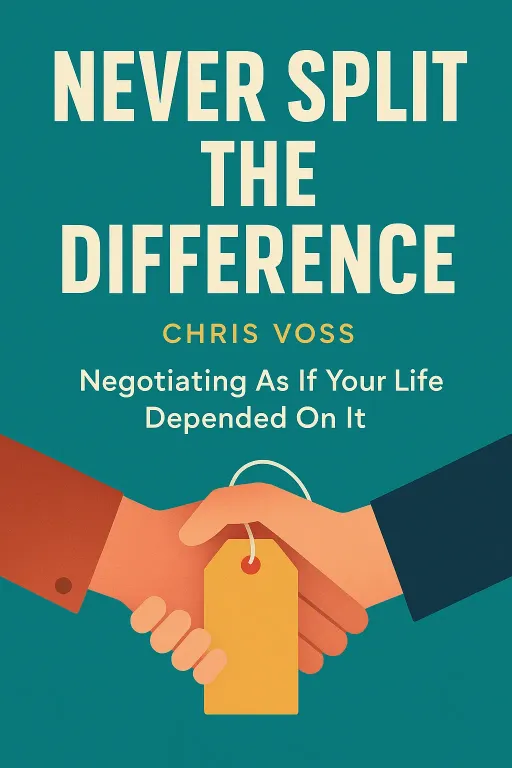
Nova: So, let's start with Chris Voss and. This book really flipped the script on what most people think negotiation is. Voss, as you mentioned, came from an FBI hostage negotiation background, where the stakes literally couldn't be higher. He wasn't just trying to get a good deal; he was trying to save lives.
Atlas: That’s a fascinating context for a business book. So, it's not just about getting what you want, it's about staying alive. How does that translate to, say, securing a new tech partnership, or even building a robust team structure, which many of our listeners are trying to do?
Nova: It translates directly to understanding the emotional landscape. Voss introduces this idea of "tactical empathy." It’s not about agreeing with your counterpart, but about understanding their perspective so deeply that you can articulate it better than they can. It’s about listening to understand, not just to respond. For example, Voss recounts a situation where he was negotiating with a bank robber. Instead of demanding the robber surrender, he’d use phrases like, "It seems like you're feeling trapped, and you're worried about what will happen if you come out."
Atlas: Oh, I see. So you're labeling their emotions, not necessarily validating their actions, but showing you understand their internal state. That’s a powerful distinction. For someone leading a team, trying to empower them, I can imagine how useful it would be to articulate a team member's frustration or concern before offering a solution.
Nova: Absolutely. And this leads to his concept of "calibrated questions." These are open-ended questions that start with "what," "how," or sometimes "why," but used carefully, that get your counterpart to actually and. Instead of saying, "Give me your best price," you might ask, "How can I afford that?" or "What would you need from me to make this work?" It shifts the dynamic from a demand to a collaborative problem-solving effort.
Atlas: That’s brilliant. Because if you’re asking "How can I afford that?", you’re not saying "no," you’re saying "help me find a way." It turns a potential impasse into an invitation. This is incredibly useful for our listeners who are navigating advanced negotiation tactics for vital partnerships, where a flat "no" can shut down the entire conversation.
Nova: Exactly. It's about turning "no" into "how." Now, in stark contrast, yet complementary, we have. Fisher, Ury, and Patton developed what they call principled negotiation. This came out of the Harvard Negotiation Project in the 1980s, a time when traditional win-lose bargaining was the norm. They observed that too often, people got stuck on positions rather than interests.
Atlas: Right, "I want X" versus "I want X because it fulfills Y need." So, the focus shifts from the superficial demand to the underlying motivation. That makes sense for leaders trying to build sustainable growth; you need to understand the 'why' behind someone's stance to build a lasting agreement, not just a temporary truce.
Nova: Precisely. They give the classic example of two people arguing over an orange. One wants the peel for a cake, the other wants the juice for a drink. If they just argue over who gets the orange, they might split it 50/50, and both are dissatisfied. But if they uncover their interests, one gets all the peel, the other all the juice, and both are 100% satisfied. It's about inventing options for mutual gain.
Atlas: That’s a perfect example. It highlights how important it is to dig deeper. But wait, how do these two approaches, Voss’s tactical empathy and the Harvard team’s principled negotiation, truly intersect? Voss is about understanding the emotional, often irrational, side, while seems to be about rational problem-solving.
Nova: That’s the beauty of it. Voss gives you the tools to those hidden interests and motivations that Fisher, Ury, and Patton tell you to focus on. You use tactical empathy and calibrated questions to get past the stated positions and emotional roadblocks, then you apply principled negotiation to build mutually beneficial solutions based on those newly discovered interests. My take is that effective negotiation isn't about winning at all costs; it's about understanding and crafting agreements that serve long-term strategic goals.
Practical Application & Strategic Impact
SECTION
Nova: So, let's bring this home for our listeners. If you're a strategist, a leader, a connector, thinking about your next strategic move, how do you apply this?
Atlas: I mean, for someone driven by impact and focused on sustainable growth, just saying "understand their interests" can feel a bit vague. What's a tiny, actionable step we can take before our next big negotiation?
Nova: Here’s a tiny step: Before your next negotiation, identify your counterpart's core interests. And then, prepare three calibrated questions. Not just any questions, but ones designed to uncover their underlying motivations, their 'why.' Questions like, "What's the biggest challenge you're facing with this initiative?" or "How would this partnership impact your long-term vision?"
Atlas: Oh, I get it. So you're not just trying to guess their interests, you're actively trying to elicit them, using Voss's techniques to feed into the framework. That makes the conceptual much more practical for someone who applies theories and builds.
Nova: Exactly. And this leads to a deeper question: How can you apply empathetic listening to transform potential impasses into opportunities for creative solutions? It’s about not just hearing the words, but listening for the emotions, the unspoken fears, the hidden desires. Voss talks about labeling emotions – "It sounds like you're concerned about..." or "It feels like this is very important to you because..."
Atlas: That’s a really powerful reframing. Instead of seeing an impasse as a wall, it becomes a puzzle to solve together. For leaders scaling frameworks and empowering teams, understanding those underlying concerns can prevent resentment and build stronger trust, even when you have to make tough decisions. It’s about building a relationship, not just closing a deal.
Nova: And that brings us to what I call the healing moment for negotiation. Remember that every negotiation is a chance to build a stronger relationship, not just close a deal. It's an opportunity for connection, for mutual understanding, for finding shared value. It’s a chance to build the foundation for future collaborations, not just extract maximum value in the moment.
Atlas: That’s actually really inspiring. Because if you approach every negotiation with that mindset, it changes the entire dynamic. It moves from a zero-sum game to a positive-sum collaboration. It aligns perfectly with the idea of securing vital partnerships and ensuring sustainable growth. It’s about trusting your instincts, seeing your vision as powerful, and embracing the unknown of what mutual gain can truly look like.
Synthesis & Takeaways
SECTION
Nova: So, what we've really explored today is that the art of negotiation, particularly for strategic partnerships, isn't about brute force or clever tricks. It's a sophisticated dance between profound empathy and clear-eyed principle. It's the ability to step into another's shoes, understand their deepest interests, and then collaboratively invent solutions that serve everyone involved.
Atlas: That makes so much sense. It's about moving beyond the superficial demands and really getting to the heart of what drives people. It's about using those calibrated questions to uncover the 'how' and the 'why,' rather than just hearing a 'no.' And it transforms negotiation from a confrontational event into an opportunity for genuine connection and growth.
Nova: Absolutely. It's about recognizing that the best deals are the ones where everyone walks away feeling heard, respected, and genuinely better off. That's how you build lasting partnerships and truly scale your impact. It’s not just about closing a deal; it’s about opening doors.
Atlas: That’s a great way to put it. For anyone looking to refine their product-market fit, build robust team structures, or secure those crucial partnerships, remember that your greatest leverage isn't power, but profound understanding and the willingness to co-create.
Nova: Indeed. The next time you're at the table, don't just prepare your arguments. Prepare your questions, prepare your empathy, and prepare to build.
Atlas: This is Aibrary. Congratulations on your growth!