How to Build Influence Without Playing Politics: The Designer's Guide
Golden Hook & Introduction
SECTION
Nova: You've got a brilliant idea. A truly groundbreaking design. It's logical, it's elegant, it solves a real problem. So why is it gathering dust on a shelf? Because logic alone won't move mountains.
Atlas: Oh man, tell me about it! I’ve seen countless incredible concepts, perfectly rational, just… wither. It’s like everyone agrees it’s a good idea, but nobody on it. What’s the secret sauce we’re missing?
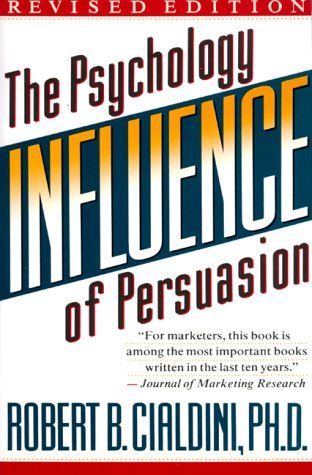
Nova: That's precisely what we're dissecting today, Atlas. We're diving into how to build influence without playing politics, especially for those in design. Our jumping-off point is a fantastic guide that distills wisdom from two foundational texts: Robert Cialdini's "Influence: The Psychology of Persuasion" and "Getting to Yes" by Roger Fisher and William Ury. Cialdini, for instance, didn't just theorize; he spent years various persuasion professions, from car sales to fundraising, to understand these principles from the inside out. It's a truly empirical foundation.
Atlas: Wow, he went undercover? That’s dedication! It makes you think these aren't just abstract theories then, but battle-tested strategies.
Nova: Absolutely. And "Getting to Yes" emerged from the Harvard Negotiation Project, becoming a cornerstone of modern negotiation theory. These aren't just academic musings. They're profoundly practical. So, if logic isn't enough, what?
Deep Dive into Core Topic 1: The Psychology of Persuasion
SECTION
Nova: Well, it turns out, people aren't just rational machines. We're swayed by subtle psychological triggers, often unconsciously. Cialdini breaks these down into six universal principles. And understanding these is not about manipulation; it’s about ethical, effective communication that resonates deeply. It's about making your brilliant ideas unstoppably appealing.
Atlas: Okay, but how does a designer, who often deals with hard data and user research, reconcile that with relying on these subtle psychological triggers? Isn't that a bit... soft for a strategic role?
Nova: That’s a fair question, Atlas. And it’s a common misconception. It’s not about abandoning data; it’s about packaging and presenting that data in a way that truly connects with human psychology. Let's look at social proof, for example. It’s a powerful one.
Atlas: Social proof. Like seeing a long line outside a restaurant and assuming it’s good?
Nova: Exactly! Or, in a design context, imagine a design team struggling to get buy-in for a brand new, innovative UI. They've got all the usability testing data, the conversion rate projections, but stakeholders are hesitant. They're wary of change.
Atlas: That's a classic scenario. What do they do? Just keep showing more data?
Nova: Not necessarily. Instead, they pivot. They run a small, internal pilot with a few enthusiastic users from different departments. They gather testimonials, not just about the UI's functionality, but about how it made their work easier, how intuitive it felt, how much time it saved them. Then, in the next review, they present those authentic, positive experiences from alongside the data.
Atlas: Oh, I like that. So, it's not just "our data says it's good," it's "your colleagues are saying it's good." That's a completely different level of persuasion. It speaks to our inherent human desire to follow the lead of others, especially those we respect.
Nova: Precisely. The stakeholders, seeing positive experiences from people they know and trust, become significantly more receptive. It reduces perceived risk. And then there's reciprocity. It's the idea that when someone gives us something, we feel an innate urge to give back.
Atlas: So, if I bring cookies to the team meeting, I'll get my feature approved?
Nova: It's a bit more strategic than cookies, though I do love a good cookie! Imagine a designer who consistently goes above and beyond. They offer extra mock-ups, create detailed user flows for adjacent teams, or provide proactive solutions to potential problems, even when not explicitly asked. They're generously sharing their expertise and effort.
Atlas: They're building up goodwill, essentially.
Nova: Exactly. So, later, when that designer needs a favor – perhaps extra time for a complex, groundbreaking feature, or resources for a crucial research project – the team, having benefited from their generosity, is far more inclined to reciprocate. They've built trust and a sense of obligation, not through quid pro quo, but through genuine contribution.
Atlas: That makes sense. It’s not about tricking people, but about understanding the human element that data sometimes misses. For someone building complex product ecosystems, though, how do you apply social proof when your product is brand new and there's no external proof yet? You can't just invent testimonials.
Nova: That’s where you get creative, Atlas. New product? Look for internal social proof. Highlight early internal testers, executive champions, or even early design sprints that generated excitement. Frame it as "our internal experts are thrilled with this direction." Or, you can leverage authority – if a respected leader backs it, that acts as a form of social proof. It's about finding existing human connections and leveraging them ethically.
Deep Dive into Core Topic 2: Principled Negotiation
SECTION
Nova: Speaking of strategic partnerships and moving design from a service to a strategic role, that brings us beautifully to our second core idea: principled negotiation, from "Getting to Yes." It's about transforming conflict into collaboration.
Atlas: That sounds like a dream. Most negotiations feel like a battle of wills, especially in design, where you have so many different stakeholders with competing priorities.
Nova: And that's exactly what Fisher and Ury challenge. Their core concept is to focus on, not. Most people go into negotiations stating their position: "I want a blue button here!" or "I need this feature by next Tuesday!" But positions are just the. Interests are the.
Atlas: So basically you’re saying, instead of arguing about the blue button, ask they want the blue button?
Nova: Precisely! Let's take a common scenario: a design team is in a deadlock with the engineering team over a feature implementation. The engineers want a simpler, faster-to-build solution. Their is "we'll deliver X." The designers want a more user-friendly, elegant solution. Their is "we need Y." They're at an impasse.
Atlas: I've been there. It usually ends with one side begrudgingly conceding, or a compromise that makes no one truly happy.
Nova: But if they shift to interests, the conversation changes entirely. The engineers' might be efficient use of resources, stable code, and hitting their sprint goals. The designers' might be user adoption, satisfaction, and long-term brand loyalty.
Atlas: So, it's about finding the hidden 'why' behind the 'what'?
Nova: Exactly. Once they uncover these underlying interests, they can brainstorm solutions that might not have been on the table when they were just arguing positions. They might discover a third option – a phased rollout, for instance. An initial simpler version that gets to market quickly and stabilizes the code, followed by an enhanced, more elegant one in the next release.
Atlas: Whoa. That's a creative problem-solving approach that satisfies both underlying interests. It's not a compromise where both sides lose a little; it's a win-win where both sides get what they truly need. But in high-stakes business environments, isn't it often a zero-sum game? Someone has to 'win' and someone has to 'lose,' right?
Nova: That's where the "principled" part comes in. It encourages generating multiple options for mutual gain. The belief that it's zero-sum is often a limiting mindset. When you focus on interests, you often find that what's good for one party isn't necessarily at the expense of the other. In fact, aligning interests often leads to a much bigger pie for everyone.
Atlas: How does this help someone who's trying to lead a design team and integrate design into the core of the business? It feels like individual negotiation, but how does it scale to strategic vision?
Nova: It scales beautifully because building a strategic vision is fundamentally about aligning diverse interests. A design leader isn't just negotiating for a single feature; they're negotiating for the of design, for resources, for strategic input. By understanding the interests of the CEO, the Head of Product, the Head of Engineering – their interests in market share, revenue, efficiency, innovation – the design leader can frame their proposals not as "give us more budget for design," but as "here's how investing in design directly addresses your core interest in market leadership and user retention." It transforms design from a cost center into a strategic partner.
Synthesis & Takeaways
SECTION
Nova: So, when you bring these two together, Cialdini for understanding to subtly persuade and Fisher & Ury for to negotiate constructively, you have an incredibly powerful toolkit. It moves design from being a service that just implements ideas, to a strategic partner that truly drives change.
Atlas: This isn't just about getting your way; it's about building stronger foundations, isn't it? It’s about building relationships, trust, and ultimately, a more impactful design culture within an organization. It's genuinely about fostering growth, both for the individual designer and for the entire team.
Nova: Absolutely. Influence, when done ethically and strategically, transforms design. It empowers your team to drive real change because you’re not just presenting logic; you’re speaking to the human element, building consensus naturally, and finding solutions that genuinely serve everyone's underlying interests. It’s about making your vision irresistible and your collaborations unbreakable.
Atlas: So, for our listeners, that tiny step from the book—identify one upcoming decision. Apply one of Cialdini's principles to frame your proposal. Observe the response. What's the best way to approach that observation? Just... watch what happens?
Nova: Not just watch, but reflect. As the user profile suggests, dedicate specific reflection time, even 15 minutes. How did they react? Did their body language shift? What words did they use? What was the outcome? This isn't about immediate success, but about learning and refining your approach. It's a continuous growth process.
Nova: This is Aibrary. Congratulations on your growth!