The 'Productivity Paradox' is a Trap: Why You Need Strategic Focus.
Golden Hook & Introduction
SECTION
Nova: What if I told you that the harder you work, the productive you might actually be? We're not talking about laziness here; we're talking about a trap that ensnares the most driven among us, leaving us busy, burnt out, and nowhere closer to our biggest goals.
Atlas: Oh man, Nova, that hits home for so many people, myself included. It’s that feeling of running on a treadmill, putting in maximum effort, but not really moving forward. It’s exhausting. So, what exactly is this trap you’re talking about?
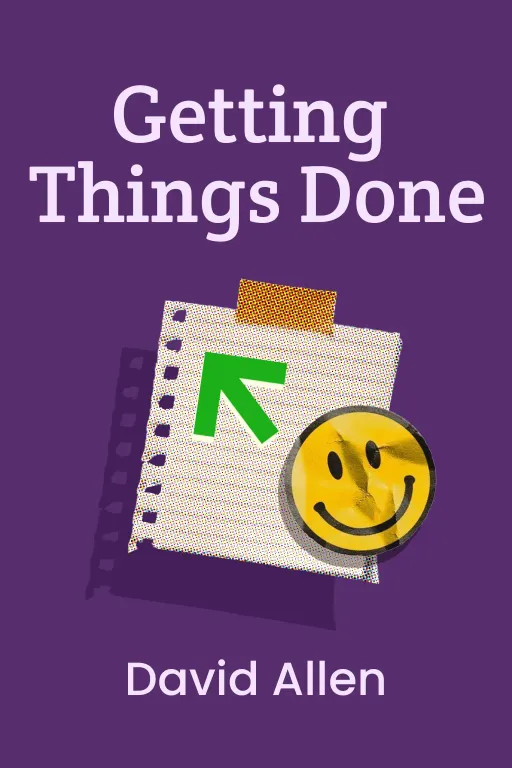
Nova: It’s what we call the 'Productivity Paradox,' Atlas. It’s the constant activity that masks a lack of strategic focus, leading to burnout and missed opportunities. And today, we're diving into how to break free from it, drawing insights from two titans of personal effectiveness: David Allen, with his groundbreaking work, "Getting Things Done," and Stephen Covey's timeless classic, "The 7 Habits of Highly Effective People." Allen's systematic approach revolutionized how many professionals manage information overload, while Covey's principles, celebrated globally, continue to shape leadership and personal effectiveness.
Atlas: That's fascinating, Nova. These are foundational texts, absolutely. But in today's hyper-connected, always-on world, where demands are coming from every angle, how do these classic concepts remain relevant? For our listeners who are strategic operators, always optimizing, always leading, it can feel like a constant battle against the urgent.
Deep Dive into Core Topic 1: The Mind for Having, Not Holding (David Allen's GTD)
SECTION
Nova: Exactly, Atlas. And that's where David Allen’s core philosophy becomes incredibly powerful. He famously said, "Your mind is for having ideas, not holding them." Think about it: our brains are incredible idea-generating machines, but they’re terrible filing cabinets. Every single uncompleted task, every nagging thought, every promise you made to yourself or someone else – that’s an "open loop" in your mind.
Atlas: Oh, I know that feeling. It’s like having a hundred browser tabs open, all demanding your attention, even if you’re not actively looking at them. It’s a constant hum of low-level anxiety.
Nova: Precisely! And that constant hum drains your mental energy. It prevents deep work, strategic thinking, and genuine presence. Allen’s insight is that the mental cost of these ideas is far greater than the effort it takes to them.
Atlas: Okay, but for someone in a complex, operational role, constantly bombarded with new initiatives, project updates, and team challenges, isn't 'capturing everything' just adding to the plate? It sounds counterintuitive. How does that free mental space when the sheer volume of things to capture is overwhelming in itself?
Nova: That's a brilliant question, and it's where the "trusted system" comes in. It’s not about just making a longer to-do list. It’s about having a reliable, external place where every single open loop, no matter how small, has a home. Imagine a project manager, let's call her Sarah. Her mind is a whirlwind: "Email that client," "Review the Q3 budget," "Follow up on the server issue," "Remember to buy milk," "Call mom." Each of these is an open loop, silently screaming for attention.
Atlas: Yeah, Sarah sounds like most of our listeners, honestly. That constant background noise.
Nova: When Sarah implements a trusted system – a simple digital tool, a notebook, whatever works – she doesn't just list these items. She processes them. Is it actionable? If not, trash it, file it, or put it on a someday/maybe list. If it actionable, she decides the very next physical action, and puts it where she'll see it when she needs to. The magic is, once it's captured and organized into a system she, her brain can let go. It knows it's handled. Suddenly, that mental browser with a hundred tabs closes down.
Atlas: That makes sense. It's not about ignoring the tasks, it's about telling your brain, "I've got this handled, you don't need to keep reminding me." So Nova, for a strategic operator constantly juggling new initiatives and existing projects, what's that very first, tiny step to build this trusted system without feeling like they're adding another massive project to their already full plate?
Nova: The tiny step is deceptively simple, but incredibly powerful: spend just 15 minutes today writing down every single open loop in your mind. No judgment, no organization, just a brain dump. Get it all out onto paper or a digital document. That act of externalizing it is the very first crack in the productivity paradox. It starts to free up that precious mental RAM.
Deep Dive into Core Topic 2: Putting First Things First (Stephen Covey's 7 Habits)
SECTION
Nova: Now, once you've captured everything, you've got clarity. But clarity alone isn't enough, is it? You still need to decide what to with all those captured items. And that leads us beautifully to Stephen Covey's profound insight: "Putting first things first." He hammers home the critical distinction between urgent and important.
Atlas: Ah, the classic Covey matrix. I think most people have heard of it, but actually by it is a whole different ballgame. It feels like in a high-stakes operational environment, everything screams "urgent!" How do you possibly carve out time for the "important but not urgent" when there are always fires to put out? It feels like a luxury many strategic leaders simply can't afford.
Nova: It absolutely feels that way, Atlas. And that's the trap. Covey argues that continually responding to the urgent, even if it's not important, is a recipe for perpetual crisis. He championed focusing on Quadrant II activities – those things that are important, but not yet urgent. These are things like planning, relationship building, professional development, and identifying new opportunities.
Nova: Think of a leader, Mark, who's always reacting. He's constantly solving immediate problems, responding to every email instantly, attending every meeting. He's busy, but he's not progressing strategically. Then there's Lisa, who dedicates small, consistent blocks of time each week to proactive planning, mentoring her team, and horizon-scanning for market shifts. She's not just putting out fires; she's building a system that prevents them. Lisa’s quarter might look less "heroic" than Mark's, but her team is calmer, her projects are more often on schedule, and she's actually moving the needle on big, strategic goals.
Atlas: That's a powerful contrast. So it’s about, not just finding extra hours. It’s about consciously prioritizing those things that will yield long-term benefits, even if they don't have an immediate deadline. But this sounds like it requires a massive mindset shift. Is this less about a 'to-do list' and more about a 'to-be list'? How does this approach foster the kind of mastery and continuous improvement that driven individuals like our listeners are always striving for?
Nova: You've nailed it, Atlas. It's absolutely a mindset shift. It's moving from a reactive stance to a proactive one. It’s about understanding that every "yes" to an urgent, unimportant task is a "no" to an important, potentially transformative one. For someone driven by mastery and continuous improvement, this isn't just about efficiency; it's about efficacy. It's about aligning your daily actions with your deepest values and long-term strategic objectives. It’s not just doing things right; it’s doing the.
Synthesis & Takeaways
SECTION
Nova: So, bringing it all together: David Allen gives us the framework to clear our minds and handle the sheer volume of life, creating mental space. Stephen Covey then provides the compass, helping us decide where to point that newly freed mental energy. It’s about capturing to get clear, and then prioritizing to get strategic.
Atlas: And for the strategic operator, the collaborative leader, the continuous learner, this isn't just about "being productive." It's about optimizing their entire approach to leadership and strategic planning. It's about designing their work and their impact, rather than letting the urgent dictate their every move. It's about building that foundation for true mastery.
Nova: Absolutely. And that strategic focus is a journey of continuous improvement, not a one-time fix. It’s an ongoing practice of intentionality. Ultimately, the 'productivity paradox' isn't about working harder; it's about working smarter by first understanding what truly deserves your attention. It's about designing your life and work with intention, rather than letting the urgent dictate your impact. This isn't just about getting more done; it's about becoming the strategic, effective leader you're meant to be.
Atlas: That's a fantastic way to put it, Nova. So, for our listeners, that tiny step Nova mentioned earlier – take 15 minutes today, right now if you can, and just write down every single open loop in your mind. It’s the first brick in building your personal operating system, a powerful step towards strategic focus.
Nova: This is Aibrary. Congratulations on your growth!