The Overwhelm Trap: Why Busyness Isn't Productivity
Golden Hook & Introduction
SECTION
Nova: What if I told you that your busiest days, the ones where you feel like you're running on all cylinders, are often your least productive?
Atlas: Whoa, Nova. That feels almost sacrilegious to say out loud! For so many of us, busyness is practically a badge of honor. It's proof that we're important, in demand, making things happen.
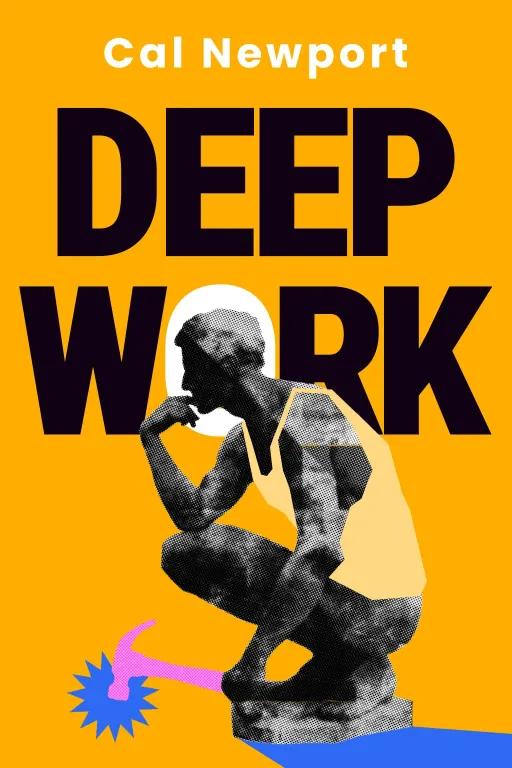
Nova: And that's exactly the 'overwhelm trap' we're dissecting today. It's this insidious belief that constant activity equals meaningful output. We're drawing deeply from the principles championed by thinkers like Cal Newport, whose book "Deep Work" really shines a light on this. It's fascinating because Newport, as a computer science professor, brings this incredibly analytical, almost scientific rigor to the study of productivity, moving far beyond typical self-help platitudes.
Atlas: So, we're not just talking about feeling tired, we're talking about a fundamental misunderstanding of what 'work' actually means for high-achievers? That’s a bold claim.
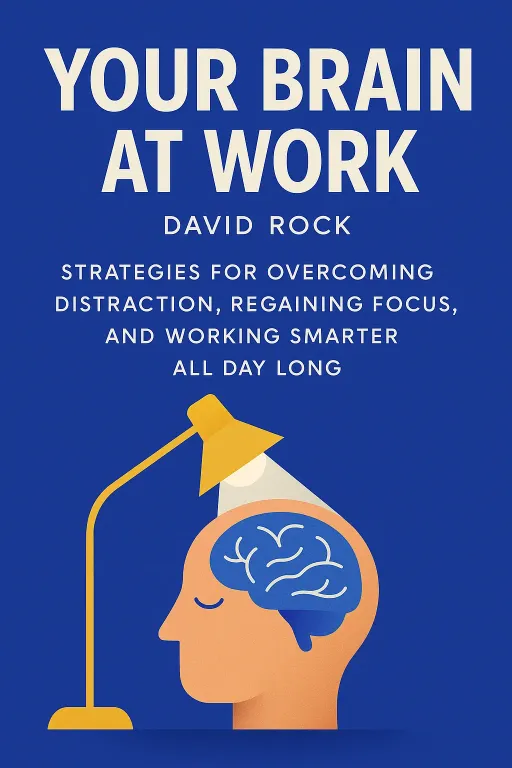
Nova: Absolutely. And we'll also touch on David Allen's "Getting Things Done" as the perfect complementary framework. It’s about recognizing that perceived busyness can actually hide a lack of real impact.
The Illusion of Busyness & Its True Cost
SECTION
Nova: Think about it: you're juggling multiple projects, emails are pinging, Slack messages are flying, meetings are stacked. You feel exhausted by the end of the day, but what truly moved the needle? Often, that intense focus you need for complex projects gets completely fragmented.
Atlas: But why do we do it? For someone like me, and I imagine a lot of our listeners who are managing high-pressure, diverse projects, it feels like the only way to stay on top of things. Is it about perceived value, or something deeper, like a fear of missing out?
Nova: It's a complex brew. Part of it is the 'tyranny of the urgent' – those immediate demands screaming for attention. Another part is what I call 'performance art' – we're often performing busyness for others, and even for ourselves, to feel important. But this constant context-switching, this fragmented focus, it's like a chef trying to cook ten gourmet dishes simultaneously. None of them will be a masterpiece; most will be undercooked or burnt.
Atlas: That's a great analogy. For many of us, it's not just about cooking one dish; it's about running a whole restaurant while also planning the next menu. How do we even begin to untangle that, when the demands feel relentless?
Nova: That's the crux. The cold fact is, true progress comes from deliberate, deep work, protecting your most valuable time. It's not about working less, necessarily, but working smarter, with intent, and with singular focus. The illusion is that more hours automatically equals more impact, and the reality is often the opposite. We're exhausting ourselves with activity that doesn't actually create new value or move us closer to our most important goals.
Cultivating Deep Work and Strategic Focus
SECTION
Nova: This naturally leads us to the solutions, which aren't about magic, but about intentional design. This is where Cal Newport's concept of 'Deep Work' becomes a superpower. He defines it as "effort focused on a single task without distraction," and argues it's essential for creating new value and improving skills in our increasingly distracted world.
Atlas: I imagine a lot of our listeners, who are often managing high-pressure, diverse projects, are thinking, "Sounds great, but how? My inbox is a war zone! My team needs me, clients are waiting, and there are a dozen emergencies happening right now."
Nova: And that's a completely valid point! That's why Newport's 'Deep Work' isn't just about wishing for focus. It's about scheduling it, protecting it, and building rituals around it. And this is precisely where David Allen's "Getting Things Done," or GTD, becomes indispensable. GTD helps you "capture, clarify, organize, and engage" with every single task, no matter how small.
Atlas: So, Allen's system is the practical scaffolding that clears your mental desktop, allowing you to actually the deep work Newport describes? Like, you can't build a skyscraper if the foundation is cluttered with old toys and random debris.
Nova: Exactly! Think of it like this: your brain is wonderful for ideas, but terrible for them. GTD gives you a trusted system to offload all those open loops – the emails, the to-dos, the random thoughts – so your cognitive space is free for the deep, complex problem-solving that truly creates value. When you know everything is captured and organized somewhere reliable, your mind is free to dive into that 90-minute block of focused work without internal distractions.
Atlas: That’s a powerful combination. Newport gives us the 'why' and the 'what' of focused creation, and Allen gives us the 'how' for managing the chaos that prevents the 'what' from happening. It's about integrating self-care into an ambitious life, not seeing them as separate.
Synthesis & Takeaways
SECTION
Nova: Ultimately, escaping the overwhelm trap isn't about doing more, it's about doing what truly matters, deeply and deliberately. It’s about recognizing that busyness is often a symptom, not a solution.
Atlas: It's about shifting from a mindset of 'I must do everything' to 'I must strategically focus on what creates the most impact,' right? That’s going to resonate with anyone who struggles with feeling pulled in too many directions, who juggles many projects but craves a deeper sense of purpose and achievement.
Nova: Precisely. These insights fundamentally shift how you view and manage your time, enabling you to achieve more meaningful results with less stress. It's the path to mindful productivity and philosophical resilience. It's about choosing impact over activity, every single time.
Atlas: So, for our listeners who are ready to make that shift, to reclaim their focus and their peace amidst their ventures, what's one tiny step they can take today?
Nova: Here's the tiny step: Block out 90 minutes tomorrow for one single task, silencing all notifications. Just try it. See what happens when you give one thing your undivided attention.
Atlas: That sounds simple, but powerfully disruptive. A true experiment in focus, and frankly, a bold act of self-care for the strategic integrator.
Nova: Exactly. It's about choosing impact over activity, every single time.
Nova: This is Aibrary. Congratulations on your growth!