How to Build a 'Second Brain' Without Overwhelming Your First One.
Golden Hook & Introduction
SECTION
Nova: Atlas, what’s the most valuable thing you have, that you constantly forget to use, misplace, or just plain overwhelm?
Atlas: Oh man, easy. My brain. Especially after trying to keep up with… well, everything. Every email, every meeting, every fleeting insight. It’s a constant battle against cognitive clutter.
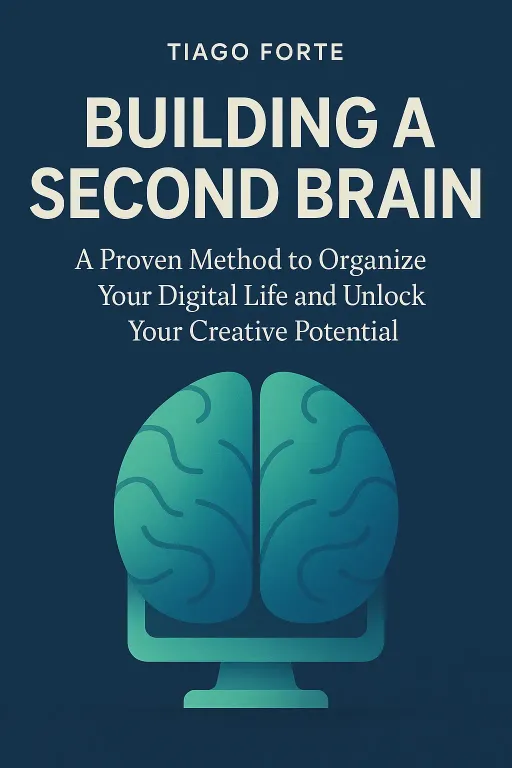
Nova: Exactly! And that battle is precisely what our brilliant authors today are trying to help us win. We’re diving deep into two foundational texts for anyone who feels that mental squeeze: "Building a Second Brain" by Tiago Forte, and the classic "Getting Things Done" by David Allen.
Atlas: That’s going to resonate with anyone who’s ever stared at a mountain of information and wondered how to even begin. For strategic thinkers, for leaders building for tomorrow, that mental clarity isn’t just nice to have, it’s essential.
Nova: Absolutely. Tiago Forte, a renowned productivity expert, didn't just theorize about knowledge management; he built a practical, digital-first methodology for navigating the overwhelming information flow of our modern world. And David Allen’s work, a true classic, laid the groundwork for managing commitments, emerging from his extensive consulting with top organizations. These aren't just theories; they're battle-tested systems.
Atlas: So, we’re talking about actual blueprints for mental freedom, not just abstract ideas. I’m curious, Nova, how do these two powerhouses work together to free up our strategic minds?
The C.O.D.E. Framework: Externalizing Your Genius
SECTION
Nova: Well, let's start with Forte and his "Second Brain." His core idea is incredibly powerful: your brain is for, not for. Trying to keep every piece of information, every idea, every insight in your head clogs your mental space. Forte provides the C. O. D. E. framework: Capture, Organize, Distill, Express.
Atlas: Okay, so you’re saying I shouldn't treat my brain like a dusty archive?
Nova: Precisely! Think of 'Capture' as having an always-on, trustworthy net for your ideas. You're in a meeting, a strategic insight hits you, or you read something brilliant. Instead of hoping you'll remember it, you capture it immediately into a digital tool.
Atlas: Like just jotting it down in a notes app? That sounds simple enough, but a lot of people already do that. What makes Forte’s 'Capture' different for someone trying to anticipate the future of their field?
Nova: It’s the behind it. It's not just a random note; it’s an intellectual asset. Let’s say a leader is chatting with a colleague, and a seemingly casual comment sparks an idea for a new market opportunity. Instead of just a mental "oh, that's interesting," they capture that thought, perhaps with a quick voice memo or a bullet point in their digital notebook. The key is that it's of their head, so their brain can go back to actively listening or strategizing, rather than trying to hold onto that fleeting thought.
Atlas: That makes sense. I imagine a lot of our listeners struggle with that exact problem – an amazing idea hits at the wrong time, and poof, it’s gone. But then what? Most of my notes apps look like digital junk drawers.
Nova: That’s where 'Organize' comes in, and Forte’s PARA method is brilliant here: Projects, Areas, Resources, Archives. It’s about structuring your information for and, not just storage. Imagine a well-curated personal library where you can instantly find what you need for your next strategic move, versus a messy attic where everything is just piled up.
Atlas: Okay, so a system for finding things when you need them. But how does a busy leader actually 'Distill' information without getting bogged down? That sounds like another task on an already overflowing plate.
Nova: It's about progressive summarization. You highlight the key points, then summarize those points, then pull out the core insight. Think of a market report: instead of rereading the whole thing every time, you’ve distilled it down to the top three actionable trends, the two biggest risks, and one surprising opportunity. That compressed knowledge is what your strategic brain uses to make decisions.
Atlas: So, it’s about turning raw data into intellectual ammunition, ready for deployment.
Nova: Precisely! And 'Express' is where it all culminates. This isn't just for writers; it’s for anyone who needs to innovate, solve problems, or make decisions. When you have a well-organized, distilled body of knowledge, you can express it in a presentation, a strategic plan, a new product idea, or even just a well-informed conversation. It’s how you turn information into tangible impact.
Atlas: But wait, looking at this from a high-stakes leadership perspective, isn't this just adding another layer of system management? How does this my brain, not just give me another system to manage?
Nova: That’s the magic of cognitive offloading. Your brain’s working memory is incredibly limited. By externalizing information into a trusted system, you free up that precious mental RAM for higher-level strategic analysis, for creative problem-solving, for truly innovative thinking. You’re no longer using your brain as a filing cabinet; you’re using it as a supercomputer.
Getting Things Done: The Master Key to Mental Clarity and Strategic Execution
SECTION
Nova: And that naturally leads us to the second key idea we need to talk about, which often acts as the operational backbone to Forte’s knowledge system: David Allen’s "Getting Things Done." If Forte helps you manage your, Allen helps you manage your.
Atlas: I can see how those would be complementary. Many strategic visions get bogged down because the day-to-day execution feels like quicksand.
Nova: Exactly. Allen’s core principle is simple but profound: get everything out of your head and into a trusted system. He says, if it’s in your head, it’s a distraction. Your mind is for having ideas, not holding them.
Atlas: Okay, but how is this different from just a standard to-do list? And for someone managing multiple complex projects and teams, how does GTD prevent that feeling of overwhelm, rather than just adding more lists?
Nova: That’s a great question, because it’s fundamentally different. GTD has five steps: Capture, Clarify, Organize, Reflect, Engage. The 'Clarify' step is what sets it apart. For every item you’ve captured, you ask: "What is it?" and "What's the needed to move this forward?"
Atlas: The 'next physical action'? Can you give an example?
Nova: Absolutely. Let's say a strategic leader has "Develop Q3 Marketing Plan" on their list. That's not an action. The 'next action' might be "Email Sarah to schedule a brainstorming meeting," or "Review last year's Q3 report." By identifying that tiny, concrete next step, the mental barrier to starting completely dissolves. It breaks down monumental tasks into manageable bites.
Atlas: I can see how that would be powerful. It’s like having a clear instruction manual for your day, preventing that paralysis of not knowing where to start.
Nova: And then 'Organize' pushes it further. You sort these actions by project, by context, and even have a "someday/maybe" list for ideas you want to pursue later. This ensures you’re always working on the right thing, at the right time, with the right tools.
Atlas: That makes me wonder about the 'Reflect' step. Why is reviewing your system so critical? Isn't that just another thing to schedule in an already packed week?
Nova: It’s the weekly review, and it’s the heartbeat of GTD. It’s where you clear your head, get current on all your projects, and make sure your actions align with your broader strategic goals. It’s not just a task; it’s an investment in maintaining trust in your system. Without it, the system crumbles, and the mental clutter creeps back in. It’s what allows you to truly trust that everything is handled, so you can dedicate your mental energy to building for tomorrow.
Atlas: That’s a perfect example. So, GTD essentially frees up mental RAM, allowing strategic leaders to focus on higher-level thinking and proactive decision-making, rather than constantly reacting to immediate demands. This directly contributes to staying ahead and anticipating the future of their field. It gives them the head space to actually connect the dots Forte helps them capture.
Synthesis & Takeaways
SECTION
Nova: Exactly! Think of it this way: Tiago Forte helps you build the most incredible, external digital brain for all your knowledge, insights, and creative sparks. David Allen then provides the operating system, the elegant workflow that ensures every task, every commitment, every strategic initiative moves forward smoothly and efficiently.
Atlas: So, it's about not just things, but things effectively, and having the mental space to think strategically about to do next. It's about moving from being overwhelmed by information to intelligently leveraging it for impact.
Nova: Precisely. And the best part? You don't have to overhaul your entire life to start. For our listeners who are strategic seekers and practical innovators, here’s your tiny step: choose one digital tool you already use—maybe your notes app, or even just a simple text document. Implement Forte's C. O. D. E. framework for a single project you're currently working on. See how capturing, organizing, distilling, and expressing that project's knowledge feels.
Atlas: And notice how your focus shifts. You'll feel that mental space opening up, that clarity emerging. It’s not just another productivity hack; it’s an investment in your strategic capacity, a way to reclaim your most valuable resource: your focused, creative mind.
Nova: Reclaiming your mental space isn't a luxury; it's the fundamental prerequisite for true strategic leadership in an age of overwhelm. It’s how you protect your focus and carve out that dedicated time for deep work.
Atlas: It really is about trusting your strategic instincts, because you’ve created the space for them to flourish.
Nova: This is Aibrary. Congratulations on your growth!