

The 'Creative Flow' Trap: Why You Need Structure to Unleash Genius.
Golden Hook & Introduction
SECTION
Nova: You know, the idea of the starving artist, wildly free, creating spontaneously? It's a beautiful myth, but it's also probably the biggest trap holding your genius hostage.
Atlas: Oh, come on, Nova. That's a bold claim! Isn't creativity all about breaking free from rules, about the unbridled spirit? I mean, for a lot of our listeners who are artists, that's almost sacrilege.
Nova: I know it sounds counterintuitive, Atlas, but today we're diving into a fascinating insight from a book called 'The Creative Flow Trap: Why You Need Structure to Unleash Genius.' What's so compelling about this work is how it synthesizes decades of psychological and productivity insights to completely redefine what true creative freedom really looks like. It’s about understanding that the seemingly spontaneous moments of brilliance actually emerge from a deeply structured process.
Atlas: Okay, that’s intriguing. So, it's not just another self-help book telling us to 'work harder,' but something that digs into the behind creative breakthroughs? What's the core argument, then? What's this 'trap' it's talking about?
Nova: The core argument is simple, yet revolutionary: true creative freedom often comes from embracing structure, not avoiding it. The trap is believing that boundless, unstructured exploration is enough. Without clear boundaries and focused effort, our artistic energy can scatter, leaving us frustrated and unfulfilled, despite our passion. It's a paradox that, once understood, can unlock profound results.
Atlas: That makes me wonder about all those times I've felt overwhelmed by too many ideas, or unable to focus on one project. It's almost like the sheer of creative freedom can be paralyzing. So, how does this book suggest we navigate that paradox?
The Paradox of Creative Freedom: How Structure Unleashes Genius via 'Flow'
SECTION
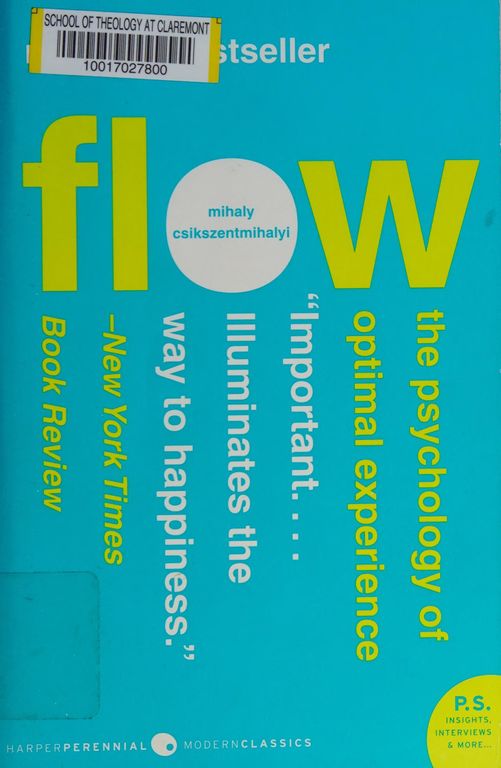
Nova: Exactly. It points us to two foundational concepts. The first is Mihaly Csikszentmihalyi's groundbreaking work on 'Flow.' We often talk about 'being in the zone,' but Csikszentmihalyi actually broke down the mechanics of that optimal experience.
Atlas: 'In the zone.' I know that feeling! It’s like time disappears, and you're just completely absorbed in what you're doing. But what exactly flow, beyond just feeling 'in the zone'? For our listeners who are trying to achieve that deep focus in their own creative practices, what are the ingredients?
Nova: Csikszentmihalyi reveals that flow isn't some mystical, accidental state. It arises when a person's skills are fully engaged in an activity that is. It requires clear goals, immediate feedback, and intense concentration. Think of a musician mastering a new, difficult piece. They're not just noodling around; they're tackling specific challenges, getting immediate feedback from the notes they play, and pushing their skills to the very edge. That's where self-consciousness disappears, and deep creative output happens.
Atlas: So, for our listeners who are artists, or just trying to master a new skill, you're saying sitting around waiting for inspiration isn't enough. It's about deliberately setting up the conditions for that inspiration to strike? Like, if a painter is struggling with a composition, they don't just stare at the canvas; they might set a specific challenge for themselves, like 'only use three colors' or 'focus on geometric shapes' to solve the problem.
Nova: Precisely. Those constraints, those structured boundaries, are what allow the flow state to emerge. It's not about limiting creativity, but providing the channel for it to surge through. The 'just challenging enough' part is key – too easy, you get bored; too hard, you get anxious. The structure creates that sweet spot.
Atlas: But doesn't too much structure kill the spark? Isn't there a risk of becoming too rigid, of losing that spontaneous, intuitive leap that often defines true artistic genius? I imagine a lot of our listeners feel that tension between wanting to be disciplined and also wanting to feel free.
The Paradox of Creative Freedom: How Structure Unleashes Genius via 'Deep Work'
SECTION
Nova: That's a valid concern, and it brings us beautifully to the second foundational concept: Cal Newport's 'Deep Work.' Where Csikszentmihalyi describes the state of flow, Newport gives us the practical strategies for cultivating it. He argues that deep work—focussed, uninterrupted concentration on a single task—is essential for producing high-quality work, particularly in our increasingly distracted world.
Atlas: Okay, so 'Flow' is the or the, and 'Deep Work' is the to get there. For someone who's constantly juggling projects, or feeling their attention pulled in a million directions—which, let's be honest, is most of us these days—how do they even begin to carve out this 'deep work' time? It sounds like a luxury.
Nova: Newport provides incredibly practical strategies. It's not about finding more time, but about time. He advocates scheduling deep work blocks, creating rituals around your focused time—like having a specific place, a specific way you start, even specific music. He also champions embracing boredom, letting your mind wander without reaching for your phone, and ruthlessly eliminating distractions. Imagine a writer who blocks out four hours every morning, turns off their internet, puts their phone in another room, and works on nothing but their manuscript. That's deep work in action.
Atlas: That sounds… intense. Almost like a monk in a monastery! Is it really necessary to be so extreme to get profound creative results? I think many people might hear 'ruthlessly eliminate distractions' and feel like it's an impossible standard in a busy life.
Nova: It's not about living in isolation, Atlas, it's about focused time. It's a deliberate choice to treat your most cognitively demanding creative tasks with the respect they deserve. Newport’s insights, combined with Csikszentmihalyi's, make it clear: deliberate, structured practice isn't the enemy of creativity, but its most powerful ally for profound results. It's about designing your life and your work to make those moments of genius not just possible, but probable.
Atlas: So it's less about being a hermit, and more about respecting your creative time enough to protect it. That actually resonates with the idea of valuing your craft, and it makes sense for anyone who's serious about their artistic journey or personal development. It’s about being intentional.
Synthesis & Takeaways
SECTION
Nova: Precisely. When you synthesize Flow and Deep Work, the message is clear: true creative genius isn't chaotic; it's cultivated. It's about designing your environment, your schedule, and your practice to genius. The paradox is that by imposing structure, by setting boundaries, you actually create the conditions for your most uninhibited, brilliant ideas to emerge. It’s about building a strong container so the creative energy doesn’t just spill out, but can be directed and amplified.
Atlas: That actually gives me chills, Nova. It’s almost like understanding that freedom isn't the absence of constraints, but finding the right constraints that actually allow you to express your true self more purely. It’s a profound shift in mindset for anyone seeking self-discovery and deeper meaning in their work. It shifts the focus from 'waiting for inspiration' to 'building the stage for inspiration.'
Nova: Exactly! And here's a tiny step for our listeners to try tomorrow: dedicate just one uninterrupted hour to a single creative task. Turn off all notifications, close all irrelevant tabs, put your phone away. Just you and that one task. Observe how your focus changes, how your output feels.
Atlas: That's a tangible challenge for our self-reflective seekers out there. It’s about proving this paradox to yourself, experiencing the power of structured focus first-hand. It’s not just theory; it’s an invitation to unlock your own genius.
Nova: It is. Because ultimately, the goal isn't just to creative, but to something meaningful, something that resonates. And that demands focus, discipline, and a deep understanding that structure is not a cage, but a launchpad.
Atlas: A launchpad for genius. I love that.
Nova: This is Aibrary. Congratulations on your growth!