The Sustainable Path to Joyful Achievement
Golden Hook & Introduction
SECTION
Nova: Most of what you've been told about achieving your dreams? It's probably setting you up for burnout. The path to real, joyful success looks nothing like the relentless grind you've been sold.
Atlas: Oh, I know that feeling. That sounds like a lot of people's reality, Nova, especially in our modern, always-on world where the pressure to achieve feels constant. We're constantly chasing the next big thing.
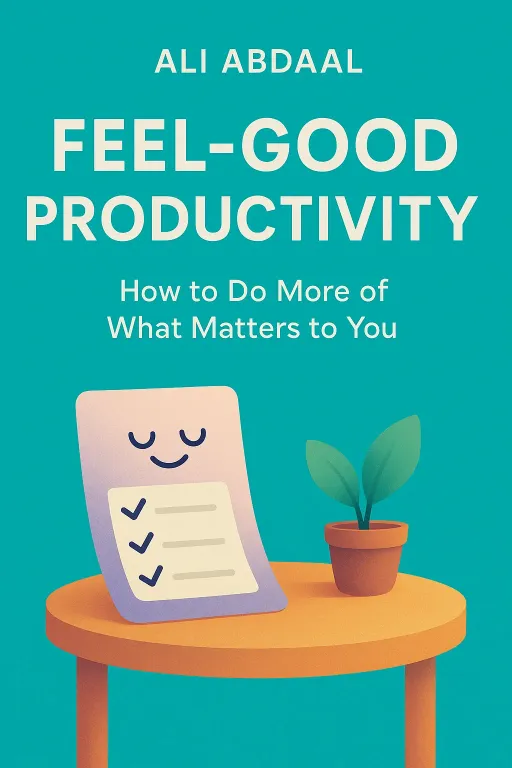
Nova: Exactly! And that's why today, we're diving into two brilliant minds who are redefining what achievement truly means. We’re exploring Ali Abdaal's "Feel-Good Productivity" and Brad Stulberg's "The Practice of Groundedness."
Atlas: Ali Abdaal, the YouTube productivity guru who also happens to be a medical doctor, right? And Stulberg, deeply rooted in performance psychology. So we're talking about a completely different playbook for success, one that promises not just results, but also well-being?
Nova: Precisely. Abdaal, with his incredible journey balancing medical school and building a massive online platform, truly embodies the idea that productivity can feel good. He didn't just preach it; he lived it. And Stulberg, coming from a background of coaching elite performers, offers a profound counter-narrative to the toxic hustle culture, emphasizing sustainable, long-term impact. Together, they challenge us to ask: What if achievement didn't have to cost us our souls?
Deep Dive into Core Topic 1: The "Energiser" Framework
SECTION
Nova: So, let's kick off with Ali Abdaal's core concept: the 'Energiser' framework. He argues that sustainable motivation, the kind that prevents burnout, isn't about willpower or external rewards. It's about three primary drivers: Play, Power, and People.
Atlas: Wait, making work? For those of us with really demanding projects, whether it's a complex report, a challenging client brief, or a massive coding project, that sounds almost impossible. Like, how do you make a spreadsheet 'play'?
Nova: That's a brilliant question, and it gets to the heart of what Abdaal means. 'Play' isn't just about goofing off. It's about finding inherent enjoyment, curiosity, or experimentation within a task. Think of it less as a chore and more as a puzzle. For instance, Abdaal himself, while studying medicine, would gamify his revision process, turning flashcards into a competitive game with friends. Or he'd approach learning a new surgical technique like mastering a complex video game. It's about reframing the activity itself to be intrinsically rewarding, not just a means to an end.
Atlas: That makes sense. It’s like changing your mindset from "I to do this" to "I wonder I can make this interesting." So, what about 'Power'?
Nova: 'Power' is about autonomy and feeling in control. It's having a say in you do your work, the tools you use, or even the order in which you tackle tasks. When we feel like cogs in a machine, our motivation plummets. But when we have agency, even small choices, our engagement skyrockets. Imagine a writer who can choose their writing environment, or a software engineer who can pick the best language for a specific problem. That sense of ownership fuels them.
Atlas: I get that. We all want agency. But how do you more power in a system where you might not have much, especially in larger organizations or when you're just starting out?
Nova: That's where we get creative. It might not be about choosing the entire project, but perhaps choosing you work on it, you organize your notes, or even you collaborate with. It’s about identifying pockets of control and expanding them. Even in highly structured environments, there's usually some room to inject personal choice. And finally, 'People.' This is about collaboration, community, and meaningful connections. We are social creatures. Working in isolation can be incredibly draining, even for introverts.
Atlas: So it's like, instead of grinding alone, you're building a team or finding a mentor? That sounds a lot less lonely, but does it really make you productive or just happier?
Nova: It makes you both! When you have people to bounce ideas off, to share successes and struggles with, you feel supported and engaged. It's why mastermind groups are so powerful, or why even just having a colleague to grab coffee with can completely shift your mood and perspective. Abdaal’s own success on YouTube is built on connecting with his audience and collaborating with other creators. The synergy of 'Play,' 'Power,' and 'People' doesn't just prevent burnout; it creates a virtuous cycle where work becomes inherently more engaging and sustainable. It’s about building a system that fuels you, rather than drains you.
Deep Dive into Core Topic 2: Grounded Achievement
SECTION
Nova: And speaking of grinding alone, that brings us perfectly to Brad Stulberg's powerful counter-narrative to what he calls 'heroic individualism.' He argues that our culture often pushes us towards a dangerous ideal: the lone wolf achiever, the self-made titan who sacrifices everything for success.
Atlas: Oh, I’ve seen that movie. It's the "I'll sleep when I'm dead" mentality, right? The person who works 80-hour weeks, never takes a vacation, and is constantly chasing the next peak. But isn't that what we're often told is the path to greatness, especially in competitive fields?
Nova: Absolutely. It's glorified in media, in business culture, and even in some self-help circles. But Stulberg reveals it as a trap. This relentless, isolated pursuit of external milestones often leads to profound emptiness, anxiety, and, yes, burnout. You might hit the goal, but if you've alienated everyone and lost yourself in the process, what was it all for? He argues that true, sustainable achievement comes from what he calls 'groundedness.'
Atlas: Groundedness. That sounds almost... anti-achievement in a traditional sense. Deep community, humility, and being present in the process. How do you reconcile that with the drive to actually big things, to innovate, to lead?
Nova: That's the brilliance of it, Atlas. Stulberg isn't saying don't strive; he's saying strive. Deep community isn't about weakness; it's about strength in numbers, shared purpose, and resilience. Think of any truly great leader or innovator – they rarely operate in a vacuum. They have mentors, collaborators, and a support system. Humility isn't about downplaying your abilities; it's about acknowledging that you don't have all the answers, being open to learning, and understanding your place in a larger system. And being present in the process? That’s where the joy and true mastery lie, rather than just fixating on the distant outcome.
Atlas: So, it's not about lowering your ambitions, but changing you pursue them? It's about building a foundation that allows you to climb higher and stay there, rather than just scrambling to the top and falling off?
Nova: Exactly! Stulberg often uses examples from elite athletes. The ones who burn out are often the ones obsessed solely with winning, pushing themselves past their physical and mental limits in isolation. The ones who achieve sustained, long-term success are those who value their team, listen to their coaches, respect their bodies, and find joy in the daily practice, not just the championship. It’s about cultivating inner resilience through these practices, rather than relying on external validation or unsustainable self-punishment. He challenges the idea that "grit" means suffering in silence; instead, it means finding strength in connection and presence.
Atlas: That’s a really powerful reframing. It makes achievement sound less like a battle and more like a journey you embark on with wisdom and support.
Synthesis & Takeaways
SECTION
Nova: And that's where Abdaal's Energisers and Stulberg's Groundedness really converge. Both are telling us that the conventional wisdom around productivity and success is fundamentally flawed. They point us towards an internal, process-oriented, and connected path to achievement. It's not about more, faster, harder; it's about more joy, more connection, and more presence.
Atlas: It sounds like both these thinkers are telling us to look inward and around us, not just ahead at some distant, often elusive, finish line. But for someone who's used to that 'finish line' thinking, that constant external validation, how do you even begin to shift?
Nova: It starts with a simple, yet profound question, directly from our takeaway: "Am I chasing an external milestone at the cost of my internal stability?" That question forces us to pause and evaluate. And then, the practical step: Today, try integrating one 'play' element—something that makes the task inherently fun—into your hardest project.
Atlas: Honestly, that's a powerful question. And just trying one 'play' element today... that's actually actionable. What if it's just putting on your favorite music while tackling that dreaded email? Or setting a timer and trying to beat your own record for a monotonous task?
Nova: Precisely. It could be as simple as changing your environment, collaborating with a colleague on a task you'd normally do alone, or approaching a problem with genuine curiosity instead of dread. The point is to actively inject those energizers, and to consciously step away from the isolated, relentless pursuit that Stulberg warns us about. Joyful achievement isn't a myth; it's a path we choose to walk, one intentional step at a time. It's about designing a life where success doesn't drain you, but rather fills you up.
Atlas: That gives me chills, Nova. It's about making the process as rich as the outcome.
Nova: Absolutely. It's a profound shift in perspective that can fundamentally change our relationship with work and life.
Atlas: This is Aibrary. Congratulations on your growth!