Unlocking New Horizons: The Strategic Blueprint for Global Expansion
Golden Hook & Introduction
SECTION
Nova: What if the very definition of 'growth' we've been chasing is actively blinding us to the most lucrative global opportunities?
Atlas: Whoa. That's a bold claim, Nova. Most leaders I know are laser-focused on growth metrics, on expanding into new markets, hitting those revenue targets. You're saying we're doing it wrong?
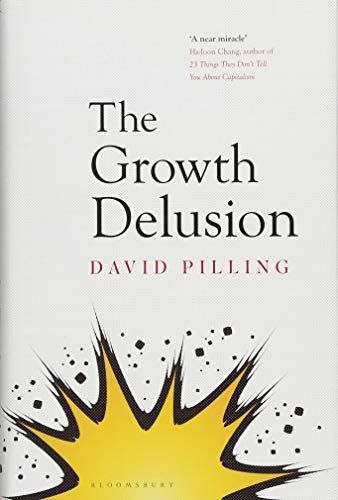
Nova: Not entirely wrong, Atlas, but perhaps with a significant blind spot. Today, we're diving into 'Unlocking New Horizons: The Strategic Blueprint for Global Expansion' through the lenses of two pivotal books. First, 'The Growth Delusion' by David Pilling, a financial journalist who spent decades observing the global economy for the Financial Times. He meticulously dissects how our obsession with GDP has actually distorted our view of progress and true market health.
Atlas: So, Pilling, a financial insider, is telling us the system is flawed? Intriguing. How does that connect to global expansion for someone looking to build a resilient business culture and dominate niche markets?
Nova: It’s the foundation of our first deep dive: challenging the GDP obsession, moving beyond what Pilling calls the 'growth delusion.' We need to ask: what are we truly missing when we only look at the numbers?
Challenging the GDP Obsession: Beyond the 'Growth Delusion'
SECTION
Nova: Pilling's core argument is that GDP was never designed to be a measure of well-being or societal health. It's simply a measure of economic activity. Think of it like a company only measuring its gross revenue without ever looking at profit margins, employee turnover, or customer satisfaction. You might see a huge number, but it tells you nothing about the underlying health or sustainability of the business.
Atlas: That makes sense. For a strategic builder, revenue growth, but it's not the whole story. You can have high revenue and still be bleeding cash or losing your best people. How do you convince a board, or even yourself, to look beyond the top-line numbers when you're expanding globally, when those numbers are so dominant in every report?
Nova: Pilling gives us stark examples. Imagine a country with skyrocketing GDP growth fueled by unsustainable resource extraction, massive environmental damage, or widening income inequality. On paper, it looks like a booming market. But for a business looking for long-term presence, you're entering a market with inherent instability: environmental risks, potential social unrest, a consumer base that might be deeply indebted or simply unable to sustain long-term purchasing power. These are huge hidden costs and risks that a simple GDP figure completely obscures.
Atlas: Right, like building a mansion on quicksand. You see the grand structure, but you're ignoring the foundation. So, it's about risk mitigation, but also finding a more resilient market. What kind of qualitative factors, specifically, should a leader be looking for that GDP misses? How do we measure the 'quicksand' versus the 'bedrock'?
Nova: Exactly. Pilling compels us to consider broader metrics. He points to indicators like average life expectancy, literacy rates, access to clean water, environmental quality, even levels of trust within a society. These are the true markers of a stable, educated, and potentially innovative workforce. They signal a consumer base with not just disposable income, but also a certain quality of life and future outlook, which are far more indicative of a market's long-term potential than a simple GDP percentage.
Atlas: That's a powerful reframing. It's not just about the size of the pie, but who's eating it, how healthy they are, and whether the pie can be baked again tomorrow. I can see how that would change the entire market assessment strategy.
Factfulness in Global Markets: Unveiling Hidden Opportunities with Data
SECTION
Nova: And that naturally leads us to the second key idea we need to talk about, which often acts as a powerful antidote to the 'growth delusion': 'Factfulness' by Hans Rosling, co-authored with Ola Rosling and Anna Rosling Rönnlund. Rosling, a brilliant public health professor and statistician, dedicated his life to using data to combat ignorance and reveal the surprising progress of the world.
Atlas: Oh, I've heard of Rosling! He's the guy with the amazing data visualizations, right? So, how does 'Factfulness' help us see global markets better, especially after we just talked about how numbers can deceive us?
Nova: Rosling's message is that our brains are wired with "ten instincts" that distort our worldview. Things like the negativity instinct, which makes us believe things are always getting worse, or the fear instinct, which exaggerates dangers. These instincts lead businesses to misjudge entire continents or regions, clinging to outdated perceptions of poverty or instability, and consequently missing vast improvements in living standards, education, and consumer power that are actually happening.
Atlas: So, it's about busting myths with actual data, and challenging our own internal biases. For a visionary leader, that's gold. Can you give me an example of a 'hidden opportunity' that might be overlooked because of these instincts, one that a leader could actually act on?
Nova: Absolutely. Take the African continent. Many businesses still view it through a lens of extreme poverty and instability, often driven by media headlines focusing on crises. But Rosling's data shows a dramatic rise in life expectancy, a significant decrease in child mortality, and a burgeoning middle class in many countries. This isn't about ignoring challenges, it's about seeing the full, nuanced picture. A company that understands these granular data points might identify a rapidly expanding market for consumer electronics, healthcare services, or educational technology in regions that are traditionally dismissed as "too risky" or "too poor" based on old generalizations.
Atlas: That's incredible. It's like having a superpower, seeing the world as it truly is, not as our instincts tell us it is. So, combining Pilling's critique of narrow metrics with Rosling's data-driven optimism, it feels like we're building a much more robust framework for global expansion.
Synthesis & Takeaways
SECTION
Nova: Precisely, Atlas. Pilling tells us what to trust – the overly simplistic, traditional metrics that create blind spots. Rosling, on the other hand, tells us – granular, unbiased data – and crucially, – factfully, challenging our inherent biases. Together, they offer a blueprint for seeing the world's markets with clarity.
Atlas: So, if we combine these insights, what three non-financial metrics would truly signal success in a new international market for a business, beyond just GDP or sales numbers? For our listeners who are building and looking for lasting impact, what should they actively track?
Nova: That's the deep question, and it's essential for strategic builders. I'd propose these three: First,. This goes beyond income to measure health, education, and living standards. A rising HDI in a region signals a more stable, educated, and potentially innovative workforce and consumer base. Second,. This indicates market readiness for modern business practices, e-commerce, and access to information, even in physically remote areas. Lastly,. This measures basic human needs, foundations of well-being, and opportunity. High scores suggest a more predictable, ethical, and resilient operating environment for your business.
Atlas: Those are powerful. They speak to long-term impact and resilience, not just short-term gains. It's about building a foundation for sustainable growth, not just chasing a fleeting number. It's about understanding the true landscape of opportunity.
Nova: Absolutely. These metrics empower leaders to make decisions based on reality, not on outdated perceptions or narrow economic indicators. They help you find the markets that are truly ready for your business and where you can make a genuine impact.
Atlas: Fantastic insights today, Nova. It's about trusting your instincts, yes, but also sharpening them with data and a broader perspective. Don't just chase growth; understand what true, sustainable growth looks like. It's about seeing the world as it really is, not as you think it is.
Nova: Precisely. And that's how you unlock new horizons, not just for your business, but for your impact.
Atlas: Always a pleasure, Nova.
Nova: You too, Atlas.