The 'Truth Decay' Trap: Why Information Overload Hides Understanding.
Golden Hook & Introduction
SECTION
Nova: What if I told you that in our hyper-connected world, the very thing we crave most—information—is actually making us intelligent, less understanding, and more susceptible to dangerous blind spots?
Atlas: Whoa. Less intelligent? That’s quite the claim, Nova. My initial reaction is, “But how?” We have more data, more news, more insights at our fingertips than ever before. Surely that makes us informed!
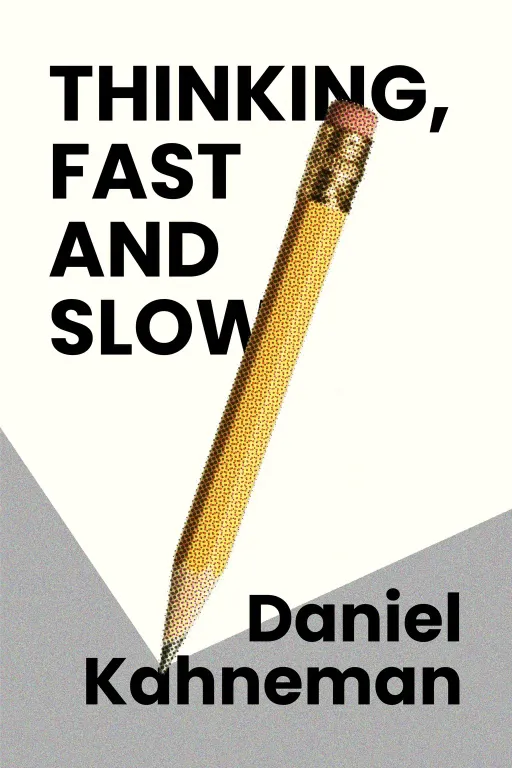
Nova: That’s the trap, Atlas, and it’s a profound one. We're calling it 'The Truth Decay Trap.' It's this insidious phenomenon where the sheer volume of information doesn't lead to clarity, but instead, ironically, hides understanding. It’s a core idea explored by two groundbreaking thinkers. First, Daniel Kahneman, a psychologist who won the Nobel Memorial Prize in Economic Sciences—a rare feat for someone outside of economics—with his seminal work,.
Atlas: Ah, Kahneman! I'm familiar with his work on cognitive biases. And then, there's Hans Rosling, whose book really challenged my worldview. Rosling, a public health expert, had this incredible knack for using simple, engaging data presentations to shatter deeply held misconceptions. His approach was so refreshing, cutting through all the noise.
Nova: Exactly. These two, in their own brilliant ways, equip us with the mental architecture to navigate this 'truth decay.' They show us that simply having more data isn't enough; we need to understand how our minds process—and often distort—that data.
The 'Truth Decay' Trap & Information Overload
SECTION
Atlas: Okay, so 'truth decay.' I can see how that might happen, especially when you're drowning in a firehose of news and analysis every day. For someone deeply invested in geopolitical analysis, like many of our listeners, the impulse is always to seek out information. But you're saying that could be counterproductive?
Nova: Absolutely. Think of it like this: imagine trying to listen to a single, clear signal on a radio, but the airwaves are jammed with a thousand other stations all broadcasting at once. The signal-to-noise ratio becomes so poor that even if your signal is there, you can't discern it. In our world, the 'signal' is genuine insight, and the 'noise' is the sheer volume of undifferentiated data, opinions, and narratives.
Atlas: So, we mistake volume for insight. We think because we've consumed hours of content, we've understood something deeply. But all we've really done is perhaps skimmed the surface of a vast ocean of information.
Nova: Precisely. And this leads to a dangerous simplification of complex issues. We start defaulting to easily digestible, often emotionally charged narratives, rather than engaging with the nuanced, layered reality. It hinders our ability to see underlying patterns, to connect cause and effect in a meaningful way. You end up with a very shallow, often biased, interpretation of global events.
Atlas: That resonates. I imagine a lot of our listeners, especially those who strive for a critical, informed perspective, wrestle with this feeling. It's almost an emotional exhaustion from the constant influx. You feel overwhelmed, yet simultaneously like you're missing something crucial. Like you're constantly playing catch-up, but never truly getting ahead.
Nova: That feeling of being perpetually behind, despite consuming vast amounts of information, is a hallmark of truth decay. It's not just about what you know, but how what you you know might actually be skewed or incomplete, because the sheer volume prevents deep processing. It feels like you're building a house with a thousand different kinds of bricks, but no blueprint.
Unmasking the Mind's Blind Spots: Cognitive Biases and Data-Driven Clarity
SECTION
Atlas: So the question then, Nova, is does this happen? Why do our brains, which are supposed to be these incredible information processors, fall into this trap even when we're trying to be objective?
Nova: That's where Kahneman’s work becomes indispensable. He explains that our brains operate with two main systems. System 1 is fast, intuitive, emotional, and automatic. It’s brilliant for quick decisions—like slamming on the brakes when a car swerves. But it’s also prone to predictable errors and biases. System 2 is slow, deliberate, logical, and requires effort. It’s what we use for complex calculations or critical geopolitical analysis.
Atlas: I see. So when we're bombarded with information, our System 1 kicks in to try and make sense of it quickly, because System 2 is just too slow and requires too much energy to process everything deliberately.
Nova: Exactly! And that’s where cognitive biases creep in. System 1 takes shortcuts. It looks for patterns, even where none exist. It confirms what it already believes – that's confirmation bias. Or it relies on readily available information, even if it's not representative – that's the availability heuristic. Think about how quickly we form opinions on international conflicts based on a few headlines, rather than deep historical context or diverse perspectives.
Atlas: That’s a tough pill to swallow, knowing our own minds are working against us, especially in high-stakes situations where accurate analysis is paramount. For someone who connects past to present, understanding the roots of conflict, how do you even begin to override that instinctive, biased System 1? It sounds almost impossible to be truly objective.
Nova: It requires intentional effort, Atlas. And that’s where Hans Rosling steps in with a crucial antidote. Rosling, with his public health background, wasn't just presenting data; he was actively challenging our preconceived notions, our System 1 assumptions, with cold, hard facts. He famously demonstrated how many widespread beliefs about the world—like the idea that the world is getting poorer, or that most people live in extreme poverty—are simply wrong when you look at the data.
Atlas: I remember his work, how he'd ask audiences seemingly simple questions about global trends, and even highly educated people would get them wrong, consistently. It was humbling. So, Rosling's approach is essentially forcing our System 2 to engage, to confront our intuitive biases with empirical evidence?
Nova: Precisely. He wasn't just giving us data; he was teaching us a. A data-driven approach that actively seeks to disconfirm our biases, rather than confirm them. It’s about cultivating an intellectual humility that says, "My intuition might be wrong, let me check the evidence." It’s a powerful mental tool for anyone, especially those in complex analytical fields, to move from snap judgments to nuanced, accurate interpretations.
Atlas: So it's not just about gathering more facts, but about how we those facts, how we question our own internal narratives, and how we actively seek out disconfirming evidence. That's a profound shift in thinking. It’s less about information and more about information with a critical, self-aware lens.
Nova: That’s the core insight. Both Kahneman and Rosling, in their own ways, are solving the problem of truth decay by equipping us with mental tools. They’re helping us understand the internal machinery of our minds so we can better interpret the external world. It means moving from passively consuming information to actively, deliberately, and critically engaging with it.
Synthesis & Takeaways
SECTION
Atlas: Wow. So, true understanding isn't just about having access to information, it's about the conscious effort to overcome our inherent cognitive shortcuts and biases. It’s about building a robust System 2 muscle that can cut through the noise and spot the real patterns.
Nova: Exactly. This shift in perspective is absolutely critical, especially in fields like geopolitical analysis. It's the difference between reacting to headlines and truly grasping the complex, underlying dynamics. It’s about fostering a more nuanced and accurate interpretation of complex global events, not by consuming more, but by processing smarter and more self-awarely. It’s about cultivating wisdom in an era of overwhelming data. So, for our listeners who strive for informed thought and seek to connect past to present, this is a call to intellectual arms.
Atlas: That’s a powerful way to put it. It makes me wonder, Nova, where in your current geopolitical analysis might unconscious biases be influencing your conclusions the most?
Nova: That’s the deep question, Atlas, and it’s one we should all be asking ourselves constantly.
Nova: This is Aibrary. Congratulations on your growth!