Stop Managing, Start Leading: The Guide to Empowering Your Team
8 minGolden Hook & Introduction
SECTION
Nova: What if everything you thought you knew about leadership was actually holding your team back? What if the most powerful thing a leader can do isn't to command, but to take the blame?
Atlas: Whoa, that's a bold statement, Nova. Taking the blame sounds… counter-intuitive, especially when we're often taught to delegate and empower. How does that make you a leader?
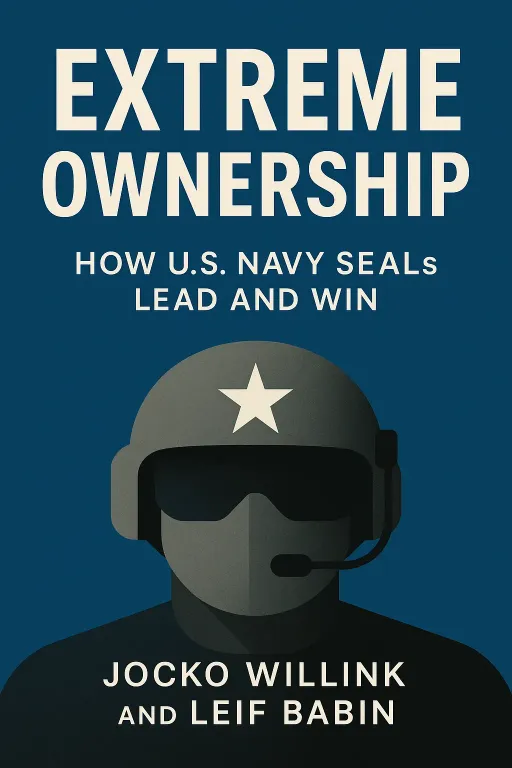
Nova: Exactly! It flips the script on traditional management, and it's the core of what we're dissecting today. We’re talking about the profound insights from the concept of "Stop Managing, Start Leading." It’s about a radical shift from merely overseeing tasks to truly empowering your team by embracing full responsibility. We're drawing heavily from two incredibly impactful books: "Extreme Ownership" by Jocko Willink and Leif Babin, and "Turn the Ship Around!" by L. David Marquet.
Atlas: Okay, so we're talking about a complete leadership overhaul rather than just tweaks. I know Jocko Willink, the former Navy SEAL commander. His background alone makes you sit up and listen, right? He’s not just theorizing; he’s a decorated combat veteran who applied these principles in the most life-or-death situations imaginable before he even thought about the business world. That’s a level of credibility you rarely see.
Nova: Absolutely. And that high-stakes context is where the principle of "extreme ownership" really shines. It's about a mindset that transforms blame into solutions, fostering accountability from the top down.
Deep Dive into Core Topic 1: The Paradigm Shift & Extreme Ownership
SECTION
Nova: So, let's dive into that first pillar: "Extreme Ownership." It's a principle forged in the crucible of combat, but its application is universal. Willink and Babin argue that leaders are responsible for in their world. Every single outcome, good or bad, ultimately falls on their shoulders.
Atlas: Wait, so you're saying if a team member makes a mistake, even a really boneheaded one, it’s still the leader's fault? That feels like an immense weight, Nova. Doesn't it just dump all the pressure onto the leader, rather than empowering the team to own their own mistakes?
Nova: It feels that way at first, doesn't it? But here’s the crucial distinction: it's not about the leader everything. It's about the leader taking ultimate responsibility for everything goes right, which includes training, communication, and creating the right environment. Imagine a scenario: a critical task is botched. The team member responsible might point fingers—"I wasn't given clear instructions," "The tools were faulty," "Another department dropped the ball."
Atlas: Yeah, that sounds like every Tuesday meeting.
Nova: Exactly. In a traditional setup, the leader might then reprimand the team member, or mediate between departments. But with extreme ownership, the leader steps forward and says, "This is my fault. I failed to ensure clear instructions. I failed to provide adequate tools. I failed to coordinate effectively with the other department."
Atlas: Oh man. That's a gut punch to the ego, for sure. But how does that anyone? Doesn't it just make the leader a scapegoat?
Nova: It’s the opposite, actually. By taking that ownership, the leader immediately shifts the focus from to blame to went wrong and to fix it. It sets an example. If the leader, who is at the top, is willing to say 'my bad,' it creates an environment where team members feel safe enough to admit their own mistakes without fear of immediate retribution. It fosters a culture of learning and continuous improvement, because everyone knows the goal is solutions, not blame.
Atlas: So it's about changing the leader's internal monologue first – from "my team failed" to "I failed to lead my team effectively" – and then that shift permeates the entire group. It's less about self-flagellation and more about setting the ultimate standard for accountability. That makes sense, but it still sounds incredibly challenging to implement in a day-to-day business setting where deadlines and client demands are constant.
Nova: It absolutely requires courage and a deep commitment. But the outcome is a team that trusts its leader, and a leader who understands that their true power lies in their ability to influence outcomes by taking responsibility for the they oversee. It moves beyond superficial management and into profound leadership.
Deep Dive into Core Topic 2: Empowering Autonomy & Leader-Leader Culture
SECTION
Nova: That internal shift in the leader, this radical ownership, then opens the door to our second powerful idea: creating a 'leader-leader' culture. This is brilliantly explored by L. David Marquet in "Turn the Ship Around!" Atlas, you know Marquet took command of the USS Santa Fe, a nuclear submarine, which was ranked dead last in the fleet, and transformed it into a top performer.
Atlas: And he did that by control, which still sounds like something out of a sci-fi movie for a submarine captain! I mean, in that environment, precision and strict hierarchy are paramount, right? How do you ensure competence and safety without traditional, top-down oversight?
Nova: That's the genius of it. Marquet realized the traditional "leader-follower" model was too slow and inefficient for complex, rapidly changing environments. He wanted to cultivate a team where every single crew member was empowered to lead and make critical decisions, not just follow orders. He did this by changing the language. Instead of crew members saying, "Captain, request permission to dive the ship," they were trained to say, "Captain, I intend to dive the ship."
Atlas: "I intend to..." That's a massive psychological and operational leap! It implies they've already thought through the plan, checked the parameters, and are ready to execute unless told otherwise. But what if their intention is… wrong? How do you manage that risk, especially on a submarine where a wrong decision could be catastrophic?
Nova: That's where the competence and clarity of intent come in. Marquet didn't just give away control; he meticulously built technical competence throughout the crew and ensured everyone understood the of the mission. When a crew member stated, "I intend to...," it was an invitation for the captain to ask probing questions: "Why do you intend to do that? What are the implications? Have you checked X, Y, and Z?" This ensured the crew understood the 'why' behind their actions, not just the 'what.' It fostered deep understanding and critical thinking at every level.
Atlas: So, it's not a free-for-all. It's a highly structured system designed to push decision-making authority down, but only after ensuring the people making those decisions are competent and fully aligned with the overall objective. It requires immense trust, training, and a clear understanding of the 'north star' goal. For an aspiring leader in, say, a tech startup, what's a small way to even begin implementing this 'leader-leader' model? Because "giving away control" sounds like a recipe for chaos in many fast-paced workplaces without the rigor of a submarine.
Nova: A great question for an adaptive learner. It starts with giving people problems, not solutions. Instead of saying, "Here's how I want you to build this feature," you might say, "Our users are struggling with X. How do you intend to solve that for them?" Then, you coach them through their proposed solution, asking clarifying questions about their intent and potential obstacles. It builds their critical thinking and their sense of ownership.
Synthesis & Takeaways
SECTION
Nova: So, when we bring these two powerful ideas together – extreme ownership and leader-leader culture – we see a complete picture of transformative leadership. Extreme ownership provides the psychological safety and the foundational mindset for leaders to then confidently empower their teams. One without the other is incomplete.
Atlas: Right. It's not about being a benevolent dictator who takes all the hits; it's about building a system where everyone is a leader because the top leader owns the environment they create, and then trusts their team to operate within it, understanding the overall intent.
Nova: Exactly. And for our listeners, especially those aspiring leaders and strategic thinkers looking for practical application, there's a tiny step you can take this week. Identify one challenge your team faces. Instead of stepping in and solving it yourself, ask your team members: "What's solution to this problem?"
Atlas: That's brilliant because it forces ownership and engagement, and it trains them to think critically rather than just waiting for instructions. It's a small step with a potentially huge ripple effect on team morale and effectiveness. How many challenges could be solved if we all truly owned the problem, and then were trusted to find the solution?
Nova: It's about moving from a team that on you to a team that with you. That's the ultimate growth for any leader.
Atlas: That's a powerful thought to end on.
Nova: This is Aibrary. Congratulations on your growth!