Designing High-Impact Learning & Development Systems
Golden Hook & Introduction
SECTION
Nova: What if everything we call 'training' in our organizations is actually setting us up for failure? What if the very act of "sending someone to a workshop" is a relic, a holdover from an industrial era that no longer serves our dynamic, rapidly evolving world?
Atlas: Whoa, Nova, that's a bold claim. Most leaders I know are pouring resources into L&D, trying to upskill their teams. Are you saying it's all for naught? Because I imagine a lot of our listeners, driven by progress and effective development, are thinking, 'Wait, we're to do good here!'
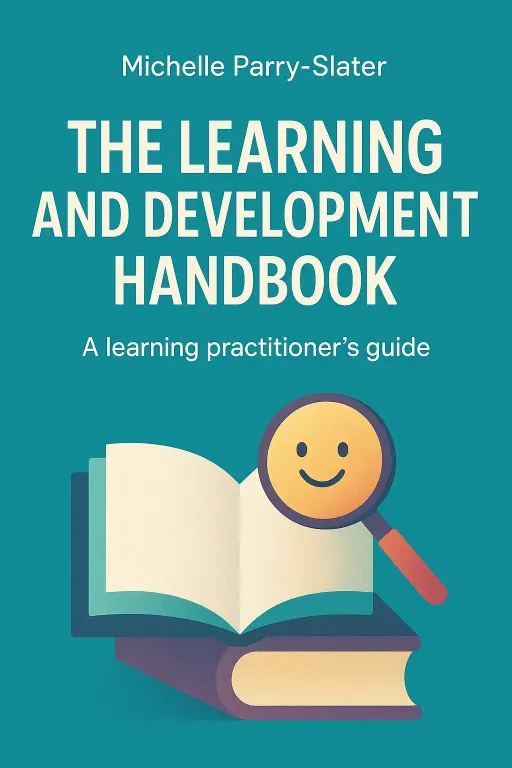
Nova: I’m not saying it's for naught, Atlas, but I am saying our might be fundamentally flawed. We often treat learning as an event, a checkbox, rather than the continuous, integrated force it needs to be. And that's exactly what two incredibly insightful books challenge us to rethink. Today, we're diving into Michelle Parry-Slater's "The Learning and Development Handbook," a guide from a seasoned L&D practitioner known for her pragmatic, real-world solutions. And we’re pairing that with "Evidence-Informed Learning Design" by Mirjam Neelen and Paul A Kirschner, two prominent voices from the world of cognitive science, famous for challenging learning myths with hard data.
Atlas: Okay, so we have the practical 'how-to' and the scientific 'why it works.' That sounds like a powerful combination for anyone who values clarity and seeks impactful knowledge. But let's start with Parry-Slater's vision. What does this 'modern, agile L&D' actually look like, if it's not just about sending people to a workshop?
The Agile Learning Ecosystem
SECTION
Nova: Exactly. Parry-Slater argues that we need to shift from a traditional, often reactive, training model to a continuous learning. Think of it less like a scheduled classroom session and more like a vibrant, self-sustaining garden where growth is inherent and constant. It’s about creating an environment where learning is embedded in the workflow, aligned directly with strategic business goals, and fostered as a culture of self-directed development.
Atlas: I guess that makes sense, but 'ecosystem' and 'self-directed' can sound a bit… abstract in a high-stakes corporate environment. How does a company actually that? Like, if I'm a manager trying to hit growth targets, how do I build a learning garden instead of just planting a few courses?
Nova: That's the core challenge, isn't it? One compelling example Parry-Slater might point to is a company that needs to quickly adapt to a new market trend or launch an innovative product. In a traditional setup, you'd design a big training program, roll it out, and hope for the best. In an agile ecosystem, you might initiate a "learning sprint."
Atlas: A learning sprint? I'm curious.
Nova: Imagine a tech company launching a new AI-powered customer service tool. Instead of a mandatory, week-long offsite, they identify the critical skills needed – understanding AI ethics, new software navigation, empathetic communication with AI – and they break these down into bite-sized, on-demand modules. Teams are encouraged to dedicate a specific time each week, say two hours, to explore these modules, collaborate on mini-projects using the new tool, and share their insights. They're not just consuming information; they're actively it in real-time, receiving immediate feedback from peers and mentors. The learning isn't separate; it's the engine driving the product launch.
Atlas: So basically you’re saying it's less about the grand, isolated event and more about consistent, integrated nourishment. But wait, looking at this from a strategic thinking perspective, how does this ensure knowledge transfer translates into tangible business growth? How do you measure the ROI of a 'learning sprint' compared to a traditional certification?
Nova: That’s a crucial distinction. The focus shifts from measuring or to measuring. With an agile approach, you're not just tracking who finished the module; you're tracking how quickly the new AI tool is adopted, how customer satisfaction scores improve, or how efficiently support tickets are resolved. Learning objectives are tied directly to performance metrics. The company might find that teams engaged in the learning sprint launched the product faster and with fewer post-launch issues than teams that relied on a one-off training event. That’s tangible business growth right there. It's about empowering people to solve business problems through continuous development, not just checking a box.
Atlas: That's actually really inspiring. It makes learning feel like a dynamic part of the business, not just a cost center. It also sounds like it requires a huge mindset shift from leadership, to trust employees to direct their own learning, and to see learning as an investment in daily operations.
Evidence-Informed Learning Design
SECTION
Nova: Absolutely, it requires trust and a fundamental shift in how we perceive capability building. And while creating this agile ecosystem is crucial, what we put it is just as important. That's where Neelen and Kirschner come in, challenging our assumptions about how people learn. Their book critiques common learning myths and advocates for design principles rooted in cognitive science.
Atlas: So you’re saying some of our 'best practices' in learning might actually be holding us back? Like what? Because I’ve been thinking about my own journey to master public speaking, and I’ve tried all sorts of things.
Nova: Oh, absolutely! Neelen and Kirschner are fantastic myth-busters. One popular myth they tackle is the idea of "learning styles"—that people learn best when teaching matches their preferred style, like visual, auditory, or kinesthetic. While it feels intuitive, extensive research shows no evidence that tailoring instruction to these styles improves learning outcomes. In fact, it can sometimes limit learners.
Atlas: Wait, hold on. I’ve heard about learning styles my whole life! So you're telling me it's not about finding if I'm a 'visual learner' but rather about something else entirely?
Nova: Precisely. They argue that effective learning design should be based on universal cognitive principles—how human brains learn best—rather than unsubstantiated preferences. For instance, principles like spaced repetition, where you revisit information over increasing intervals, and retrieval practice, where you actively recall information rather than just rereading it, are far more potent for long-term retention.
Atlas: That's fascinating! So, if I'm trying to master public speaking, it's not about just reading a book once, or only watching TED Talks? It's about actively practicing, getting feedback, and revisiting my material strategically?
Nova: Exactly! Imagine a sales team learning a new, complex product line. A traditional approach might involve a week-long, intensive product knowledge dump followed by a multiple-choice test. An evidence-informed approach would break that content into smaller chunks. They might learn a few features, then immediately practice explaining them to a peer. A week later, they’d get a short, low-stakes quiz on those features, forcing them to recall them from memory. Then, a month later, another practice session where they have to integrate those features into a simulated client conversation. This spaced, active retrieval builds much stronger, more resilient knowledge that translates directly into confident sales pitches and better client interactions. It’s not just about knowing the product; it’s about being able to that knowledge effectively when it counts.
Atlas: That’s a great example. It highlights how understanding the science makes the learning stick, which then directly impacts performance and business growth. It's not just about filling heads with information; it's about building capabilities that drive results. What's even more interesting is how this approach aligns with the self-growth mindset many of our listeners share. It empowers them to be more intentional about how they learn.
Synthesis & Takeaways
SECTION
Nova: It’s a powerful synergy, isn't it? Parry-Slater gives us the blueprint for the dynamic, agile learning —the 'what' and 'why' of modern L&D. Neelen and Kirschner then provide the scientific 'how' to ensure that everything within that ecosystem, from a micro-learning module to a complex leadership program, is designed for maximum effectiveness and real-world transfer.
Atlas: So, for listeners who are driven by progress and effective development, and want to audit their own team's learning initiatives, where do they even begin? The books suggest a "tiny step" and a "deep question."
Nova: The tiny step is simple but profound: Audit just current team learning initiative. Look at it through these two lenses. Is it truly agile? Does it embed learning into the flow of work, or is it an isolated event? And is it evidence-based? Does it leverage cognitive science principles, or is it built on intuition and common myths? Then, propose one small adjustment. Maybe it's adding a retrieval practice component, or shifting a long session into shorter, more frequent check-ins.
Atlas: That makes me wonder, how can we integrate scientific learning principles into our team's development to ensure knowledge transfer translates into tangible business growth? Because ultimately, that's what we're all striving for: making development count.
Nova: That's the deep question, Atlas. It's about moving from simply providing learning opportunities to strategically designing experiences that guarantee impact. It means asking: Is this learning initiative truly moving the needle on our business goals? Are we using the best available science to make sure knowledge sticks and transforms into action? When we combine agility with evidence, we stop just 'doing training' and start truly 'designing high-impact learning and development systems.' It's a game-changer for anyone serious about growth and mastery.
Atlas: Absolutely. This isn't just about L&D; it's about making every moment of learning count, whether it's for public speaking, strategic thinking, or negotiation. It’s about building a smarter, more adaptable workforce.
Nova: A workforce ready for anything.
Atlas: This is Aibrary. Congratulations on your growth!