** The Heart's Architecture: Decoding Emotional Intelligence with Anastase and Nova
Golden Hook & Introduction
SECTION
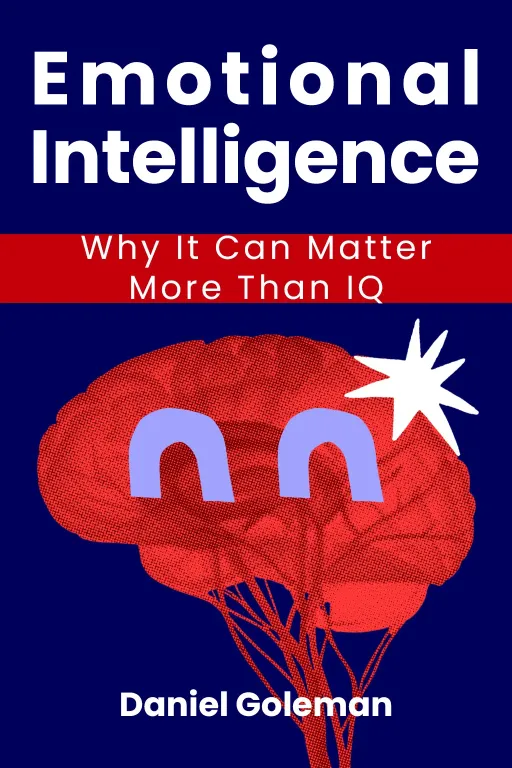
Nova: Picture this. It is a sweltering, sticky August afternoon in New York City. The kind of heat that makes people sullen, irritable, and ready to snap at the slightest provocation. You step onto a crowded bus on Madison Avenue, expecting the usual cold silence or muttered complaints. But instead, you are greeted by a middle-aged bus driver with a massive, enthusiastic smile. As you drop your fare, he warmly says, "How's your day going?" Throughout the journey, he acts as a lively tour guide, pointing out a museum exhibit here, a great sale at a shop there, and expressing genuine delight at the city around him. By the time the passengers step off the bus, the heavy cloud of irritation has completely vanished. They actually smile and call out, "Thank you, have a great day!" That bus driver was what Daniel Goleman calls an "urban peacemaker." He was a master of emotional intelligence. Welcome to the show, everyone! I am Nova, and today we are exploring the incredible science of the heart and mind. Joining us is our brilliant guest, Anastase, a deeply analytical thinker who loves connecting the dots across complex ideas. Anastase, it is so wonderful to have you here with us today!
Anastase: Thank you, Nova. It is a pleasure to be here. That story of the bus driver is a perfect entry point because it illustrates something profound. It shows that emotions are not just private, internal states; they are highly contagious social forces. As an analytical thinker, I find myself fascinated by the underlying mechanisms of this phenomenon. Goleman’s work suggests that our traditional, narrow definition of intelligence—which is heavily biased toward academic IQ—completely misses the mark when it comes to predicting how well we navigate the complexities of human life, relationships, and even our own internal worlds.
Nova: Oh, absolutely! It is like we have been using only one half of our map to navigate a very complex terrain. Today, we are going to tackle Goleman's groundbreaking book from two distinct, powerful angles. First, we will journey into the physical architecture of the brain to understand "emotional hijacking"—why we sometimes react before we even think, and how a simple marshmallow can predict a child's entire life trajectory. Then, we will pivot to what we call the "family crucible," exploring how early childhood attunement shapes our emotional blueprints and how we can apply these insights to build a truly happy, emotionally healthy family. Ready to dive in?
Anastase: I am absolutely ready, Nova. Let's dissect the biology first. It provides the essential framework for everything else.
Nova: -
Deep Dive into Core Topic 1
SECTION
Nova: Excellent! Let's start with the physical brain. Goleman explains that we essentially have two minds: one that thinks, and one that feels. And these two minds are managed by different parts of our brain. We have the neocortex, which is the thinking brain, responsible for logic, planning, and complex analysis. But deep inside, we have the limbic system, our emotional brain. And at the absolute center of this emotional brain sits a tiny, almond-shaped structure called the amygdala. Goleman calls the amygdala an "emotional sentinel." It is constantly scanning our environment, asking one fundamental question: "Is this going to hurt me? Am I in danger?" And sometimes, Anastase, the amygdala acts so fast that it completely bypasses our thinking brain. Goleman calls this an "emotional hijacking." Have you ever experienced a moment where you reacted so quickly in anger or fear, and only seconds later did your thinking brain catch up and ask, "Wait, why did I just do that?"
Anastase: Yes, indeed. And the evolutionary logic behind this is incredibly elegant, even if it occasionally misfires in our modern environment. From an analytical perspective, the amygdala operates on a "quick and dirty" processing pathway. Joseph LeDoux’s research, which Goleman highlights, revealed a direct neural shortcut from the thalamus—the brain's sensory gateway—straight to the amygdala, completely bypassing the neocortex. In prehistoric times, if you heard a rustle in the bushes, pausing to analyze whether it was a tiger or just the wind could cost you your life. The amygdala triggers an instantaneous fight-or-flight response, flooding the body with stress hormones like epinephrine and norepinephrine. It prioritizes speed over accuracy. The problem is that in modern society, we rarely encounter physical tigers. Instead, we encounter symbolic threats—a critical comment from a spouse, an annoying email from a colleague, or a minor traffic slight. Our amygdala perceives these as life-threatening emergencies, leading to a massive emotional overreaction that our neocortex later regrets.
Nova: That is such a brilliant way to put it, Anastase! We are running 21st-century software on hardware that was designed hundreds of thousands of years ago. And when that hardware takes over, it can lead to tragic or deeply regrettable outcomes. Goleman shares the heartbreaking story of a father who heard a noise in his daughter's bedroom late at night. Believing it was an intruder, his fear-driven amygdala hijacked his rational mind. He grabbed his pistol, went to investigate, and when his daughter jumped out of the closet to play a practical joke, he reacted instantly and shot her. It is a devastating example of how a system designed to protect us can lead to catastrophe when it operates without the balancing influence of the neocortex.
Anastase: It is a sobering reminder of the high stakes involved. The key to preventing these hijackings lies in the prefrontal cortex, which acts as an emotional manager. The left prefrontal lobe, in particular, seems to function as a neural thermostat, dampening the signals sent by the amygdala. This brings us to what Goleman identifies as the master aptitude of emotional intelligence: emotional self-control, specifically the ability to delay gratification and resist impulse. This isn't just a minor social skill; it is a fundamental psychological capacity.
Nova: Oh, and that brings us straight to one of the most famous and fascinating studies in the history of psychology: the Marshmallow Test! Back in the 1960s, psychologist Walter Mischel put four-year-old children in a room, sat them down at a table, and placed a single marshmallow right in front of them. The researcher gave them a choice: they could eat the marshmallow right now, or, if they waited fifteen to twenty minutes until the researcher returned from an errand, they would get marshmallows. It is the ultimate struggle between the impulsive amygdala screaming "Eat it!" and the rational prefrontal cortex saying "Wait for the reward!"
Anastase: What makes this study so scientifically significant is not just how the children behaved in the moment—some covered their eyes, sang to themselves, or literally licked the marshmallow to cope with the tension—but what happened to them decades later. The researchers tracked these children into adolescence and adulthood. When they graduated from high school, the children who had successfully delayed gratification at age four were significantly more socially competent, self-assertive, and better able to cope with life's frustrations. Remarkably, they also scored, on average, over two hundred points higher on their SAT exams than the children who had grabbed the single marshmallow immediately.
Nova: Isn't that mind-blowing? A simple choice at age four predicts academic success and emotional resilience years down the road! It shows that emotional self-control is a foundational skill that unlocks all of our other cognitive abilities. If our minds are constantly flooded with anxiety, anger, or impulsive desires, our working memory is severely compromised. We literally cannot think clearly or learn effectively because our emotional brain is hogging all the cognitive bandwidth.
Anastase: Exactly. It suggests that cognitive intelligence, or IQ, is essentially a passive capacity, whereas emotional intelligence, or EQ, is the active manager of that capacity. You can have a brilliant mind, but if you cannot manage your emotional distress, you cannot deploy that brilliance when it matters most. This is why Goleman argues that emotional literacy is a prerequisite for a successful life.
Nova: -
Deep Dive into Core Topic 2
SECTION
Nova: That is a perfect transition to our second core topic, because if emotional intelligence is so vital, where on earth do we learn it? Goleman's answer is clear: the family. He calls family life "our first school for emotional learning." It is in this intimate crucible that we learn how to feel about ourselves, how others react to our feelings, and what choices we have when we are afraid, angry, or sad. And this brings us to our customized theme for today: building a happy family. Anastase, how does Goleman's concept of "emotional attunement" play into how parents shape their children's emotional blueprints?
Anastase: This is where the science becomes incredibly beautiful and practical. Emotional attunement is the process by which a parent empathically responds to a child's nonverbal emotional signals. It is not merely about imitating the child's behavior; it is about matching the and behind it. For instance, if a baby squeals with delight, an attuned mother doesn't just squeal back; she might give the baby a gentle, rhythmic squeeze that matches the joyful energy of the squeal. This subtle, physical feedback loop lets the baby know, "I am understood. My feelings are real, and they are shared." Goleman highlights that repeated moments of attunement literally sculpt the child's developing neural pathways, particularly the connections between the amygdala and the prefrontal cortex.
Nova: Yes! And the opposite is also true, which is so important for parents to understand. Misattunement—when a parent consistently ignores, rejects, or misinterprets a child's emotions—can have devastating long-term effects. Goleman shares a fascinating study by psychiatrist Daniel Stern, who observed a mother who treated her twin sons differently. With one twin, whom she felt was more like her, she was perfectly attuned. But with the other twin, she was persistently intrusive, trying to force eye contact when he wanted to look away, and ignoring his signs of distress. A year later, that second twin was noticeably more fearful, dependent, and emotionally insecure. He had learned a silent, painful lesson: "My feelings do not matter, and expressing them will only lead to rejection or distress."
Anastase: That study is a powerful illustration of how early relational patterns become internalized. It connects deeply to the "Block Test" conducted by the renowned pediatrician Dr. T. Berry Brazelton. He would offer blocks to eight-month-old infants to assess their basic outlook on life. Babies from encouraging, emotionally supportive homes would struggle with the blocks, drop them, look up at the adult with expectancy, and try again, eventually succeeding with a look of pride that said, "I can do this!" But babies from bleak, neglectful, or chaotic homes exhibited a "hangdog" demeanor. Even when they successfully put the blocks together, they looked down with an expectation of failure or indifference. They had already developed a defeatist blueprint. This reveals that optimism and self-efficacy are not just innate personality traits; they are learned emotional habits cultivated in the family crucible.
Nova: It is so true. And it shows that as parents, we are constantly teaching, even when we don't realize it. Goleman identifies three of the most common emotionally inept parenting styles. First, there are parents who completely ignore their child's feelings, treating emotional distress as a minor nuisance that will just pass. Second, there are laissez-faire parents who acknowledge the child's feelings but offer absolutely no guidance or limits, essentially saying, "It's okay to be angry, and it's okay to throw that vase across the room." And third, there are contemptuous parents who are actively harsh, critical, and punitive, punishing children for showing sadness or anger. None of these styles help a child develop emotional literacy.
Anastase: Indeed. The alternative that Goleman champions is "emotion coaching." Emotionally adept parents treat their child's emotional distress as an opportunity for connection and teaching. They validate the emotion first—"I see that you are really angry right now, and it's okay to feel angry." But then, they set clear boundaries on behavior and help the child problem-solve—"But it is not okay to hit your brother. Let's think of a better way to show your anger." This approach teaches the child self-awareness, emotional vocabulary, and constructive coping mechanisms. The data supports this beautifully: children of emotion coaches have better emotional regulation, lower stress hormones, stronger peer relationships, and even higher academic achievement.
Nova: It is like giving our children an emotional inoculation for life! And the most encouraging part of Goleman's work is his assertion that "temperament is not destiny." Even if a child is born with an overexcitable amygdala—making them naturally timid, shy, or prone to anxiety—supportive, gentle parenting can actually help "tame" that amygdala over time. Jerome Kagan's longitudinal studies at Harvard showed that timid children whose parents gently pushed them to adapt to new situations, rather than overprotecting them, gradually became more confident and outgoing. Their brains actually adapted!
Anastase: That concept of neuroplasticity is incredibly hopeful. It means that the emotional habits we lay down in childhood are malleable. Through conscious effort, self-awareness, and emotional relearning, we can reshape our neural pathways at any age. For a family, this means that by practicing emotional intelligence together—by cooling down before we resolve conflicts, by listening nondefensively, and by validating each other's feelings—we can break generational cycles of emotional dysfunction and build a truly happy, resilient home.
Nova: -
Synthesis & Takeaways
SECTION
Nova: Oh, I love that so much! It is all about small, daily practices that accumulate over time to build a beautiful, strong emotional foundation. We have covered so much ground today, Anastase. From the rapid, protective responses of our amygdala to the profound impact of parental attunement on a child's developing brain. If you had to distill all of this wisdom into one actionable takeaway for our listeners to apply in their own lives and families today, what would it be?
Anastase: I would recommend adopting a structured approach to emotional problem-solving, similar to the "SOCS" method highlighted in emotional literacy curricula. SOCS stands for: Situation, Options, Consequences, and Solutions. The next time you or a family member experiences an emotional surge, instead of reacting impulsively, pause. Identify the clearly. Brainstorm your for response. Analyze the potential of each option. And finally, choose the most constructive. This simple cognitive framework acts as a bridge, allowing the prefrontal cortex to step in, modulate the amygdala's impulse, and guide us toward wise, emotionally intelligent decisions.
Nova: That is an absolutely brilliant and practical tool! Situation, Options, Consequences, Solutions. It is a roadmap for navigating those emotional storms with grace and intelligence. Anastase, thank you so much for sharing your incredible insights and analytical depth with us today. This has been an incredibly enriching conversation.
Anastase: Thank you, Nova. It has been an absolute pleasure exploring these ideas with you.
Nova: And to all of our wonderful listeners out there, thank you for tuning in! Remember, emotional intelligence is not a fixed trait; it is a lifelong practice. This week, we challenge you to pause before you react, listen with an open heart, and bring a little bit of that Madison Avenue bus driver's joy into your own home. Until next time, keep connecting, keep growing, and take care of your hearts and minds!