The Empathy Gap: Why Children's Fears Need Deeper Understanding
Golden Hook & Introduction
SECTION
Nova: Many of us were told as kids to "toughen up" or "stop being silly" when we expressed a fear. And we often repeat that cycle.
Atlas: I mean, sometimes a monster under the bed is just a shadow, right? We want our kids to be resilient, not to be afraid of every little thing. Isn't there a point where we need to teach them to distinguish between real danger and, well, imagination?
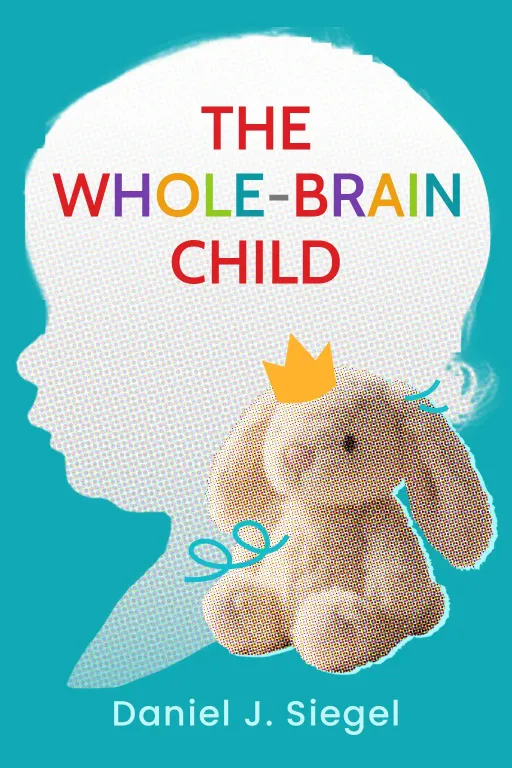
Nova: That's precisely the "empathy gap" we're diving into today, Atlas. Today, we're exploring why "The Empathy Gap: Why Children's Fears Need Deeper Understanding" is such a crucial concept. It's not about validating the monster, it's about validating the of fear. We're drawing insights from this foundational idea, and specifically from giants like Daniel J. Siegel and Tina Payne Bryson, authors of "The Whole-Brain Child," and Daniel Goleman, who essentially popularized "Emotional Intelligence."
Atlas: Oh, I like that. Siegel, the clinical professor of psychiatry, bridging neuroscience and relationships; and Goleman, who showed us that EQ is just as vital as IQ. These aren't just feel-good theories. These are deeply researched, practical frameworks.
Nova: Exactly. Siegel's work in interpersonal neurobiology, for instance, is groundbreaking because it doesn't just theorize; it shows us how our brains are wired for connection and how those connections shape our emotional landscape from childhood upwards. And Goleman's insights remind us that understanding and managing emotions is a skill, not just an innate trait.
Atlas: So, this isn't just about kids. It's about us, as adults, learning to speak the language of their inner world.
The Empathy Gap: Bridging the Divide
SECTION
Nova: Precisely. And the first major hurdle is what we call the "empathy gap." It's this fundamental disconnect where what seems like a minor inconvenience or an irrational fear to an adult is a genuinely overwhelming, 'big' experience for a child. For us, a thunderstorm might be a cozy evening indoors. For a child, the booming sound, the flashing lights, the shaking windows – it can feel like the world is literally falling apart.
Atlas: Oh, I know that feeling. I imagine a lot of our listeners can recall a time they were dismissed as a child, or perhaps, for those of us who are parents, a moment where we’ve accidentally dismissed a child’s fear because it seemed so trivial. You know, "It's just a bug, don't be silly!"
Nova: That’s it. And while our intention is often to reassure, to tell them it's "not a big deal," what the child actually hears is "My feelings aren't valid. My experience isn't real." This invalidation can have profound consequences. It teaches them to suppress their emotions, to distrust their own internal compass, and it actually hinders that deep connection we crave with them.
Atlas: So, we're not just brushing off a fleeting emotion; we're potentially chipping away at their emotional literacy and their trust in us as safe harbors for their feelings. That sounds pretty heavy. What does that do to a child's developing sense of self?
Nova: It can be incredibly detrimental. If their internal world is constantly being told it's "wrong" or "silly," they learn to hide that world from us. They learn that certain emotions are unacceptable. This suppression, over time, can manifest as anxiety, anger, or even a deep-seated insecurity. Acknowledging their 'big' feelings—even if the 'thing' they're afraid of seems small to us—is the first, most crucial step. It's like acknowledging the pain of a stubbed toe, even if it's not a broken leg. The pain is real to them, in that moment.
Atlas: Can you give an example? How do you acknowledge a seemingly irrational fear like a shadow monster without, you know, confirming that there a shadow monster?
Nova: Absolutely. Instead of saying, "There's no monster, go to sleep," you might say, "Wow, that shadow looks really scary, doesn't it? It's okay to feel a little scared when things look different in the dark. Let's shine a flashlight and see what that shadow really is." You're validating the feeling, the fear, without validating the imaginary threat. You’re joining them in their emotional experience, then gently guiding them back to reality.
Atlas: That’s a great way to put it. You're not saying the fear is wrong, you're saying "I see your fear, and we can face it together."
The Neuro-Emotional Shift: Brains, Feelings, and Connection
SECTION
Atlas: So, understanding this empathy gap feels crucial. It’s about meeting them where they are emotionally. But how does the brain actually play into this? I mean, why do kids process emotions so differently?
Nova: This is where Siegel and Bryson's "The Whole-Brain Child" becomes absolutely essential. They explain that a child's brain develops from the bottom up, and from back to front. We often talk about the 'downstairs brain' and the 'upstairs brain.' The downstairs brain is where our primal emotions, instincts, and memories reside – it's the fight, flight, or freeze response. The upstairs brain, which is the prefrontal cortex, is responsible for logic, planning, empathy, and emotional regulation.
Atlas: Okay, so when a child is completely overwhelmed, say, by that shadow monster, is their 'upstairs brain' just offline? Are they literally incapable of rational thought in that moment?
Nova: Precisely. In moments of intense fear or overwhelm, the downstairs brain can completely hijack the upstairs brain. It's like the logical control tower goes dark, and the primitive alarm system takes over. That's why trying to reason with a child having a tantrum or a severe fear response is often futile. Their brain simply isn't equipped to process it logically in that state. Our role, as adults, is to help them integrate these two parts of their brain.
Atlas: That makes so much sense! And I can see how Goleman's "Emotional Intelligence" ties in here. We're essentially helping them develop their emotional intelligence by teaching them to understand and manage these powerful internal experiences.
Nova: Exactly. Co-regulation is the key. When a child is in that downstairs brain state, our calm, regulated presence helps bring their upstairs brain back online. We help them name their feelings, we soothe them, and then, once they're calm, we can help them make sense of what happened. This is where storytelling becomes an incredibly powerful tool.
Atlas: How does storytelling actually help a child's brain integrate these feelings? Like, how does a narrative connect the downstairs and upstairs brain?
Nova: Stories provide a safe container for big emotions. When a child hears a story about a character who felt scared but found a way to be brave, or processed a difficult situation, it allows them to experience those emotions vicariously. It builds neural pathways. They can see a beginning, a middle, and an end to a scary feeling. It helps them understand cause and effect, develop problem-solving skills, and realize that feelings are temporary. We're essentially rehearsing emotional regulation and resilience through narrative.
Atlas: That's fascinating. But wait, I have to ask: are we, as adults, inadvertently creating more anxious children by over-validating every small fear? Is there a line between empathy and enabling?
Nova: That’s a really important distinction. Empathy is about acknowledging the feeling, not necessarily validating the fear itself. We're not saying, "Yes, there's a monster and you should be terrified." We're saying, "I see you're scared, and that feeling is real for you right now. Let's figure this out together." The goal is to equip them with tools for resilience, not to eliminate all discomfort. It's about teaching them that they can fear and still be okay, still be brave, still cope. It's building that internal strength.
Synthesis & Takeaways
SECTION
Nova: So, bringing it all together, the journey from recognizing the empathy gap to understanding the neuro-emotional shift in children's brains truly transforms how we can connect with and support them. It's about acknowledging their feelings, rather than dismissing them, and then using that connection to help them integrate their emotional and logical selves.
Atlas: It really shifts the perspective from "Why are they being so dramatic?" to "What is their brain trying to tell them, and how can I help them understand it?" It's a profound change in approach, not just for parents, but for anyone who tells stories to children, or really, anyone who wants to foster emotional well-being in the next generation.
Nova: Absolutely. It circles back to our deep question: How might acknowledging a child's 'big' feelings, rather than dismissing them, change your approach to storytelling? It means crafting narratives where characters genuinely struggle with fear, where their feelings are acknowledged, and where they find healthy, integrated ways to overcome challenges, rather than just having fears magically disappear. It’s about building emotional resilience through the power of story.
Atlas: That is such a hopeful way to look at it. It empowers us to be better guides for these young, developing minds. It's about creating a safe space for their emotions, so they can grow into emotionally intelligent, resilient individuals.
Nova: This is Aibrary. Congratulations on your growth!