The Empathy Advantage: Why Understanding Emotions is Your Superpower.
Golden Hook & Introduction
SECTION
Nova: What if the very thing we've been taught defines success – raw intellect, pure IQ – is actually holding us back from true fulfillment and powerful connection? What if society's biggest blind spot is also your greatest untapped potential?
Atlas: Oh, I like that. It immediately makes me think of all the times I've seen brilliant people stumble, not because they weren't smart enough, but because something else was missing. How does this idea challenge what we usually consider successful?
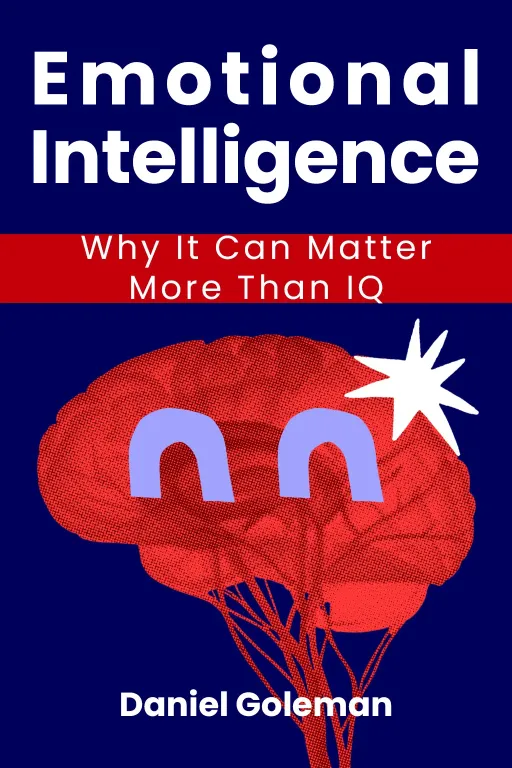
Nova: Exactly. Today, we're dissecting 'The Empathy Advantage,' drawing heavily from the groundbreaking work of Daniel Goleman, particularly his seminal book, 'Emotional Intelligence.' Goleman, a science journalist, wasn't just spinning theories; he synthesized decades of brain and behavioral research into a compelling argument that fundamentally reshaped how we understand human capabilities and success.
Atlas: That makes sense. I remember when his work really started to gain traction, especially in the corporate world. It felt like a fresh perspective, moving beyond just the numbers on a test.
The Emotional Blind Spot
SECTION
Nova: It was a huge shift. For too long, the spotlight was solely on IQ. We measured it, we valued it, we built educational systems around it. But Goleman’s core argument is that emotional intelligence is a better predictor of success than traditional intelligence.
Atlas: Okay, but what does 'better predictor' actually mean in a real-world sense? Give me an example of where IQ falls short and EI truly shines. For our listeners who are building complex systems or leading teams, this might feel a bit abstract.
Nova: Consider this: Imagine two project managers, both incredibly sharp, top of their class academically. Let's call them Alex and Ben. Alex is a genius at algorithms, can debug any code, and understands complex financial models instantly. Ben is also smart, but perhaps not quite at Alex's analytical level.
Atlas: Sounds like Alex has the edge on paper.
Nova: On paper, yes. But when a critical project hits a snag, and tensions rise within the team, Alex struggles. He gets frustrated when others don't immediately grasp his brilliant solutions. He dismisses team members' emotional concerns as 'irrational' and focuses solely on the technical problem. The team feels unheard, morale plummets, and the project grinds to a halt not because of technical issues, but because of interpersonal friction.
Atlas: Oh, I’ve been there. You see the technical solution, but the human element just keeps getting in the way.
Nova: Precisely. Now, Ben, with his slightly lower IQ but higher emotional intelligence, approaches the same crisis differently. He notices the tension, schedules one-on-one check-ins, actively listens to concerns about workload and communication, and mediates conflicts. He might not debug the code as fast as Alex, but he keeps the team cohesive, motivated, and pulling in the same direction. The project gets delivered, maybe not with the most elegant code, but on time and with a stronger team intact.
Atlas: Wow. So Alex's raw intellect was almost a liability because he couldn't navigate the human landscape, while Ben's ability to understand and manage emotions became his true competitive advantage.
Nova: Exactly. The cause of Alex's stagnation was that blind spot to emotions. His process ignored the human element, leading to team breakdown and project delays. Ben's process, rooted in empathy and social skills, fostered collaboration and ultimately, success.
Atlas: But isn't some level of IQ still essential? Are we saying intellect doesn't matter at all? That sounds a bit out there.
Nova: Absolutely not. Think of it this way: IQ is the engine of a high-performance car. You need a powerful engine to go fast. But emotional intelligence is the skilled driver behind the wheel. A powerful engine with a poor driver will crash. A decent engine with an excellent driver will get you to your destination safely and efficiently. IQ is foundational, but EI is the multiplier, the strategic advantage that actually gets you where you want to go.
Mastering the Emotional Toolkit: EI as Your Strategic Advantage
SECTION
Nova: That analogy of the skilled driver brings us perfectly to the actual toolkit. What these components of emotional intelligence that Goleman outlines, and how do we build them? He breaks it down into five key areas: self-awareness, self-regulation, motivation, empathy, and social skills.
Atlas: Okay, so five distinct skills. Let's start with self-awareness. Many of our listeners, especially those driven by self-mastery, might feel they self-aware. What's the deeper layer Goleman is talking about here? How do you truly cultivate it beyond just reflecting?
Nova: It goes beyond simply knowing your strengths and weaknesses. Deep self-awareness is about understanding your, your, and their impact on your thoughts and actions. It's about recognizing your emotional triggers in real-time. For example, a deeply self-aware person might notice that when they're under intense pressure, they tend to become overly critical or withdraw. They don't just feel bad; they the pattern.
Atlas: So it's not just "I'm stressed," it's "I'm stressed, and when I'm stressed, I tend to micromanage my team, which isn't effective." That’s a great way to put it. That ability to not just but your feelings in action.
Nova: Exactly. And that observation allows for the next step: self-regulation. If you know micromanaging is your stress response, you can then consciously choose a different, more effective response. It’s about managing your internal states, impulses, and resources.
Atlas: That makes sense. And empathy, that feels like a 'soft skill' to many. How does that translate into a strategic advantage in, say, a negotiation or a complex team project? That's going to resonate with anyone who struggles with navigating difficult conversations.
Nova: Empathy isn't just about 'feeling for' someone; it's about understanding their perspectives, needs, and emotional states, and then on that understanding. Consider a leader introducing a new, potentially unpopular organizational change. A leader with low empathy might just announce the change, expecting everyone to fall in line, leading to resistance and resentment.
Atlas: Yeah, that’s a recipe for disaster. You see that all the time.
Nova: A leader with high empathy, however, would anticipate the team's concerns—fear of job loss, increased workload, uncertainty. They'd proactively address these during the announcement, explaining the 'why,' offering support, and creating forums for feedback. They don't just present the facts; they present them in a way that respects the emotional landscape of their team.
Atlas: So it's not just about 'feeling' for people, it's about understanding and responding effectively, which sounds incredibly powerful. It’s almost like having a predictive ability for human behavior.
Nova: Precisely. The empathetic leader in that scenario avoids costly delays, maintains morale, and ensures smoother implementation. The tangible business outcome is a successful transition, directly attributable to their emotional intelligence. It’s a strategic move, not just a kind gesture.
Synthesis & Takeaways
SECTION
Nova: What we're really seeing here is that emotional intelligence isn't some innate, fixed trait. It's a set of learnable skills. Just like you can improve your analytical skills, you can absolutely enhance your self-awareness, your empathy, and your social skills through intentional practice.
Atlas: For someone who's looking to build, to architect a more connected and successful life, where does one even start with this? What's the first tangible step to begin cultivating this superpower?
Nova: A fantastic starting point, and one that resonates deeply with the idea of meaningful connection, is to practice active listening daily. It sounds simple, but it's transformative. Truly hear beyond the words people are saying. Pay attention to tone, body language, the unspoken emotions.
Atlas: I can see that. That would build both self-awareness, by noticing your own reactions, and empathy, by really understanding others. So, the real superpower isn't something you're born with; it's something you cultivate through understanding yourself and others, leading to clarity and profound impact. What a powerful idea.
Nova: It truly is. Begin by asking yourself today: where in your life could a deeper understanding of emotions—yours or others'—create a significant positive change? Start there, and watch your superpower unfold.
Nova: This is Aibrary. Congratulations on your growth!