The Empathy Advantage: How to Build Unshakeable Bonds
Golden Hook & Introduction
SECTION
Nova: What if I told you that the secret to building truly unshakeable bonds isn't about talking more, or even about listening better, but about something you rarely do alone in a quiet room?
Atlas: Oh man, that's a curveball. My first thought is meditation, but then I'm like, how does quiet introspection lead to unshakeable with other people? That feels almost contradictory.
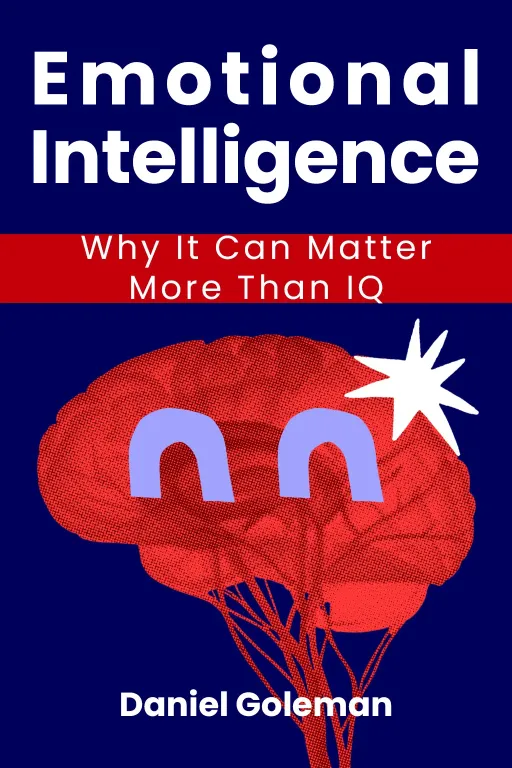
Nova: Exactly! And that's the beautiful paradox we're unraveling today as we dive into "The Empathy Advantage," focusing on how to build those deep, resilient connections. We're pulling insights from two absolute titans in the field: Daniel Goleman's groundbreaking work on "Emotional Intelligence," which really shifted our understanding of what makes people successful and connected, and "Crucial Conversations" by Kerry Patterson, Joseph Grenny, Ron McMillan, and Al Switzler, a book that's become a cornerstone in professional development for its incredibly practical frameworks on navigating the toughest discussions.
Atlas: Right, Goleman really put emotional intelligence on the map, showing us it's not all about IQ. And "Crucial Conversations" is practically required reading in some leadership circles for a reason. So, we're blending the inner game with the outer strategy for connection.
Nova: Precisely. And it all starts with that quiet room, that internal world.
The Inner Game of Connection: Self-Awareness as the Foundation of Empathy
SECTION
Nova: Because the first core idea, drawing heavily from Goleman, is that true connection outwards begins with a profound understanding of ourselves. How can we expect to understand another person's emotional landscape if we haven't even mapped our own?
Atlas: That makes perfect sense, but it also sounds... hard. Like, how do I even to become self-aware? Isn't that just a fancy way of saying 'think about your feelings'?
Nova: It's more than just thinking, Atlas, it's sensing, identifying, and understanding the of those feelings. Imagine a scenario: you're in a team meeting, and a colleague presents an idea that completely contradicts yours. Your stomach tightens, your jaw clenches, and you feel a surge of irritation. If you lack self-awareness, your immediate reaction might be to lash out, to dismiss their idea, or to get defensive.
Atlas: Oh, I've seen that play out. It usually doesn't end well for team morale, or for the idea itself, to be honest.
Nova: Right. But with self-awareness, you recognize that tightening in your stomach, that flush of irritation. You label it: "Ah, that's my ego feeling threatened," or "That's my fear of being wrong kicking in." When you understand internal state, you create a tiny, crucial pause.
Atlas: So, that pause is the key. Instead of just reacting, you're observing your own reaction.
Nova: Exactly! And in that observation, you gain control. Now, when your colleague leans forward, looking a bit defensive themselves, you're not just seeing an 'opponent.' You're thinking, "Okay, I just felt threatened, maybe they're feeling threatened too. Maybe their defensiveness isn't an attack on me, but a reaction to their own perceived threat, or their passion for their idea."
Atlas: Wow, that completely reframes the interaction. You're not just reacting to their behavior; you're trying to understand the emotion behind it, because you’ve already understood the emotion behind reaction.
Nova: It's like having an internal radar. Goleman highlights that self-awareness is the foundational layer for empathy. You can't truly step into someone else's shoes if you don't even know what your own shoes feel like. This isn't just about 'feeling for others'; it's about recognizing the universality of certain human emotions after you've identified them within yourself.
Atlas: So, if I'm constantly misinterpreting my own triggers or feelings, I'm probably doomed to misinterpret everyone else's, too. That's actually really inspiring, because it means I have control over improving my empathy.
Nova: You absolutely do. This inner work makes you more authentic and responsive, transforming potential conflicts into opportunities for connection, even before you've uttered a single word. It’s the silent superpower of strong bonds.
Mastering the Dialogue: Skillful Navigation in High-Stakes Interactions
SECTION
Nova: And that naturally leads us to the second key idea, which often acts as the active deployment of that internal understanding: mastering the dialogue, especially in high-stakes situations. Knowing yourself is one thing, but then you have to actually to people, often when emotions are running high.
Atlas: Yeah, because even with all the self-awareness in the world, if you can't communicate effectively when it really counts, those bonds are still going to fray. Crucial Conversations sounds like the playbook for that.
Nova: It is. "Crucial Conversations" defines these as discussions where opinions vary, stakes are high, and emotions run strong. The authors provide frameworks for navigating these without resorting to silence or violence – meaning, withdrawing or attacking.
Atlas: Hold on, that sounds great in theory, but when someone's yelling at you, or completely shutting down, 'staying in dialogue' feels impossible. How do you actually that without getting run over or just giving up?
Nova: That's where the tactics come in. One of their core principles is to "start with heart" – meaning, clarify what you want for yourself, for the other person, and for the relationship you open your mouth. If your goal is truly mutual understanding and respect, not just to win, your approach changes dramatically.
Atlas: So, it's about setting your intention, almost like a compass, before you sail into choppy waters.
Nova: Exactly. And another powerful tool is "making it safe." When people feel unsafe, they either go silent or get aggressive. So, you have to find ways to re-establish safety. One way is to apologize if you've made a mistake, or to clarify your positive intent. For example, "I really want us to find a solution that works for both of us, and I value our relationship too much to let this issue fester."
Atlas: That's a huge shift from the usual "I'm right, you're wrong" approach. It sounds less like a debate and more like... joint problem-solving.
Nova: Precisely. And Goleman's empathy is the engine for this. When you're self-aware enough to recognize emotional state, and empathetic enough to sense, you're far better equipped to "make it safe." You can see their withdrawal or aggression not as a personal affront, but as a sign they feel unsafe in the conversation. And then you can address underlying feeling.
Atlas: So, the self-awareness from Goleman helps you stay calm and understand your own reactions, and then the "Crucial Conversations" tactics give you the actual words and steps to take to de-escalate and move forward. They really do intertwine.
Nova: They do. These insights equip you to not only perceive emotions but also to skillfully manage conversations, transforming potential conflicts into opportunities for deeper connection. It's about recognizing that every interaction, especially the difficult ones, is a chance to build, not break, a bond.
Synthesis & Takeaways
SECTION
Nova: So, bringing it all together, "The Empathy Advantage" isn't just a soft skill; it's a powerful, two-pronged approach. It starts with the internal work of self-awareness, allowing us to truly understand our own emotional landscape. This internal clarity then fuels our ability to empathize with others, giving us the insight to navigate even the most high-stakes, emotionally charged conversations with grace and skill, drawing from the tactical wisdom of "Crucial Conversations."
Atlas: It’s the journey from quiet self-reflection to confident, compassionate engagement. And it means that building those unshakeable bonds isn't some mystical talent; it's a learnable skill, built on understanding and then applied with intention.
Nova: Absolutely. And if there's one tiny step our listeners can take tomorrow to start seeing this advantage in their own lives, it's this: in just one conversation, intentionally listen to understand, not to reply.
Atlas: That’s so powerful because it forces you to pause, to really absorb, and to put the other person's perspective first. It’s the simplest way to activate that empathy and begin building something truly solid.
Nova: It truly is. That small shift in intention can ripple outwards, transforming your interactions and strengthening your connections in ways you might not expect.
Atlas: Amazing. What a journey from the inner world to the outer one.
Nova: This is Aibrary. Congratulations on your growth!