

The Emotionally Intelligent Leader: Cultivating Self-Awareness for Greater Impact
Golden Hook & Introduction
SECTION
Nova: Atlas, if I told you that the secret to becoming an impactful, visionary leader wasn't about being the smartest person in the room, but about feeling your feelings… would you believe me?
Atlas: Oh, I like that, Nova. Because honestly, for so many of us striving for that lasting impact, that 'master achiever' status, we've been told it's all about raw intellect, strategic genius, maybe a dash of ruthlessness. Feeling your feelings almost sounds… counter-intuitive to the board room, doesn’t it?
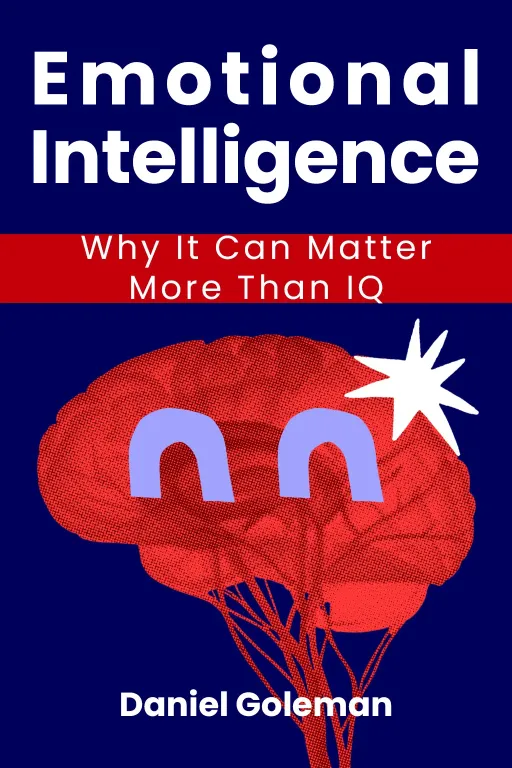
Nova: Exactly! It flies in the face of decades of corporate dogma. Yet, today we’re diving into a pair of groundbreaking books that argue precisely that: Daniel Goleman’s Emotional Agility*. Goleman, a science journalist who spent years covering behavioral sciences, first popularized the idea that our emotional skills are far more predictive of success than IQ. His work really shifted the conversation in the mid-90s, making these 'soft skills' a hard science.
Atlas: Right, so it’s not just a touchy-feely concept, it’s backed by research. I’m curious though, for someone who’s always pushing boundaries, building foundations, and driving impact, how does 'feeling your feelings' actually translate into strategic scaling and leadership development? It sounds a bit like an abstract concept that’s hard to put into practice when you’re facing real-world challenges.
Nova: That’s the beautiful part, Atlas. It's not about being soft; it's about being profoundly. And that brings us directly to our first core idea: the absolute bedrock of personal mastery is cultivating emotional intelligence. It’s the ability to lead with authentic presence and make thoughtful, impactful decisions, even when the stakes are sky-high.
The Bedrock of Personal Mastery: Emotional Intelligence
SECTION
Atlas: Okay, so emotional intelligence as the bedrock. What does Goleman really mean by that? Because for a lot of our listeners, they might hear 'emotional intelligence' and think 'being nice' or 'being empathetic,' which are great qualities, but how do they build a legacy?
Nova: That's a perfect question, because it’s much deeper than just being 'nice.' Goleman breaks it down into five key components: self-awareness, self-regulation, motivation, empathy, and social skills. Think of it like this: traditional leadership development often focuses on external metrics – strategy, operations, financial acumen. But Goleman, through his extensive research, including studies on high-performing executives, found that what truly differentiated top leaders wasn't their IQ, but their emotional intelligence. He famously argued it was twice as important as pure intellect and technical skill combined.
Atlas: Wow, twice as important. That’s a bold claim. So, give me an example. How does, say, self-awareness, which is the first component, play out in a real-world scenario for someone who’s trying to scale their business or develop their leadership? It sounds a bit abstract.
Nova: Let's take a common scenario. Imagine a leader, let's call her Sarah, who is brilliant, highly analytical, and always has the right answers. But she has a blind spot: she gets incredibly defensive when challenged. Her team, sensing this, starts to sugarcoat feedback or avoid bringing up problems altogether. They might even say she has "thin skin." Sarah genuinely wants to improve, but her lack of self-awareness about this defensiveness creates a toxic feedback loop, stifling innovation and trust.
Atlas: Oh, I’ve been there. Not as Sarah, thankfully, but I’ve been on teams where that dynamic plays out. You see the leader’s reaction, and you just clam up. So, how does Goleman’s framework help Sarah? She probably already she's self-aware.
Nova: Exactly! That’s the critical insight. Self-awareness isn't just knowing your strengths; it's understanding your emotional triggers, your default reactions, and how they impact others. A self-aware leader like Sarah, after some honest reflection or perhaps 360-degree feedback, would recognize that knot in her stomach, that quickening pulse, the instant urge to justify herself when challenged. She wouldn't just react; she'd that reaction. Goleman's work, which built upon earlier psychological research into emotions, essentially mapped out how our emotional brain works, and how we can consciously engage with it rather than being driven by it.
Atlas: So basically you’re saying it’s about pausing before the knee-jerk reaction. It’s like, instead of letting your emotions hijack your decision-making, you become the calm observer in the control room.
Nova: Precisely. And that leads us beautifully to Susan David's work in, which provides the for cultivating that self-awareness and then moving beyond it. David, a Harvard Medical School psychologist, introduces the concept of "emotional agility" as the ability to navigate life’s inevitable ups and downs with self-acceptance, clear-sightedness, and an open mind. If Goleman gives us the emotional intelligence matters, David gives us the to actually live it, especially under pressure. She emphasizes that emotions are data, not directives.
Emotional Agility: Navigating Challenges with Clear-Sightedness
SECTION
Atlas: Okay, 'emotions are data, not directives.' That’s a great way to put it, especially for our listeners who are drivers, achievers, and constantly making high-stakes decisions. They need data. But how does emotional agility differ from just… pushing through emotions, or ignoring them, which is often the default for high-performers?
Nova: That’s where the profound shift happens. Many high-achievers, in their drive for self-mastery, inadvertently fall into what David calls "emotional rigidness." They either bottle up difficult emotions, pretending they don't exist, or they dwell on them, getting stuck in rumination. David's research, often conducted with leaders in high-stress environments, showed neither approach works in the long term. In fact, she argues that "bottling" emotions can lead to burnout, poor decision-making, and a lack of authenticity.
Atlas: That makes sense. I can definitely relate to that. I’ve been there, thinking ‘I don’t have time for this feeling, I just need to get this done.’ And then it just… festers. So, how does David suggest we handle those challenging emotions, especially when we’re trying to build something significant, when we’re under pressure to perform?
Nova: Her "Tiny Step" for this week, which I think is incredibly powerful, is to "observe a challenging emotion without judgment. Instead of reacting immediately, acknowledge it and consider its underlying message before responding." It's about creating a space between the stimulus and your response. David calls this "showing up" to your emotions. It’s not about suppressing them or letting them run wild. It's about seeing them for what they are: temporary states, messengers, not your identity.
Atlas: So you're saying, if I feel that familiar frustration bubbling up when a project isn’t going to plan, instead of immediately lashing out or diving into a frantic, unstrategic fix, I should just… notice it? Like, "Oh, hello, frustration. What are you trying to tell me?"
Nova: Exactly! And that’s the crucial move. That frustration might be telling you that your expectations are unrealistic, or that a team member needs more support, or that you're actually burnt out. If you react immediately, you miss that critical data. If you ignore it, it builds up. David’s work emphasizes that this active observation, this "taking a step back" from your emotions, allows you to align your actions with your values, rather than being swept away by momentary feelings. It’s about choosing your response, rather than just reacting. She talks about how so many of us are "hooked" by our emotions, letting them dictate our actions, often unconsciously. Emotional agility is about unhooking yourself.
Atlas: That’s a great analogy, 'unhooking yourself.' Because honestly, that sounds like true self-mastery. It’s not about not having the emotions, it’s about controlling the narrative around them, and using them as fuel, or as information, instead of being derailed by them. It's like having a high-performance engine, but also having the best diagnostic tools to know exactly what's going on under the hood.
Nova: Yes! And for our listeners who are focused on strategic scaling and leadership development, this is absolutely transformative. When a leader can observe their own fear of failure without judgment, they can then make a more calculated, courageous decision. When they can acknowledge their team's anxiety during a pivot, they can communicate with genuine empathy, building trust rather than driving people away. It allows for sustained impact, because you're not constantly fighting against your own internal landscape.
Synthesis & Takeaways
SECTION
Atlas: This is actually really inspiring, Nova. It reframes what "strength" in leadership truly means. It's not about emotional invulnerability, but emotional and. It’s about being able to sit with discomfort, extract the wisdom from it, and then move forward strategically, which is exactly what a legacy builder needs.
Nova: Absolutely. The profound insight here is that true leadership, the kind that leaves a meaningful mark, isn't just about external achievements. It's about the internal landscape you cultivate. Goleman laid the groundwork for understanding the immense power of emotional intelligence, showing us it's the hidden driver of success. And David then gives us the practical toolkit for how to actually wield that power, how to become emotionally agile. It's about recognizing that your emotions are not weaknesses to be overcome, but rather vital information to be understood and leveraged.
Atlas: So, the tiny step for this week – observing a challenging emotion without judgment. That’s something concrete and actionable. It’s about taking that 15 minutes daily, not just for a high-impact task, but for a high-impact observation. It’s about embracing the journey of self-mastery, not just chasing immediate perfection. For anyone looking to truly enhance their personal mastery and strategic scaling, this is the foundation.
Nova: Precisely. It's about building a better leader, from the inside out. This is Aibrary. Congratulations on your growth!









