Mastering Emotional Control: The Art of Inner Discipline
Golden Hook & Introduction
SECTION
Nova: Atlas, what's your go-to strategy when someone, with the best intentions, says, "Just calm down"?
Atlas: Oh, Nova. My go-to strategy is usually to calmly explain why that's the least helpful thing anyone could ever say, with increasing volume, until they understand the irony. It’s… not always effective.
Nova: Exactly! It’s like telling a fire to just 'be less hot.' Emotions aren't toggles we just flip. But what if mastering those internal fires, understanding their heat, their fuel, their purpose, was the ultimate superpower for anyone looking to build something truly lasting?
Atlas: That’s a compelling reframe. I'm listening. Because for anyone trying to lead, to create, to architect their own life, the idea of 'just calm down' feels like a dismissal of the very intensity required for greatness.
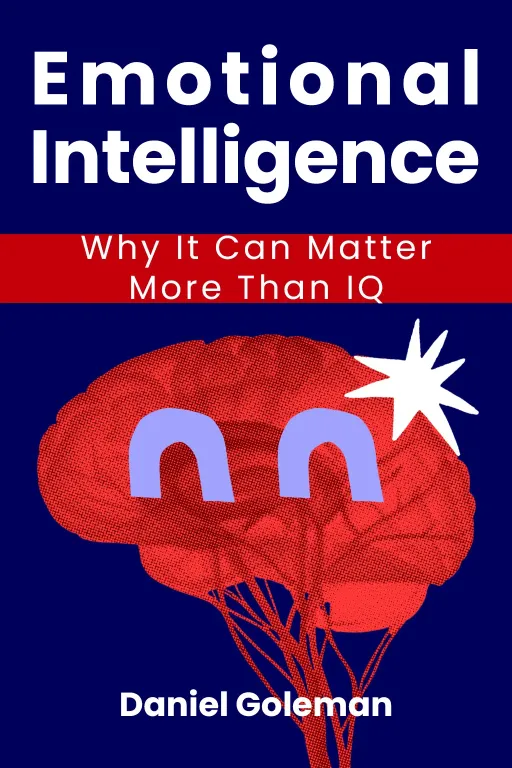
Nova: It absolutely is. And that’s why today, we're diving into two foundational texts that, when woven together, offer a profound roadmap for exactly that: Daniel Goleman's seminal "Emotional Intelligence," which revolutionized our understanding of success, and Ryan Holiday's "The Obstacle Is the Way," a modern classic that distills ancient Stoic wisdom into actionable strategies for navigating life's inevitable challenges.
Atlas: So, we're talking about more than just feeling good. We're talking about a practical framework for inner strength and external effectiveness.
Nova: Precisely. It’s about building an inner discipline that allows you to not just survive the storms, but to sail through them, and even harness their power.
The Foundation of Emotional Mastery: Awareness and Self-Regulation
SECTION
Nova: Think about it, Atlas. For decades, success was almost exclusively measured by IQ, by raw cognitive horsepower. Then Goleman drops "Emotional Intelligence," and suddenly, the conversation shifts. He demonstrates that things like self-awareness, self-regulation, motivation, empathy, and social skills—what he calls EQ—are actually more critical for genuine, long-term success than pure intellect.
Atlas: That’s a huge claim. For someone who values structure and intentional action, the idea of 'emotions' can often feel… chaotic. How do you bring structure to something that feels so inherently unstructured? And how does a leader, who needs to project strength, truly embrace this without seeming vulnerable or 'soft'?
Nova: That’s the brilliant paradox. It’s not about being 'soft' or 'emotional' in the stereotypical sense. It’s about being incredibly strong. Goleman's work showed us that the most effective leaders aren't emotionless automatons. They're profoundly aware of their own feelings and the feelings of others. Self-awareness, for example, isn't just knowing you're angry; it's understanding you're angry, what triggers it, and what impact that anger has on your decisions and those around you.
Atlas: So you're saying it's about understanding the internal operating system, not just trying to force an outcome.
Nova: Exactly! Consider a CEO I once heard about – brilliant, technically gifted, could solve any complex problem. But under pressure, he’d devolve into shouting matches, micromanaging every tiny detail, alienating his top talent. His IQ was off the charts, but his team was a revolving door. He was a master of the spreadsheet, but a novice in the boardroom of his own mind.
Atlas: That sounds rough, but also incredibly common in high-stakes environments. The pressure can make you revert to whatever you think is 'effective,' even if it's destructive. So, how did he shift? How does someone like that build that internal mastery?
Nova: His turning point came when he lost a key project, not because of technical issues, but because his team morale was so low, they just couldn't innovate. He finally realized his outbursts weren't motivating; they were paralyzing. He started working with a coach who taught him one simple thing: pause. When frustration hit, instead of immediately reacting, he learned to identify the emotion. 'Am I angry? Am I anxious? What's underneath this?'
Atlas: Hold on, so it’s not about suppressing the anger, but just momentarily hitting the brakes?
Nova: Precisely. It’s about creating a tiny space between stimulus and response. In that space, self-regulation kicks in. Instead of just lashing out, he'd consider one alternative, more constructive response. Maybe it was taking a walk, or writing down his thoughts, or even just explicitly stating, "I'm feeling frustrated right now, I need a minute." This wasn't about being weak; it was about being strategic. He realized that true strength isn't the absence of emotion, but the ability to choose how you respond to it.
Atlas: I can definitely relate to that. That makes me wonder, how does this internal work translate to the external impact and integrity that a leader really strives for? Because it sounds like a lot of quiet, internal wrestling.
Nova: It is quiet, but it's the most powerful wrestling you can do. When you master that internal landscape, your external actions become more intentional, more aligned with your values. You project genuine composure, not just a facade. You build trust because people see you're in control of yourself, not just trying to control them. That’s where true integrity and lasting impact are forged. It's the ultimate act of building from within.
Leveraging Obstacles for Growth: The Stoic Reframing
SECTION
Nova: Now, Atlas, that internal mastery is incredible, but what happens when the world throws you a truly massive curveball? When the obstacle isn't just your own frustration, but a market crash, a project failure, a personal setback? How do you apply this inner discipline when external circumstances feel utterly overwhelming?
Atlas: That's the real test, isn't it? Because knowing how to manage your own anger is one thing, but genuinely reframing a significant, painful setback without just sugarcoating it feels like a monumental task. Especially for someone who architects and builds, a major failure can feel like a personal demolition.
Nova: That's where Ryan Holiday’s "The Obstacle Is the Way" comes in, drawing deeply from Stoic philosophy. It's not about denying the pain or pretending everything is fine. It's about a radical shift in perspective: seeing challenges not as hindrances, but as opportunities. The Stoics believed that the only thing truly within our control is our judgment and our response. Everything else is external.
Atlas: So you're saying it's about shifting from "Why is this happening to me?" to "What can I do with this?"
Nova: Exactly. Let me tell you about Thomas Edison. His laboratory burned down, destroying years of his work, prototypes, records. It was a catastrophic loss, estimated at over a million dollars in 1914 money. His son, Charles, said Edison watched it burn with 'great calm.' He even called his wife to witness it, saying, "You'll never see a fire like this again."
Atlas: Wow. My first reaction would be pure devastation. I mean, years of work, just gone. That's not just 'bad,' that's a professional and personal nightmare. How do you find calm in that?
Nova: Well, it wasn't calm in the sense of being emotionless. It was calm in the sense of accepting what and immediately shifting to. He told his son, "All our mistakes are burned up. Now we can start fresh." Within three weeks, he had designed a new phonograph. He reframed a literal burning obstacle into a chance to innovate without the baggage of past errors.
Atlas: That’s incredible. That's a powerful example of taking a catastrophic event and finding the leverage point. But what about the initial emotional resistance? How do you move from the shock and the devastation to Edison mindset?
Nova: That's where the inner discipline from Goleman's work becomes critical. First, you acknowledge the emotion—the devastation, the anger, the fear. You don't suppress it. But then, you consciously engage in the Stoic practice of reframing. You ask yourself: "What is the here? What virtue can I practice? Patience? Creativity? Resilience? What lesson is this obstacle trying to teach me?" It's an active, intentional process of inquiry, not passive acceptance.
Atlas: So it's about seeing the challenge as a kind of training ground. Not just enduring it, but actively using it to sharpen your tools. That makes me wonder, for a leader focused on genuine power and lasting impact, how does consistently applying this mindset cultivate those things?
Nova: It cultivates a profound resilience and an unshakeable inner calm. When you consistently turn obstacles into opportunities, you become antifragile—you don't just withstand shocks; you get better because of them. People see that. They trust a leader who remains composed and resourceful under fire, who doesn't just react, but thoughtfully responds. That builds genuine power, because it’s rooted in internal strength and integrity, not just external circumstances. It's the ultimate expression of building your own path, even when the path is blocked.
Synthesis & Takeaways
SECTION
Nova: So, bringing it all together, Atlas, what Goleman and Holiday teach us is that mastering emotional control isn't about being emotionless. It's about cultivating a profound self-awareness, regulating our internal state, and then, crucially, leveraging that inner discipline to dynamically engage with the external world. It's about channeling our emotions, transforming setbacks, and truly building something powerful and resilient.
Atlas: It’s a journey from reacting to responding, from being a passenger in your own emotional life to being the architect of your reactions. That conscious choice, that tiny pause between stimulus and response, feels like the real superpower here. It's the quiet work that allows for monumental external impact.
Nova: Absolutely. True strength, true leadership, and genuine power don't come from avoiding emotion or sidestepping obstacles. They come from the quiet, internal work of understanding and mastering our emotional responses, allowing us to build a life of purpose and lasting impact, regardless of external circumstances. It’s the ultimate form of inner discipline.
Atlas: That’s actually really inspiring. So, for our listeners, how can you reframe a current 'obstacle' in your life—whether it's a project setback, a difficult conversation, or even just daily frustration—as an opportunity for practicing patience, creativity, or resilience? That’s the deep question to sit with.
Nova: This is Aibrary. Congratulations on your growth!