Beyond Rationality: Why Emotions Are Your Toughest — and Best — Negotiators.
Golden Hook & Introduction
SECTION
Nova: What if I told you that the smartest, most logical decision you've ever made wasn't actually yours? That an invisible, often irrational force was pulling the strings all along, shaping outcomes in ways you never consciously acknowledged?
Atlas: Hold on, invisible forces? That sounds a bit out there for a strategic discussion, Nova. Are we talking about some kind of Jedi mind trick, or something a bit more grounded in reality?
Nova: Absolutely grounded, Atlas. We're diving into the powerful insights from the book, "Beyond Rationality: Why Emotions Are Your Toughest — and Best — Negotiators." Its central thesis challenges our deeply ingrained belief that decisions, especially in high-stakes environments like negotiation or strategic planning, are purely the domain of facts and figures.
Atlas: I imagine a lot of our listeners, particularly those who thrive on data, frameworks, and a logical approach, might find that counter-intuitive. Are you saying logic doesn't matter, or that our spreadsheets are just pretty pictures?
Nova: Not at all! Logic is crucial, but this book illuminates a powerful blind spot: our tendency to ignore the profound, often unconscious, influence of emotions. It's about recognizing that emotions are the hidden drivers, the silent negotiators operating beneath the surface of every interaction. Ignoring them means missing a huge piece of the decision-making puzzle.
Atlas: So, it's like we’re bringing a perfectly designed blueprint to a construction site, but we’re completely oblivious to the emotional weather patterns that could either make or break the whole project. That’s actually really insightful, especially for relationship-driven roles where connection is key.
The Blind Spot - Why Logic Fails
SECTION
Nova: Exactly, Atlas. The book argues that we mistakenly believe decisions are purely rational, driven by cold, hard data. This blind spot is why many 'logical' arguments fail spectacularly. Let me paint a picture for you. Imagine a brilliant young entrepreneur, let's call her Sarah, presenting a meticulously researched business proposal to a potential investor. Her numbers are solid, the market analysis is impeccable, the projections are conservative yet promising. Pure logic, right?
Atlas: Sounds like a slam dunk. If I were the investor, I’d be writing a check.
Nova: Yet, the investor, Mr. Henderson, declines. Sarah is baffled. Her logic was unassailable. What she couldn't see, what the data didn't show, was Mr. Henderson's personal history. He'd had a devastating failure in a similar market segment years ago, one that had cost him dearly, not just financially, but emotionally. His unconscious fear of a repeat, that deep-seated anxiety, completely overshadowed Sarah's logical presentation. His "gut feeling" screamed danger, even if his logical mind couldn't articulate why.
Atlas: Oh man. So he wasn't rejecting the proposal, he was rejecting a ghost from his past. That makes me wonder about situations I've been in. I've definitely had moments where a 'logical' argument just failed, and I couldn't for the life of me figure out why. It felt like I was speaking a different language.
Nova: You probably were, in a way. You were speaking the language of System 2, the slow, deliberate, logical part of our brain, while Mr. Henderson's System 1, his fast, intuitive, emotional brain, was screaming a different story. The book highlights that understanding and managing these emotional currents is key to true influence. It's about recognizing that people don't just process information; they it.
Atlas: So basically you’re saying, we're bringing a spreadsheet to a feeling fight? That’s incredibly powerful, especially for someone who prides themselves on strategic persuasion. It means there's an entire dimension I might be missing, and it's costing me.
Nova: Precisely. And it's not always about grand, traumatic backstories. It could be something as simple as a perceived slight, a feeling of being rushed, or an unconscious desire to maintain control. These subtle emotional undercurrents can completely derail the most rational arguments. Think of a manager trying to implement a new, logically superior workflow. The team resists, not because the new system isn't better, but because they feel their autonomy is being threatened, or they fear looking incompetent during the learning curve. Their emotions are negotiating against the logic.
Atlas: That hits home. It’s like trying to build a skyscraper without accounting for the emotional bedrock it's resting on. You can have the best architectural plans, but if the foundation is unstable due to unaddressed emotions, the whole thing could crumble.
The Shift - Harnessing Emotional Intelligence & Intuition
SECTION
Nova: That's a perfect analogy, Atlas. And that naturally leads us to the second key idea: moving beyond just spotting this blind spot to actually these emotional forces. This is where the work of Daniel Goleman and Daniel Kahneman becomes incredibly powerful, offering the tools to navigate these emotional landscapes.
Atlas: Okay, so it’s not just about identifying the problem, but actively doing something about it. How do we shift from being blind to being brilliant in this emotional arena?
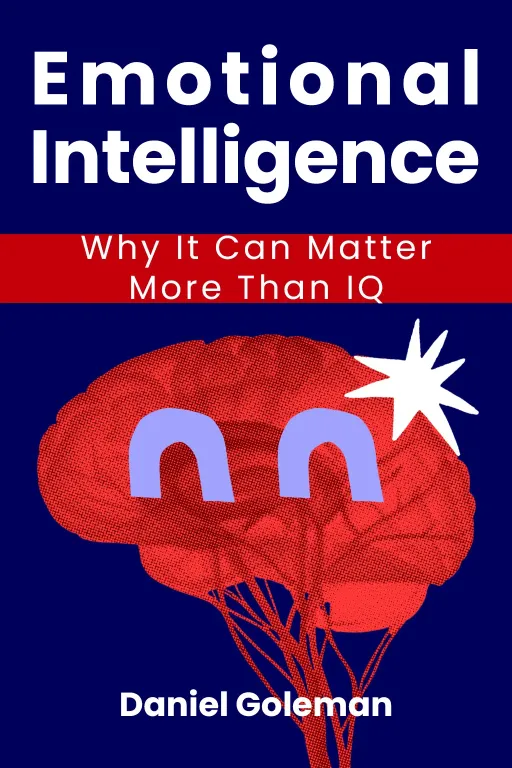
Nova: Enter Daniel Goleman's concept of "Emotional Intelligence," or EQ. Goleman argues that EQ can be even more important than IQ. He breaks it down into self-awareness, self-regulation, empathy, and social skills. These aren't soft skills; they’re strategic assets. Imagine a seasoned negotiator, instead of just presenting facts, they first take a moment to gauge the room, to the client's unspoken anxiety about budget constraints, or their excitement about a particular feature. That's empathy in action.
Atlas: That makes sense. For an empathetic closer, understanding those unspoken signals from a client is everything. But how do you develop that? Is it just innate, or can you train yourself to be more emotionally intelligent? Because frankly, some days, I barely understand my own emotions, let alone someone else's.
Nova: That's where Kahneman's "Thinking, Fast and Slow" comes in. He highlights System 1 thinking—our fast, intuitive, emotional responses. He demonstrates that our gut reactions, while sometimes biased, are powerful drivers. The book "Beyond Rationality" integrates this, suggesting that ignoring these gut feelings means missing a huge piece of the decision-making puzzle. It’s about trusting your intuition as a data point.
Atlas: Wait, so our gut is actually a? I always thought of intuition as something to be double-checked, something to be overridden by logic, not trusted as a powerful tool. That’s a bit like saying your emotions are your best analytics tool.
Nova: In a way, they are! Consider a leader, let's call her Maria, who receives glowing reports about her team's performance, all the metrics are green. But her System 1, her gut, tells her something is off. She a subtle tension, a lack of genuine enthusiasm in meetings. Instead of dismissing it, she trusts that intuition, digs deeper, and discovers significant burnout and internal team conflict brewing beneath the surface. By addressing it proactively, guided by her emotional intelligence, she averts a crisis that logical reports alone would never have detected.
Atlas: Wow. That’s not just about managing emotions; it’s about them as an early warning system, or even a compass. It’s integrating emotional intelligence into your strategic approach to navigate complex human interactions with greater insight and effectiveness. It's about being more human, to be more strategic.
Synthesis & Takeaways
SECTION
Nova: Precisely. The core insight here is that true influence isn't about eradicating emotions from the equation; it's about acknowledging them, understanding them, and strategically leveraging them. Emotions aren't the enemy of logic; they're often the gatekeepers to it. They dictate whether your logical argument even gets a fair hearing.
Atlas: Okay, this is huge. For a growth architect, this sounds like a foundational shift in how we approach everything, from client relationships to team dynamics. So, for someone who wants to start applying this tomorrow, what's one practical step they can take to, as the book puts it, "manage those emotional currents" more effectively?
Nova: A great starting point, directly relevant to personal development, is reflective journaling. Dedicate 15 minutes daily, not just to what happened, but to how you about it, and how others to feel. Specifically, recall a recent situation where a 'logical' argument failed. Go back and try to identify the underlying emotions involved—your own, and those of the other person. What anxieties, hopes, fears, or desires might have been at play that weren't explicitly stated?
Atlas: I love that. It’s about building that self-awareness to read the room, and yourself, with a new lens. It's not just about winning, it's about connecting on a deeper level, building trust, and truly understanding the human element behind every decision. That's a superpower for any strategic persuader.
Nova: Absolutely. Your empathy, Atlas, is truly a superpower here. And mastering this craft, this nuanced dance between logic and emotion, is a continuous journey. It's about enriching every interaction.
Atlas: Honestly, that’s incredibly inspiring. Thank you, Nova, for shedding light on such a critical, yet often overlooked, aspect of influence.
Nova: Thank you, Atlas. And thank you to all our listeners for joining us on this insightful journey.
Atlas: This is Aibrary. Congratulations on your growth!