The Blackmail Diagnosis: Navigating Fear, Obligation, and Guilt
Golden Hook & Introduction
SECTION
Nova: Have you ever agreed to something, and the moment you said 'yes,' a wave of resentment washed over you? You felt cornered, maybe a little sick to your stomach, but you couldn't quite put your finger on why.
ABDUL AKABE: That's a feeling I think everyone knows. It's that internal conflict where your actions and your gut feelings are completely at odds.
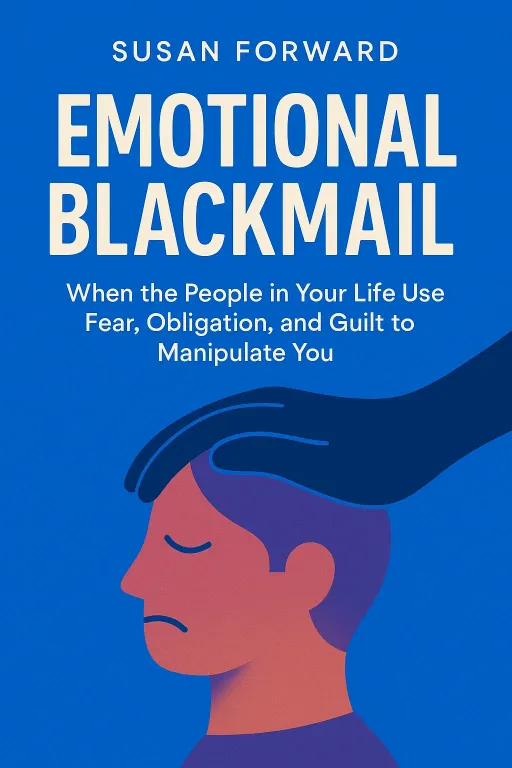
Nova: Exactly. And according to psychologist Susan Forward in her groundbreaking book, "Emotional Blackmail," that feeling isn't just in your head. It's a sign you've been caught in a manipulative fog. A FOG, she calls it, of Fear, Obligation, and Guilt. Welcome everyone, and I'm so glad to be here with Abdul Akabe. Abdul, with your background in healthcare and your analytical way of looking at the world, I feel like you're the perfect person to help us unpack this.
ABDUL AKABE: Thanks, Nova. It's a fascinating topic. In healthcare, we're constantly navigating complex human dynamics under pressure, so understanding these hidden scripts is incredibly valuable.
Nova: I love that you call them 'hidden scripts.' That's perfect. Today, we're going to cut through that FOG with a two-part diagnostic toolkit drawn from the book. First, we'll explore the six clinical symptoms that turn a simple request into a blackmail transaction. Then, we'll identify the four different 'faces' of blackmailers, from the aggressive Punisher to the promise-dangling Tantalizer, so you can spot their playbook a mile away.
Deep Dive into Core Topic 1: The Diagnostic Checklist
SECTION
Nova: So, Abdul, let's start with the diagnosis. The book argues that emotional blackmail isn't just a vague, uncomfortable feeling; it's a transaction with six distinct stages. It's a predictable, repeatable cycle.
ABDUL AKABE: A system. It's not random chaos; there's a logic to it, even if it's a destructive one.
Nova: Precisely. Let's make this real with a story from the book. Imagine Helen, a literature professor, and Jim, a successful songwriter. They've been dating for just over a year, and it's been wonderful. But then, the cycle begins. Step one is. Jim says, "We should move in together. It's the natural next step."
ABDUL AKABE: Seems reasonable on the surface.
Nova: It does. But then comes step two:. Helen is direct. She says, "I'm just not ready for that. I love you, but I'm not comfortable with that level of commitment yet." This is where a healthy conversation would explore those feelings. But in blackmail, it triggers step three:. Jim doesn't listen. Instead, he turns it on her. He says things like, "If you weren’t so self-centered, you could open up your life a little. Why don't you want to share yourself with me?"
ABDUL AKABE: He's reframing her healthy boundary as a personal failing. He's changing the narrative.
Nova: He is. And when that pressure doesn't work, he escalates to step four:. It's not a direct "do this or else." It's subtle. He says, "If you can’t make this kind of commitment to me after all we’ve meant to each other, maybe it’s time for us to see other people."
ABDUL AKABE: There it is. The fear. The threat of loss.
Nova: And it works. That leads to step five:. Helen, terrified of losing him, gives in. She agrees to let him move in, even though it goes against her better judgment. And this is the most important part, step six:. Because Jim got what he wanted, the pattern is now established. The book calls this a quiescent period, a temporary peace, but the blackmail machine has been built and tested. It will be used again.
ABDUL AKABE: You know, Nova, from my perspective as a healthcare professional and someone who analyzes systems, what you've just described is a perfectly designed negative feedback loop.
Nova: A negative feedback loop? Tell me more.
ABDUL AKABE: Think about it. Jim applies pressure. Helen resists, which creates tension. Helen's compliance is the 'reward' that resolves the tension for Jim. It tells his system, 'This strategy works. Do it again next time.' In healthcare, we see how crucial it is to break these cycles, whether it's in patient adherence to a difficult treatment or in team communication. If you reward a dysfunctional process, you guarantee it will repeat. Helen, by complying, just taught Jim exactly how to manipulate her.
Nova: That is a brilliant and chilling way to put it. She's not just a victim; she's an unwilling participant in her own training.
ABDUL AKABE: Unwilling, but active. That's the key. The system requires both parties to function.
Deep Dive into Core Topic 2: The Four Faces of the Blackmailer
SECTION
Nova: That's a perfect transition, because that system, that feedback loop, isn't always run by the same type of 'programmer.' The book says the blackmailers themselves aren't all the same. They have four distinct styles, or 'faces.' This is our field guide to manipulators.
ABDUL AKABE: So, different operating systems for the same malicious program.
Nova: Yes, exactly! The book identifies four main types. First, you have. They're the most direct. Their message is, "Do what I want, or I will hurt you." This can be through anger, silence, or taking something away.
ABDUL AKABE: The classic threat.
Nova: Then you have. They turn the threat inward. Their message is, "Do what I want, or I will hurt." They make you responsible for their well-being, threatening to get depressed, sick, or worse if you don't comply.
ABDUL AKABE: That one feels particularly difficult to resist because it plays on your empathy.
Nova: It's incredibly powerful. The third type is. They are masters of guilt. They don't state what they want. They just let you know how miserable they are, and imply that you are the cause and therefore the only one who can fix it. They are professional victims.
ABDUL AKABE: They make you a mind-reader, and if you fail, it's proof you don't care.
Nova: You've got it. And finally, there's. They are the most seductive. They dangle a wonderful promise—of love, money, a promotion—but it's always just out of reach. Every time you do what they want, they move the goalposts. They keep you hooked on hope.
ABDUL AKABE: So they offer a reward, but the reward is a mirage.
Nova: A mirage you'll exhaust yourself chasing. Let's look at a workplace example from the book. Meet Kim. She's an employee feeling completely overwhelmed by a huge project. She goes to her boss to ask for help or a more realistic deadline.
ABDUL AKABE: A very normal, professional request.
Nova: You'd think so. But her boss responds with a masterful blend of two styles. He says, "I know how much you want to get home to your family... but you know they’ll appreciate that promotion we’ve been considering you for. We need a team player with real dedication for that job. But go ahead. Spend more time with the kids. Just remember that if those are your priorities, we might have to reconsider our plans for you."
ABDUL AKABE: Wow. That's a masterclass. He's dangling the promotion—that's the Tantalizer—and then immediately threatening to take it away—that's the Punisher. He's making her feel guilty for wanting a family life and afraid of losing her career, all in one breath.
Nova: It's devastatingly effective. So there we see the Tantalizer and Punisher in action. But Abdul, the book also talks about the 'Sufferer'—the person who makes you feel responsible for their unhappiness. Does that dynamic resonate with you, perhaps from your experience in healthcare, where you're dealing with people in vulnerable states?
ABDUL AKABE: Oh, absolutely. The 'Sufferer' dynamic is incredibly potent in a caregiving context. And it's often not malicious, which makes it even harder to spot. A patient might say, "I'll only feel better if are the one who helps me," creating this immense sense of obligation that can lead to burnout. Or think of the story in the book about Tom, whose mother says, "How can you go on vacation for Christmas? You’ll ruin the holiday for everyone. How many Christmases do you think I have left?"
Nova: The ultimate guilt trip.
ABDUL AKABE: It weaponizes your empathy and your sense of duty. The key insight from this book, for me, is that recognizing this as a 'Sufferer' pattern, rather than just a simple, heartfelt request, is what gives you permission to set a healthy boundary. You can still have compassion without taking on the full weight of their happiness. It's about separating their feelings from your responsibility.
Synthesis & Takeaways
SECTION
Nova: That is such a critical distinction. So, to bring it all together, we've seen that emotional blackmail is not just a bad mood or a tough argument. It's a system with six clear, diagnosable symptoms.
ABDUL AKABE: A feedback loop of Demand, Resistance, Pressure, Threats, Compliance, and Repetition.
Nova: And the people who use this system have four main playbooks: the Punisher, the Self-Punisher, the Sufferer, and the Tantalizer.
ABDUL AKABE: And the first step to breaking that loop is always diagnosis. Naming the pattern is what gives you the power to change your response. It moves you from being a confused participant to a clear-eyed observer.
Nova: I love that. From participant to observer. The book offers many strategies for what to do next, but it all starts with one simple, powerful acronym: S. O. S. The next time you feel that pressure, that FOG of Fear, Obligation, and Guilt rolling in, just remember S. O. S.
ABDUL AKABE: Stop, Observe, Strategize.
Nova: That's it. Don't give an immediate answer. Buy yourself time. Say, "I need to think about that." What's really being asked of you? Which of the four faces are you seeing? What symptom in the six-step cycle are you in? And finally, Decide your response based on your own values and needs, don't just react based on their pressure.
ABDUL AKABE: It's a mental emergency brake. It stops the cycle from running on autopilot. And it leaves us with a powerful question to ponder: In which relationship are you repeatedly complying, and what one small step can you take this week to just 'Stop' and observe before you answer?
Nova: A perfect thought to end on. Abdul, thank you so much for helping us diagnose this.
ABDUL AKABE: My pleasure, Nova. It's about moving from being controlled by the system to understanding it. That's where freedom begins.