How to Deepen Patient Connections Without Draining Yourself.
Golden Hook & Introduction
SECTION
Nova: Atlas, what’s the one thing you absolutely dread more than anything else in your professional life?
Atlas: Oh, easy. Explaining a complex medical diagnosis to a worried family member when they're already convinced they've Googled all the answers. It's like trying to teach quantum physics to a cat, but with way higher emotional stakes. And the cat is really, really upset.
Nova: That is such a vivid image, and honestly, it perfectly encapsulates what we’re diving into today. Because those high-stakes, emotionally charged conversations? They’re not just challenging; they’re incredibly draining if you don’t have the right tools.
Atlas: Amen to that. My energy levels after one of those can hit zero faster than a phone battery after a TikTok binge.
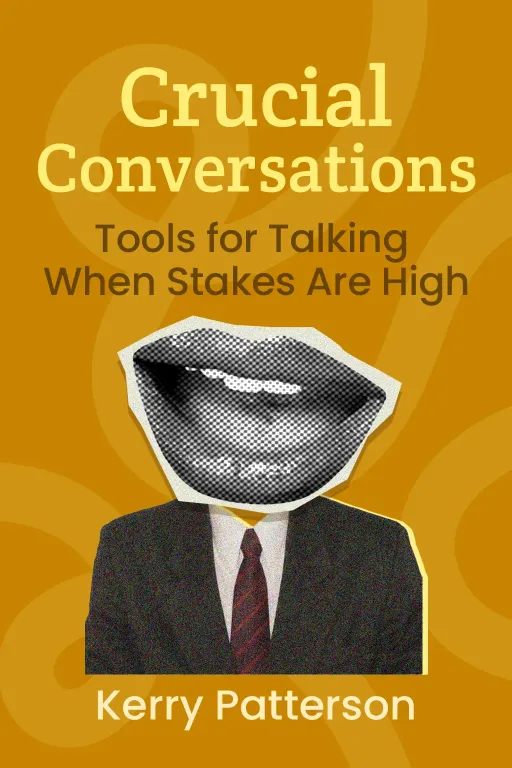
Nova: Well, we're here to recharge that battery today. We’re exploring two absolute titans in the communication space: 'Crucial Conversations' by Kerry Patterson, Joseph Grenny, Ron McMillan, and Al Switzler, which emerged from decades of research at Stanford University, giving it this incredibly robust, empirical backbone.
Atlas: And then we've got 'Difficult Conversations' by Douglas Stone, Bruce Patton, and Sheila Heen, straight out of the Harvard Negotiation Project. So, we're talking about frameworks built on some serious academic and real-world rigor, not just armchair philosophy. This isn't just about being 'nicer'; it's about strategy, right?
Nova: Exactly. It's about strategy, clarity, and ultimately, preserving your own energy while deepening those vital patient connections. Because, as a caregiver, your well-being directly fuels your ability to care for others.
The Crucial Conversations Framework: Navigating High-Stakes Dialogue
SECTION
Nova: So, let's start with 'Crucial Conversations.' The premise is simple, yet profound: a crucial conversation is one where stakes are high, opinions differ, and emotions run strong. Think about your cat-quantum-physics scenario, Atlas. High stakes, differing opinions on treatment, and emotions through the roof.
Atlas: Oh, absolutely. It's not just the words you say, it's the entire atmosphere in the room. The way you walk in, the way you sit down.
Nova: Precisely. And the core insight from this book is that these conversations are rarely handled well. We tend to either avoid them, which lets problems fester, or we handle them poorly, which causes damage. The authors argue that the key to mastering these moments lies in maintaining what they call "mutual respect" and "mutual purpose."
Atlas: Mutual respect, I get. Treat everyone like a human. But mutual purpose? When a family is convinced they know best, and I'm looking at conflicting medical data, finding a "mutual purpose" feels like finding a unicorn.
Nova: It can feel that way, but it's about reframing. Instead of "your way versus my way," it's about finding a shared goal. For example, a doctor needs to discuss end-of-life care with a family who is still in denial. The family's purpose might be to "save their loved one at all costs," which is understandable. The doctor's purpose is to "ensure the best quality of life and dignity for the patient."
Atlas: Which, on the surface, can feel like two different planets.
Nova: It can. But the mutual purpose, the real common ground, is "what is truly best for the patient." It’s about creating a safe space where both parties feel heard and respected, so you can explore that shared goal. The authors call this 'making it safe.' If people don't feel safe, they either clam up or lash out.
Atlas: So, it's less about winning an argument and more about creating an environment where a productive discussion can even happen. But when emotions are running high, how do you actually 'make it safe'? Is there a magic phrase?
Nova: There isn't a magic phrase, but there are powerful techniques. One is to "start with heart," meaning you approach the conversation with the right motives. Are you genuinely trying to help, or are you trying to prove a point? Another is to "apologize when appropriate" if you've contributed to the problem, or "contrast" what you intend with what you intend.
Atlas: Like, "I don't mean to upset you, but I am concerned about..."?
Nova: Exactly. "I don't want to make you feel like I'm dismissing your concerns, because I genuinely want to make sure we're doing what's best for your mother." It’s about clarifying your intention. This framework is incredibly practical because it gives you tools to stay in dialogue, even when every fiber of your being wants to flee or fight. And that, surprisingly, is what preserves your energy. You’re not fighting; you’re facilitating.
Deconstructing Difficult Conversations: The 'What, Feelings, Identity' Model
SECTION
Atlas: That makes a lot of sense. Staying in dialogue, facilitating rather than fighting. But what about when the conversation isn't just "crucial," but genuinely? When it feels like there are these unspoken layers underneath everything?
Nova: Ah, that’s where 'Difficult Conversations' by Stone, Patton, and Heen shines. They argue that every difficult conversation, no matter how complex, is actually three conversations wrapped into one: the 'what happened' conversation, the 'feelings' conversation, and the 'identity' conversation.
Atlas: Three conversations? I thought one was hard enough!
Nova: Right? But separating them is the key. The 'what happened' conversation is about facts, who said what, who did what. It's often where we get stuck, debating whose story is right.
Atlas: The classic "he said, she said" scenario. "I told the nurse I needed pain medication an hour ago!" "No, you didn't, you asked for water!"
Nova: Precisely. The authors suggest shifting from a "truth assumption" – assuming you know the objective truth – to a "learning stance" – assuming you have some information, and they have some information, and together you can build a more complete picture.
Atlas: Okay, so you’re saying instead of arguing about the 'what,' we should be curious about 'what.'
Nova: Absolutely. Then there’s the 'feelings' conversation. This is often the most avoided, but it's the engine of the difficult conversation. We often try to intellectualize or rationalize feelings away, but they demand to be acknowledged.
Atlas: Oh, I see that with patients. They're not just upset about the diagnosis; they're scared, they're angry, they feel helpless. And if you don't acknowledge those underlying emotions, no amount of factual explanation will get through.
Nova: Exactly. The book emphasizes that feelings aren't good or bad; they just. And acknowledging them – "I can see how frustrating this must be for you" – doesn't mean you have to agree with their perspective or solve the feeling. It simply creates space for it, which paradoxically often helps diffuse it.
Atlas: That’s actually really powerful. Just making space for the feeling. It's like letting air out of a balloon.
Nova: And finally, the 'identity' conversation. This is the hardest one. It's about what the situation means to us, about our self-image. Am I competent? Am I a good person? Am I worthy of respect? When a conversation challenges our identity, we feel threatened, and we react defensively.
Atlas: So, for a caregiver, if a patient questions their advice, it’s not just about the medical facts; it might feel like an attack on their professional identity. Like, "Am I a good doctor if my patient doesn't trust me?"
Nova: Exactly! Or for the patient, a chronic illness might challenge their identity as a 'strong, independent person.' Suddenly, they're 'sick,' 'dependent,' and that's a huge shift. The book teaches us to understand our own identity triggers and to help others explore theirs. By understanding these three conversations, you can prepare for them, separate them, and address them constructively, rather than letting them merge into an overwhelming, confusing mess. It’s a profound shift from blame to understanding.
Synthesis & Takeaways
SECTION
Nova: So, bringing these two powerful frameworks together, 'Crucial Conversations' gives us the big picture: how to create a safe space for dialogue in high-stakes moments. 'Difficult Conversations' provides the granular tools: how to dissect the layers of what's truly going on beneath the surface.
Atlas: It’s like 'Crucial Conversations' is the architect designing the safe building, and 'Difficult Conversations' gives you the blueprints for the plumbing, wiring, and foundation within. You need both for a truly functional structure.
Nova: What's truly transformative here is that these aren't just communication hacks. They're fundamental shifts in how we approach human interaction. They teach us that true connection, even in the most challenging moments, comes from understanding, not just words. And by doing so, you actually preserve your own energy.
Atlas: It's counterintuitive, isn't it? You’d think leaning into these tough talks would be more draining, but avoiding them or handling them poorly is what really saps your strength.
Nova: Absolutely. The energy drain comes from unresolved conflict, from feeling misunderstood or ineffective. These frameworks give you the agency to navigate those waters with skill and intention. It's a testament to the power of self-awareness and preparation. When you know a conversation is difficult, and you have a roadmap, it's no longer a terrifying unknown.
Atlas: That’s a game-changer for anyone in a caregiving role. Knowing that you can deepen patient connections without completely draining your own well of empathy. So, what's a tiny step our listeners can take today?
Nova: Before your next potentially difficult patient or family conversation, take a moment. Mentally identify the core message you need to convey, and then, crucially, try to anticipate just one key feeling you expect might arise from the other person. Just one. That small bit of preparation can make all the difference.
Atlas: That’s incredibly practical. It shifts you from reactive to proactive.
Nova: Exactly. It's about being strategically empathetic.
Atlas: This is Aibrary. Congratulations on your growth!