Beyond the Ballot Box: Why Constitutions Shape More Than Just Governments
Golden Hook & Introduction
SECTION
Nova: Atlas, quick, five-word review of the U. S. Constitution, go!
Atlas: Old, complex, debated, powerful,?
Nova: Alive indeed! That's actually a perfect lead-in to what we're discussing today, drawing insights from a fascinating piece of analysis we're calling "Beyond the Ballot Box: Why Constitutions Shape More Than Just Governments." It's not a book in the traditional sense, but more of a deep philosophical dive that challenges how we think about foundational documents.
Atlas: Oh, I like that. So we're talking about the deep structure, not just the surface-level politics? I imagine a lot of our listeners, especially those who seek to understand the 'why' behind things, are already leaning in.
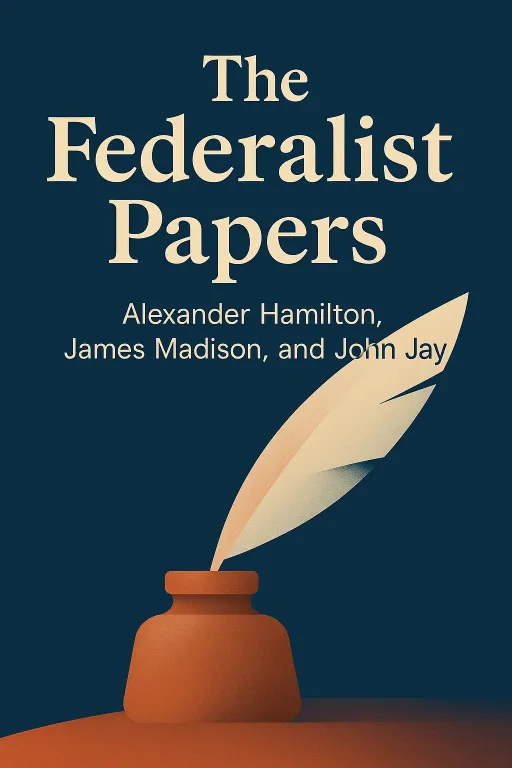
Nova: Exactly. Its insights are deeply informed by classic works like "The Federalist Papers" by Alexander Hamilton, James Madison, and John Jay, which laid the philosophical groundwork for the U. S. Constitution. And also Alexis de Tocqueville's seminal "Democracy in America," a groundbreaking observation of early American society by a French political thinker who had an incredibly fresh perspective because he was an outsider.
Atlas: That makes sense. Sometimes it takes an outsider to truly see the patterns we're too close to observe ourselves. So, we're zooming out from the political drama to the underlying code?
Constitutions as Dynamic Reflections of Human Nature
SECTION
Nova: Precisely. We often view political systems as these static structures, like a building that just sits there. But the core insight here is that they are dynamic reflections of human nature and societal aspirations. They're philosophical blueprints.
Atlas: Wait, a philosophical blueprint? How does a legal document get to be philosophical? Isn't it just a set of rules and amendments?
Nova: That's where "The Federalist Papers" come in. They articulate the philosophical basis for the U. S. Constitution, revealing an almost shockingly deep understanding of human psychology from the framers. They weren't just writing laws; they were designing a government to ambition and prevent tyranny, not just manage it.
Atlas: Channel ambition? That sounds a bit cynical. Is ambition inherently a bad thing we need to contain?
Nova: Not necessarily bad, but it's a powerful force. The framers operated from a pragmatic view of human nature. They understood that people are driven by self-interest, by a desire for power, for recognition. Instead of trying to eliminate those drives, which is impossible, they sought to build a system where those ambitions would counteract each other.
Atlas: Right, like a controlled demolition where the forces collapse inward instead of exploding outward. So, checks and balances? That's what you're talking about?
Nova: Exactly! Checks and balances, separation of powers—these aren't just bureaucratic hurdles. They are ingenious psychological mechanisms. You want power? Fine. But you'll need to contend with another branch that also wants power, and they'll keep an eye on you. It's a brilliant way to harness ambition for the public good, by making it difficult for any one person or group to gain absolute control.
Atlas: That's a great way to put it. So, it's not just about what's in the Constitution, but the underlying assumptions about human behavior that shaped it was written. It’s like a grand, societal-scale psychology experiment.
The Subtle Influence of Constitutional 'Spirit' on Daily Life
SECTION
Nova: And that understanding naturally leads us to the second key idea, which is how this philosophical 'spirit' of a constitution subtly influences the daily lives and long-term character of its citizens. How does that grand design filter down to you and me?
Atlas: Yeah, I’m curious about that. For someone trying to connect diverse threads and see patterns, this feels like a critical link. How does something written centuries ago whisper in our ears today, shaping our customs and even our souls, as De Tocqueville put it?
Nova: That's where De Tocqueville's observations in "Democracy in America" are so illuminating. He wasn't just looking at laws; he was looking at the that democracy fostered. He noted how democratic institutions shaped not just governance, but also the customs, the values, and yes, even the individual character of its citizens.
Atlas: Can you give an example? Like, how does a constitutional principle actually manifest in someone's everyday life?
Nova: Absolutely. Think about the emphasis on individual rights and liberties embedded in the U. S. Constitution. De Tocqueville observed that this fostered a strong sense of individualism, a spirit of self-reliance, and a tendency for Americans to form voluntary associations to solve problems rather than waiting for the government.
Atlas: Ah, so it's not just "I have the right to free speech," but that then encourages a culture where people expect to voice their opinions, debate, and even challenge authority. It shapes the way arguments happen at the dinner table, not just in Congress.
Nova: Precisely! Or consider property rights. Beyond the legal protection, it cultivates a certain entrepreneurial spirit, a drive to innovate and build, because people feel secure in the fruits of their labor. The 'spirit' encourages a specific kind of engagement with the world. He observed that the very act of participating in local governance, in juries, in town meetings, instilled a sense of civic duty and a practical understanding of how society functions.
Atlas: That makes me wonder, how does the 'spirit' of a constitution subtly influence the daily lives and long-term character of its citizens, especially for those of us who are driven by a desire for informed perspective? Are we more inclined to seek out information, to question, because the system implicitly encourages it?
Nova: I think so. The very design that encourages ambition also encourages a certain kind of critical engagement. If the government is designed to be checked, then citizens are, by extension, encouraged to be the checkers. It fosters a certain vigilance, a desire to understand and hold power accountable. It's why a culture of robust debate, even intense disagreement, often thrives in such systems.
Atlas: So, it's like the Constitution provides the framework, and humanity's inherent nature, with all its complexities and ambitions, fills it in. And in doing so, it subtly directs the flow of our collective character. It's not just a rulebook, it's a guide to human interaction, thought, and evolution within a society.
Synthesis & Takeaways
SECTION
Nova: That's the profound takeaway. Constitutions are living documents, not just static rules. They subtly guide how people interact, think, and evolve within a society. They are the invisible hand shaping our collective character, far beyond the explicit laws they lay down.
Atlas: That’s actually really inspiring. It means that understanding these foundational documents isn't just for legal scholars or historians. It's for anyone who wants to understand the human condition, how societies function, and how we got to where we are. It changes how you view every news headline, every political debate.
Nova: Absolutely. By recognizing these documents as philosophical blueprints for human behavior, we gain a deeper appreciation for the intricate dance between governance and the human spirit. It empowers us to be more informed citizens and, perhaps, even more thoughtful architects of our collective future.
Atlas: I love that idea of being "thoughtful architects." So, for our listeners, the next time you see a headline about a constitutional debate, don't just see the politics. Try to glimpse the human nature, the deep philosophical underpinnings, and the subtle influence that document has on the very fabric of daily life around you. It's a whole new lens for understanding the world.
Nova: This is Aibrary. Congratulations on your growth!