The Mastermind's Scalpel: Carving Out Deep Work in a Distracted Healthcare World
Golden Hook & Introduction
SECTION
Nova: Imagine a surgeon so focused they can pioneer a new technique, or a psychiatrist like Carl Jung, who literally built a stone tower without electricity just to think. Now, picture the average professional today—a 2012 McKinsey study found they spend over 60% of their week on emails and internet searches. That gap between potential and reality is what we're exploring today. It's the battle between 'Deep Work' and 'Shallow Work'.
Thiên Kim: That gap feels very real, especially in my world. It’s the tension between what we’re trained to do and what the day demands of us.
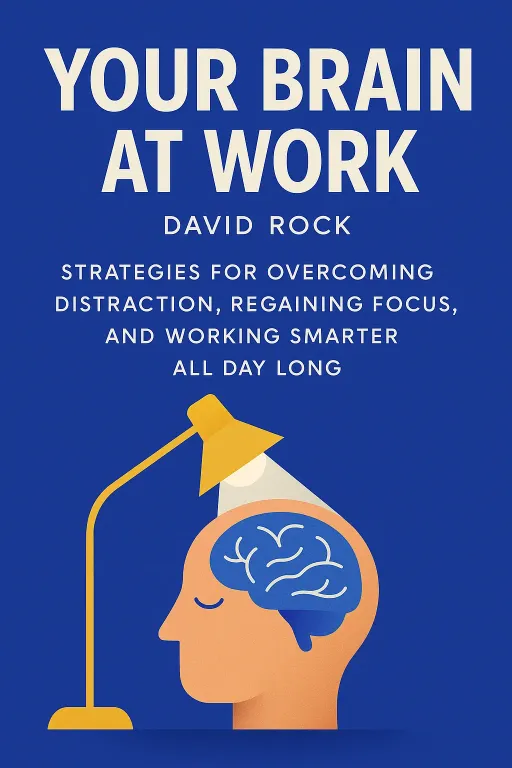
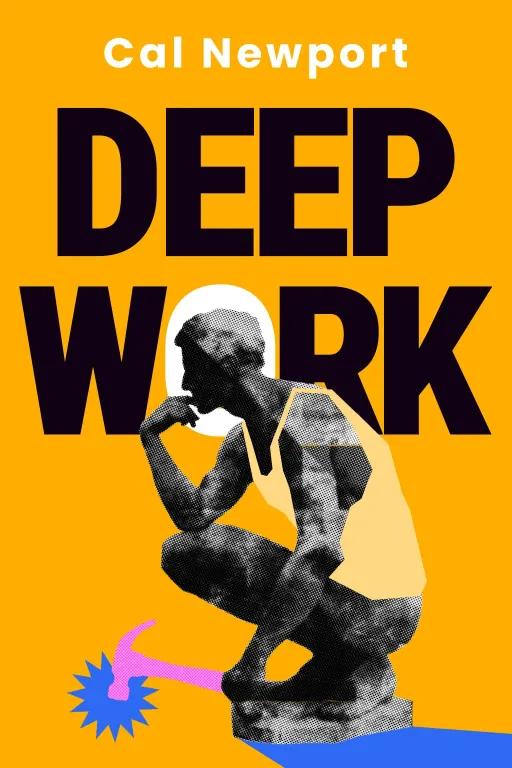
Nova: Exactly. And Cal Newport's book 'Deep Work' gives us a powerful framework for this battle. Today we'll dive deep into this from two main perspectives. First, we'll diagnose the hidden epidemic of 'shallowness' in demanding professions and understand why it's so dangerous. Then, we'll shift to the solution, exploring how to build our own 'Focus Fortress' with practical systems and rituals that anyone can start using today. And I am so thrilled to have Thin Kim here with us. As a healthcare professional with a sharp, analytical mind, you live in this high-stakes environment every day. Thanks for joining us.
Thiên Kim: I’m excited to be here. This topic is something I think about a lot. It feels less like a productivity hack and more like a survival strategy.
Deep Dive into Core Topic 1: The Hidden Epidemic of Shallowness
SECTION
Nova: I love that framing—a survival strategy. So let's start with that diagnosis. Newport draws this stark line between 'Deep Work'—activities that push your cognitive limits and create new value—and 'Shallow Work,' which he defines as non-demanding, logistical tasks often done while distracted. How do you see that playing out in a field like healthcare?
Thiên Kim: It's the core conflict of the modern clinician. Deep work is sitting with a complex patient chart, synthesizing labs, imaging, and history to arrive at a differential diagnosis. It's learning a new, complex procedure. It's the work that actually changes outcomes. Shallow work is the endless charting, the administrative emails, the constant pager alerts for non-urgent issues. It feels productive, but it's really just… motion.
Nova: That's a perfect distinction. And Newport tells this incredible story about a financial consultant named Jason Benn. Benn was in a comfortable job, but he had this horrifying realization that his entire role could be automated with a simple Excel script. His work was fundamentally shallow.
Thiên Kim: Wow. That’s a wake-up call.
Nova: A huge one. So what did he do? He quit his job, moved back home, and decided to become a computer programmer—a field that demands deep work. But he struggled. He was so used to distraction he couldn't concentrate. So he took a radical step. He locked himself in a room with no phone, no internet, just textbooks and notecards. For two months, he just studied, intensely. After that, he went to a coding bootcamp and excelled, eventually landing a high-paying developer job. He completely transformed his value in the economy by forcing himself to learn a deep skill.
Thiên Kim: That's a powerful story. It's the difference between mindlessly filling out electronic health records—which feels productive—and the deep, focused effort of synthesizing a patient's entire history to catch a rare diagnosis. Newport's 'Principle of Least Resistance' explains why we so often default to the charting. It's easier, the feedback is immediate—you check a box, you feel a sense of completion. But it's not where the life-saving insights happen.
Nova: You've hit on another one of his key ideas: 'Busyness as a Proxy for Productivity.' In knowledge work, and I imagine especially in a hospital, it's hard to measure real productivity. So, we default to what's visible. Answering emails quickly, being in meetings, clearing your task list. We look busy.
Thiên Kim: Absolutely. A resident who is constantly running around, answering every page instantly, might be seen as more 'productive' than one who carves out a quiet hour to deeply analyze a complex case. The system often rewards visible shallowness over invisible depth. But that invisible depth is where expertise is built.
Nova: And that's the danger, right? That this culture of shallowness doesn't just make us less productive; Newport argues it can permanently diminish our ability to concentrate. It's like a muscle we stop training.
Thiên Kim: It atrophies. And in healthcare, a loss of focus isn't just an economic problem; it has real human consequences. That's what makes this so critical.
Deep Dive into Core Topic 2: Building Your 'Focus Fortress'
SECTION
Nova: Exactly. So if we know shallowness is the default, how do we fight back? This is where Newport's ideas get really practical and, for an analytical thinker like you, Thin Kim, I think you'll love this. He argues that relying on willpower is a losing strategy. It's a finite resource that gets depleted. The real solution is building systems. It’s about building your own 'Focus Fortress'.
Thiên Kim: Okay, now you're speaking my language. I'm all about systems.
Nova: I thought so! He proposes a few philosophies, but one of the most practical is the 'Rhythmic Philosophy.' It’s about making deep work a simple, recurring habit. He tells the story of a doctoral candidate named Brian Chappell. Chappell had a full-time job, a family, and a dissertation to write. His initial attempts to just 'find time' for deep work were a total failure.
Thiên Kim: I can relate to that. 'Finding time' is a fantasy. Time must be made.
Nova: Precisely. So Chappell created a rhythm. He committed to waking up and working on his dissertation from 5:00 AM to 7:30 AM every single weekday. No exceptions. It wasn't about feeling inspired or motivated. It was just what he did. The rhythm, the consistency, removed the need for willpower. And the result? He became incredibly productive, churning out pages and chapters at a shocking rate.
Thiên Kim: The Rhythmic philosophy is brilliant because it removes the decision-making. You're not debating you should do deep work, you're just executing a pre-decided plan. It automates the commitment. For a healthcare professional on a shifting schedule, maybe it's not the same time every day, but a ritual of 'the first 60 minutes of my shift are for complex case review, no interruptions.' It's a system, not a feeling.
Nova: A 'tower of time,' to borrow your earlier phrase! And another key part of that system is having a clear end point. Newport calls it a 'shutdown ritual.' At the end of the day, you take a few minutes to review your tasks, make a plan for tomorrow, and then, this is the key, you say a phrase out loud like 'Shutdown complete.' It sounds silly, but it signals to your brain that it's okay to disengage.
Thiên Kim: That's critical for avoiding burnout, especially in my field. The work is never truly 'done.' There's always another patient, another chart. Without a clear mental off-switch, your brain stays in a state of low-grade anxiety, which Newport would probably call 'attention residue.' It follows you home and degrades your ability to rest and recharge for the next day's deep work. A shutdown ritual is a psychological boundary.
Nova: It's a boundary, exactly! And sometimes, to build that fortress, you need more than just a small ritual. Newport talks about making 'grand gestures.' He brings up J. K. Rowling, who was struggling to finish the last Harry Potter book at home with all the distractions. So she made a grand gesture: she checked into a five-star hotel, the Balmoral in Edinburgh, and wrote there every day until the book was finished. The investment and the change of scenery signaled to her brain: this is serious. This is deep work time.
Thiên Kim: That's fascinating. The healthcare equivalent might be a surgeon taking a dedicated week at a specialized training facility to master a new robotic technique, completely removed from their daily clinical duties. It's a significant investment of time and resources that creates an environment where only deep work is possible.
Synthesis & Takeaways
SECTION
Nova: So, when we put it all together, it feels like a two-part strategy. First, we have to be brutally honest and diagnose the shallow work that's consuming our days. And second, we have to build these non-negotiable rituals and systems to protect our time for deep work.
Thiên Kim: And to realize that focus isn't some innate talent or a moral virtue. It's a practical skill you train. Like any other clinical skill, it requires deliberate practice. You wouldn't expect to be a great surgeon without practice, and we shouldn't expect to be great thinkers without it either.
Nova: I love that. Focus as a trainable, clinical skill. So for everyone listening, here’s a challenge inspired by the book. Try a 'Roosevelt Dash.' Theodore Roosevelt was famous for getting his college work done in short, intense bursts of focus. So, pick one important, non-urgent task you've been putting off—maybe it's reading a research paper or starting a project plan. Give yourself a ridiculously short, almost impossible deadline, and tell someone about it to hold yourself accountable. The intensity it forces might just show you how much focus you're truly capable of.
Thiên Kim: That’s a great, practical experiment. It’s a low-risk way to feel the power of what Newport is talking about.
Nova: Thin Kim, thank you so much for bringing such a sharp, practical lens to these ideas today. It’s been fantastic.
Thiên Kim: The pleasure was all mine. It’s given me a lot to think about for my own practice.