The 'Teacher's Mindset' Shift: Rethinking How You Learn Anything.
Golden Hook & Introduction
SECTION
Nova: Atlas, five words. What's your take on learning?
Atlas: Oh, that's a good one. Hard, slow, forgettable, frustrating, and... absolutely necessary.
Nova: You nailed the last one, but I'm going to challenge you on the first four. What if I told you that most of what we think about learning is actually a massive blind spot, and there's a powerful shift we can make that transforms it from a struggle into something far more profound and effective?
Atlas: Whoa. Okay, I'm listening. That sounds like a bold claim, especially for anyone who, like me, is constantly trying to absorb new information in a world that never stops changing.
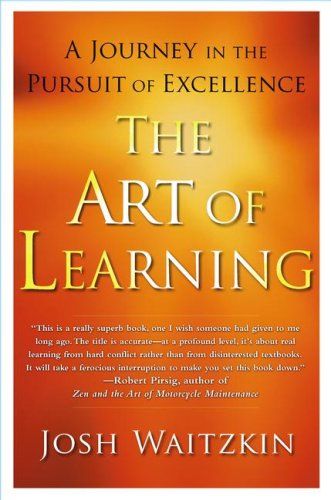
Nova: It’s a shift often called the 'teacher's mindset.' Today, we’re diving into this concept, drawing profound insights from masters of learning like Josh Waitzkin, author of The Art of Learning, and Cal Newport, with his groundbreaking work, Deep Work. Waitzkin, in particular, is fascinating; he's not just a chess grandmaster, but also a world champion in martial arts. That kind of dual-domain mastery gives him a unique lens on how we truly internalize and apply knowledge.
Atlas: That is a remarkable background. So, you're saying a chess prodigy and a productivity guru can teach us how to learn better by thinking like a teacher? My initial thought is, "But I'm not a teacher!"
Nova: Exactly! And that's precisely the blind spot we're talking about. We often see learning as this solitary, almost passive act, right? We sit, we read, we listen, we try to absorb. But the truth, as Waitzkin and Newport implicitly show us, is that teaching is one of the most potent ways to learn. It forces a level of comprehension and connection that just 'being a student' rarely does.
The 'Teacher's Mindset' - Why it Transforms Learning
SECTION
Atlas: Okay, but how is that different from just, you know, good study habits? Like, if I read a textbook really carefully, isn't that enough?
Nova: Not quite. Think of it like this: are you trying to tour a house, or are you trying to build one? When you tour a house, you appreciate the architecture, the layout, maybe even the decor. But when you’re building it, you need to understand every single joint, every load-bearing wall, every pipe and wire. You need to know how it all connects, how it functions, and crucially, how to explain it to the plumber, the electrician, or even the future homeowner.
Atlas: That’s a great analogy. So, the 'teacher's mindset' is really about fundamentally changing your relationship with the material from a consumer to a creator?
Nova: Precisely. When you approach a new concept with the intention of explaining it to someone else, your brain engages differently. You're not just trying to recall facts; you're trying to them, them, them, and. That active construction process builds far more robust neural pathways. It forces you to identify gaps in your own understanding because you can't explain what you don't truly grasp.
Atlas: So you're saying that the act of having to articulate something, to break it down for a hypothetical student, is where the real learning happens? That's actually really inspiring, because it means the struggle to explain the learning.
Nova: Absolutely. It’s like a meta-learning strategy. You're learning how to learn more effectively by putting yourself in a different role. It moves you from surface-level memorization to deep, principal-based understanding, which is exactly what Waitzkin champions. If you can't teach it simply, you don't understand it well enough.
Atlas: Huh. That makes me wonder, how many times have I nodded along, thinking I understood something, only to realize I couldn't explain it to my partner later? Probably more than I'd like to admit.
Cultivating the Mindset with Waitzkin & Newport
SECTION
Nova: And that naturally leads us to the second key idea: if the 'teacher's mindset' is so powerful, how do we actually cultivate it? This is where insights from Waitzkin and Newport become incredibly practical. Waitzkin talks about what he calls "making smaller circles."
Atlas: "Making smaller circles"? Sounds a bit like a Zen koan. What does that mean in practice?
Nova: It's about deconstructing a complex skill or concept into its most fundamental, underlying principles. Instead of just learning a thousand chess openings, Waitzkin learned the core of strategy that underpin all openings. He practiced those core principles until they became instinctive, almost a part of him. He wasn't just memorizing moves; he was internalizing the behind the moves.
Atlas: So, for someone trying to learn, say, a new programming language, it wouldn't be about just memorizing syntax, but understanding the core logic and computational thinking behind it?
Nova: Exactly. And then, once you grasp those smaller circles, you expand them, building upon that solid foundation. This is crucial for the teacher's mindset because to teach effectively, you distill complex ideas down to their essence. You have to understand the foundational principles so well that you can present them in different ways, answer unexpected questions, and guide someone else to build their own understanding.
Atlas: Okay, I see that. It's about deep internalization, not just surface-level recognition. But that kind of deep processing sounds like it requires a certain environment, a certain mental state. It's not something you can do while multitasking, right?
Nova: You hit the nail on the head, Atlas. And that's where Cal Newport's "Deep Work" comes in. While he focuses on productivity, his work implicitly supports the teacher's mindset by advocating for intense, undistracted focus. To truly "make smaller circles" and internalize concepts deeply enough to teach them, you need to engage in what Newport calls "deep work."
Atlas: Deep work, as in, shutting out all distractions and really focusing for extended periods? That feels like a luxury in our always-on world. How does that connect to teaching?
Nova: Well, preparing to teach isn't a superficial activity. It demands intense, undistracted cognitive effort. You need to actively synthesize, organize, and simplify complex information. You need to mentally rehearse explanations, anticipate potential misunderstandings, and formulate clear examples. That level of intellectual heavy lifting simply doesn't happen when you're constantly context-switching or operating in a state of shallow attention. Newport's concept shows us that the environment we create for our learning is just as important as the intention we bring to it.
Atlas: That makes perfect sense. To truly understand something well enough to teach it, you need to dedicate focused, uninterrupted mental energy to it. It's like you're building a mental curriculum, not just a set of flashcards. This all brings me to a question that was posed in the original content: How would you explain the last new concept you learned to someone with no prior knowledge?
Nova: Oh, that's a fantastic challenge! For me, it was the concept of "emergence" in complex systems – how simple interactions among components can lead to complex, unpredictable patterns at a higher level, like a flock of birds. To explain it, I’d start by comparing it to something familiar, like a traffic jam forming without any individual driver intending to create one. No single car caused the jam, but the collective behavior of many cars following simple rules leads to an emergent, complex phenomenon. Then I'd move to the birds, and eventually to how our brains work. That process of simplification, analogy, and anticipating questions is the teacher's mindset in action.
Atlas: That's a perfect example. It's not just reciting definitions; it's about building understanding from the ground up, just like you would for a student.
Synthesis & Takeaways
SECTION
Nova: Ultimately, the 'teacher's mindset' isn't about literally standing in front of a classroom. It's about a profound shift in how we engage with knowledge. It’s about cultivating that deep, almost obsessive drive to understand the underlying principles, to "make smaller circles," and then to create the focused environment – the "deep work" – necessary to truly internalize and articulate those insights.
Atlas: It's about transforming learning from a passive intake of information into an active, creative process of understanding and explanation. And what you're really left with isn't just facts, but a robust, interconnected mental model that you can actually use and adapt. It's truly about mastery.
Nova: Exactly. It's about building a learning muscle that gets stronger with every attempt to teach, to simplify, to connect. It’s a powerful approach for anyone who wants to move beyond surface-level knowledge and truly master new domains.
Atlas: So, for all our curious listeners out there, we'll leave you with that deep question from the content: How would explain the last new concept you learned to someone with no prior knowledge? Give it a try. You might be surprised at what you discover about your own understanding.
Nova: This is Aibrary. Congratulations on your growth!