The Information Overload Trap: How to Master Your Digital Environment.
Golden Hook & Introduction
SECTION
Nova: What if I told you that the very tools designed to connect us are systematically eroding our capacity to think deeply? And that this isn't just about distraction, but a fundamental rewiring of our brains?
Atlas: Oh man, that sounds a bit dramatic, but I feel it. I mean, my attention span feels like it's been replaced by a flock of hyperactive squirrels. Is it really that dire, Nova?
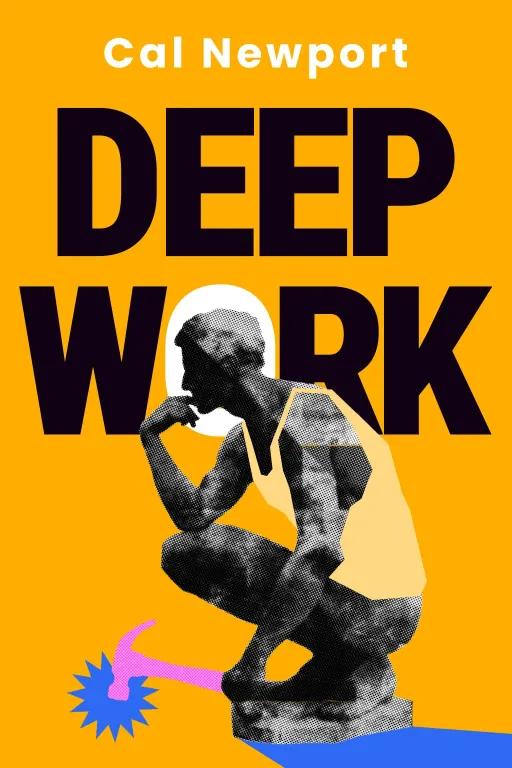
Nova: It is, Atlas, and today we're dissecting 'The Information Overload Trap,' a concept that draws heavily from two foundational texts: Cal Newport's 'Deep Work' and Nicholas Carr's 'The Shallows.' Carr's work, in particular, sparked quite a stir when it came out, challenging the rosy view of the internet's impact on our minds. It was quite controversial for suggesting that our beloved internet was actually making us, well, shallower.
Atlas: That makes me wonder, is this just about better time management, or something much deeper happening inside our heads?
The Digital Rewiring: Understanding the Deep Impact of Shallow Engagement
SECTION
Nova: It’s far deeper than just time management, Atlas. Carr, in 'The Shallows,' doesn't just talk about distraction; he makes a compelling case that our constant digital interaction fosters a preference for superficial information processing. Our brains are incredibly plastic, meaning they adapt to how we use them. Think about it: when you're online, you're constantly jumping between tabs, skimming articles, checking notifications.
Atlas: Oh, I know that feeling. It's like my brain has been trained to expect a new shiny object every 30 seconds. I'll sit down to read a long article, and suddenly, I'm mentally checking my email or wondering what's new on social media. It's almost involuntary.
Nova: Exactly. That constant novelty, the instant gratification of a new link or notification, it strengthens neural pathways associated with rapid context switching and shallow engagement. The cause is clear: an environment designed for constant interruption. The process is our brain adapting. And the outcome? A diminished capacity for sustained, deep concentration. Carr’s argument, while sometimes perceived as pessimistic, really ignited a crucial conversation about cognitive science and the ethical implications of how we design and interact with our digital tools. He wasn't saying the internet is evil, but that its has profound cognitive costs.
Atlas: But is this just a bad habit, or is something truly in our brains? I mean, isn’t this just evolution? Adapting to a new environment? Maybe deep work is just an outdated concept in a world that demands constant connectivity and rapid information processing.
Nova: That's a great, provocative question, Atlas. It's true our brains are adapting, but adaptation isn't always benign. While we might become more adept at rapid context switching, the cost is often the ability to engage in what Newport calls "deep work"—the focused, uninterrupted concentration that pushes our cognitive limits and creates something truly valuable. It’s the difference between being a master of many shallow tasks and a master of complex, high-value creation. The problem isn't the adaptation itself, it's the of that adaptation if left unchecked. We're losing the muscle for sustained, meaningful thought.
Atlas: Right. So, it's not that we're getting dumber, but we're getting in a way that might not serve our highest potential. It's like we're becoming excellent sprinters but forgetting how to run a marathon. That's a bit of a grim picture, Nova. It feels almost inevitable in our current world.
Reclaiming Cognitive Control: Strategies for Deep Work and Focused Living
SECTION
Nova: It can feel that way, but that's precisely where Cal Newport offers a powerful counter-narrative. That's where 'Deep Work' comes in. If we understand how our brains are being rewired, we can consciously shape that evolution. Newport defines deep work as professional activities performed in a state of distraction-free concentration that push your cognitive capabilities to their limit. These efforts create new value, improve your skill, and are hard to replicate.
Atlas: That sounds like a dream for anyone trying to get serious work done. But for someone trying to lead a team or manage complex projects, scheduling 30 minutes sounds doable, but how do you actually this without alienating colleagues or missing critical updates? There’s a real-world friction there.
Nova: Absolutely, Atlas, and Newport addresses this. It's not about disappearing from the face of the earth. One key strategy is to deep work. Just as you schedule meetings, you schedule blocks of uninterrupted time. You communicate this to your team, setting clear boundaries. It might mean a "do not disturb" sign on your physical or digital door, or using specific tools to manage notifications. It's about designing your environment intentionally. Nova's own take reinforces this: consciously shaping your digital environment and practices is essential. It's about creating a ritual around focus, whether it's working from a specific location, using specific software, or even just turning off all non-essential notifications for a set period.
Atlas: And what about the ethical side? Is it ethical to 'disconnect' when your job demands constant availability? This touches on how technology shapes humanity, and our responsibilities to those we work with.
Nova: That's a crucial point for "The Ethical Explorer." Newport emphasizes that deep work isn't about isolation; it's about intentional connection. When you produce high-quality, high-value work, you're ultimately serving your team and your organization better. It's about delivering impact, not just presence. Imagine a programmer solving a critical bug in silence for two hours versus someone constantly checking Slack but making little progress. The former delivers far more value. While Newport's work is widely praised for its practical applicability, it does implicitly ask us to re-evaluate what "being available" truly means in a productive and ethical sense. It's about redefining our digital citizenship.
Atlas: I guess that makes sense. It’s about being truly present and effective when you are connected, rather than superficially available all the time. It’s like, instead of trying to juggle ten balls badly, you focus on one, accomplish it, and then move to the next—with better results.
Nova: Precisely. It’s a shift from a reactive, always-on mode to a proactive, intentional one. And the beauty is, it's a skill that can be cultivated. It’s not about superhuman willpower, but about strategic environment design and habit formation.
Synthesis & Takeaways
SECTION
Atlas: So, it's not about fearing technology, but mastering our relationship with it. It's about intentionality, recognizing the subtle ways it's shaping us, and then taking control.
Nova: Exactly. Understanding the problem, as Carr illuminates, empowers us to implement solutions, as Newport so brilliantly outlines. The profound insight here is that our cognitive landscape isn't predetermined; we have agency. The danger isn't the technology itself, but our unexamined, default relationship with it. The true cost of constant distraction isn't just lost productivity; it's the erosion of our capacity for original thought, for complex problem-solving, and for genuine human connection. The future of innovation and meaningful creation depends on our ability to reclaim our focus.
Atlas: That gives me chills. This isn’t just about personal productivity; it's about the future of deep thinking. So, for our listeners, our tiny step for you this week is simple: Schedule a 30-minute block of 'deep work' tomorrow, free from all digital notifications and distractions. Just 30 minutes to start.
Nova: And tell us how it goes! What did you work on? What did you discover about your own focus? Join the conversation with us on social media and share your experiences.
Nova: This is Aibrary. Congratulations on your growth!