The 'Busy Trap' is a Trap: Why Focused Execution Delivers Real Agent Value.
Golden Hook & Introduction
SECTION
Nova: What if the very thing you’ve been told is a sign of success – being perpetually busy – is actually the biggest obstacle preventing you from achieving your deepest, most impactful work?
Atlas: Whoa. That’s a bold claim, Nova. I think a lot of us, myself included, have been conditioned to believe that if you’re not busy, you’re not productive. It’s almost a badge of honor in many professional circles, especially in fast-paced tech environments.
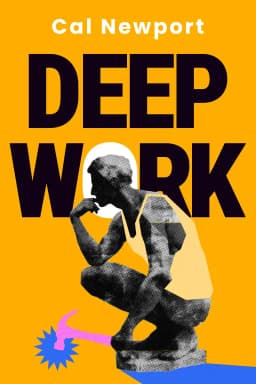
Nova: Absolutely, Atlas. It's a pervasive myth, and today we’re going to dismantle it. We’re diving into why constant activity often leads to shallow results, and how to instead architect a career defined by deep focus and essential value creation. We’ll be drawing heavily from two transformative books: "Deep Work" by Cal Newport and "Essentialism" by Greg McKeown.
Atlas: Oh, I like that. Two powerhouses. Newport, of course, is the acclaimed computer science professor whose insights into focus are backed by incredible academic rigor. And McKeown, a renowned business strategist who advises Fortune 500 companies, brings that practical, real-world application. It’s a compelling combination.
Nova: Exactly. And the core idea here is that true value, especially in complex fields like Agent engineering, demands intense focus, not just activity. So, let's start by unmasking this illusion of busyness. Why does it feel so good, yet so often leave us feeling unfulfilled and underperforming?
The Illusion of Busyness & Shallow Work
SECTION
Nova: Well, it comes down to what Newport calls "shallow work." This is the non-cognitively demanding, logistical stuff often performed while distracted. Think endless email triage, constant Slack notifications, back-to-back meetings that achieve little, or reactive bug fixing that just keeps the lights on.
Atlas: Oh, I know that feeling. I imagine a lot of our listeners, especially those building complex Agent systems, feel this constant pull of context switching. You’re trying to debug a critical Agent behavior, and suddenly you’re pulled into a meeting, then an urgent email, then a quick chat. So, how does this 'busy trap' manifest in a high-stakes tech environment, like when you're trying to debug a critical Agent behavior or design a new architecture?
Nova: It's insidious. Consider the case of Alex, a talented Agent architect. Alex was brilliant, but constantly swamped. His day started with an hour of email, then a stand-up meeting, then he’d jump between three different projects, responding to urgent requests, reviewing code snippets, and attending status updates. He was working 10-12 hours a day, always "on."
Atlas: Sounds like a lot of people I know. And I’ve been there myself. You feel like you’re constantly putting out fires, and that productive because you’re actively engaged.
Nova: Precisely. But here’s the kicker: Alex was busy, but rarely creating anything truly groundbreaking. His Agent systems were functional, but lacked the innovative edge he knew they could have. The cause was simple: always reacting, never proactively building. The process was fragmented attention, constantly shifting focus, which, as studies show, can take 20 minutes to fully recover from each time.
Atlas: Twenty minutes? Wow. So, if you’re switching tasks every hour, you’re losing a significant chunk of your day just getting back to baseline. That’s a huge hidden cost.
Nova: A massive cost. The outcome for Alex was a feeling of perpetual overwhelm, a sense that his skills weren't being fully utilized, and a ceiling on his ability to innovate. He was stuck in what we call the 'busy trap,' where visible activity is mistaken for valuable output.
Atlas: But wait, isn't some of that 'shallow work' unavoidable? How do you even begin to carve out deep work time when the demands are relentless, especially when you're trying to integrate new Agent tech with existing business systems? It’s not like you can just ignore your team or your manager.
Architecting Focus with Deep Work & Essentialism
SECTION
Nova: That's exactly where our second big idea comes in – moving from reactive busyness to proactive focus. Cal Newport's 'Deep Work' and Greg McKeown's 'Essentialism' aren't just theories; they're blueprints for this. Newport defines deep work as the ability to focus without distraction on a cognitively demanding task. It’s what allows you to quickly master complicated information and produce at an elite level.
Atlas: Okay, so it's not just deep work, it's your work environment for it. For someone who's constantly optimizing systems, this sounds like optimizing their own operating system. I can see that. But how does 'Essentialism' play into this, especially when you're trying to push the boundaries of Agent technology and there are so many exciting new things to explore? It can feel like everything is essential.
Nova: McKeown’s "Essentialism" is the perfect complement. It's about doing less, but better. It's a systematic discipline for discerning what is absolutely essential, and then eliminating everything that is not, so you can allocate your time and energy to what truly matters. Think of it as a rigorous filtering process, much like an Agent system's decision logic filtering noise from critical data.
Atlas: That’s a great analogy. So, it’s not about doing deep work, but doing deep work on the things.
Nova: Exactly. Let's look at another example: Sarah, an Agent engineer tasked with developing a new, highly performant Agent system. Initially, she was like Alex, caught in the busy trap. But then she adopted these principles. First, she identified the truly essential tasks for her project: designing the core Agent architecture, developing the critical decision-making algorithms, and rigorous testing of the core logic.
Atlas: And how did she manage the "non-essential" stuff? Because for a value creator, saying 'no' can feel like closing doors to potential innovation or business value. What's the secret to discerning what's truly essential for Agent projects versus what's just 'busywork in disguise'?
Nova: She applied McKeown's filters: "Is this absolutely essential to achieving our core objective?" and "If I don't do this, what's the worst that could happen?" She ruthlessly eliminated or delegated non-critical meetings, automated repetitive tasks, and set strict boundaries around her communication channels. Then, she carved out dedicated blocks of "deep work" time, protecting them like sacred ground, much like you'd protect a critical system from external interference.
Atlas: So, she essentially architected her schedule for focus. That also really resonates with the "打破边界" advice for our listeners – it’s not just about technical boundaries, but personal and professional ones too.
Nova: Precisely. The outcome? Sarah's Agent system was not only delivered on time, but it was significantly more robust, scalable, and innovative than anything her team had produced before. She wasn't just busy; she was impactful. She leveraged her time not just for activity, but for intense, concentrated effort on high-leverage tasks. This is the difference between simply working Agent projects and truly Agent engineering.
Synthesis & Takeaways
SECTION
Nova: This isn't just about productivity hacks; it's about a fundamental shift in mindset. It's moving from a reactive, busy approach to a proactive, focused strategy for building truly excellent intelligent systems. It’s about being an architect of your own attention, not just a responder to daily demands.
Atlas: That’s actually really inspiring. It frames productivity not as a struggle against time, but as a strategic design choice. So, based on all this, what's one 'shallow work' activity you could eliminate this week to create more time for deep, concentrated effort on your Agent projects?
Nova: That's the deep question, isn't it? It's about identifying that one thing that gives you the most perceived busyness but the least actual value. Maybe it's checking email every five minutes, or attending that recurring meeting that never has a clear agenda.
Atlas: Exactly. And for our listeners who are aspiring domain experts and value creators in Agent engineering, answering that question isn't just about personal efficiency; it's about unlocking the potential for breakthrough innovation and building truly stable, scalable Agent systems.
Nova: It’s about choosing impact over activity.
Atlas: Absolutely.
Nova: This is Aibrary. Congratulations on your growth!